

Peaches. Sweet, juicy, and somehow always a little nostalgic. If you’ve never tasted one, think of a fruit that’s like biting into summer itself—soft, fragrant, and with a touch of fuzz that makes it feel like you’re eating straight from nature’s candy aisle. They’re the kind of fruit that makes you stop what you’re doing and savor every bite, even if you’re late for a meeting.
Peach trees are a thing of beauty too, with their delicate pink blossoms in the spring, giving a preview of the deliciousness to come. They need a bit of patience, though. They’re not the kind of tree that’s going to hand you fruit on day one. But once they start to fruit, typically around the second year, you’ll be glad you stuck it out.
And while they’re not the biggest fan of drought, peaches like to bask in the sun. A good summer of warmth, a little water, and they’ll reward you with a crop that’s perfect for pies, jams, or just eating straight off the tree.
The tree itself? Beautiful. Sleek, elegant branches that reach out like they’re trying to hug the sky, and leaves that turn gold in the fall. Plus, there’s something special about walking under a peach tree, knowing that it’s as much a feast for the eyes as it is for the stomach.
Rich in vitamins A and C, peaches are not only delicious but also packed with nutrients that promote skin health and boost the immune system.
They are versatile in the kitchen, enjoyed fresh as a snack, added to fruit salads, or used in desserts like pies and cobblers. Peaches can also be incorporated into savory dishes, such as salads and salsas, adding a delightful sweetness.
With varieties like freestone and clingstone, peaches cater to different culinary needs, whether eaten raw or used in cooking and canning.
How to Grow Peaches
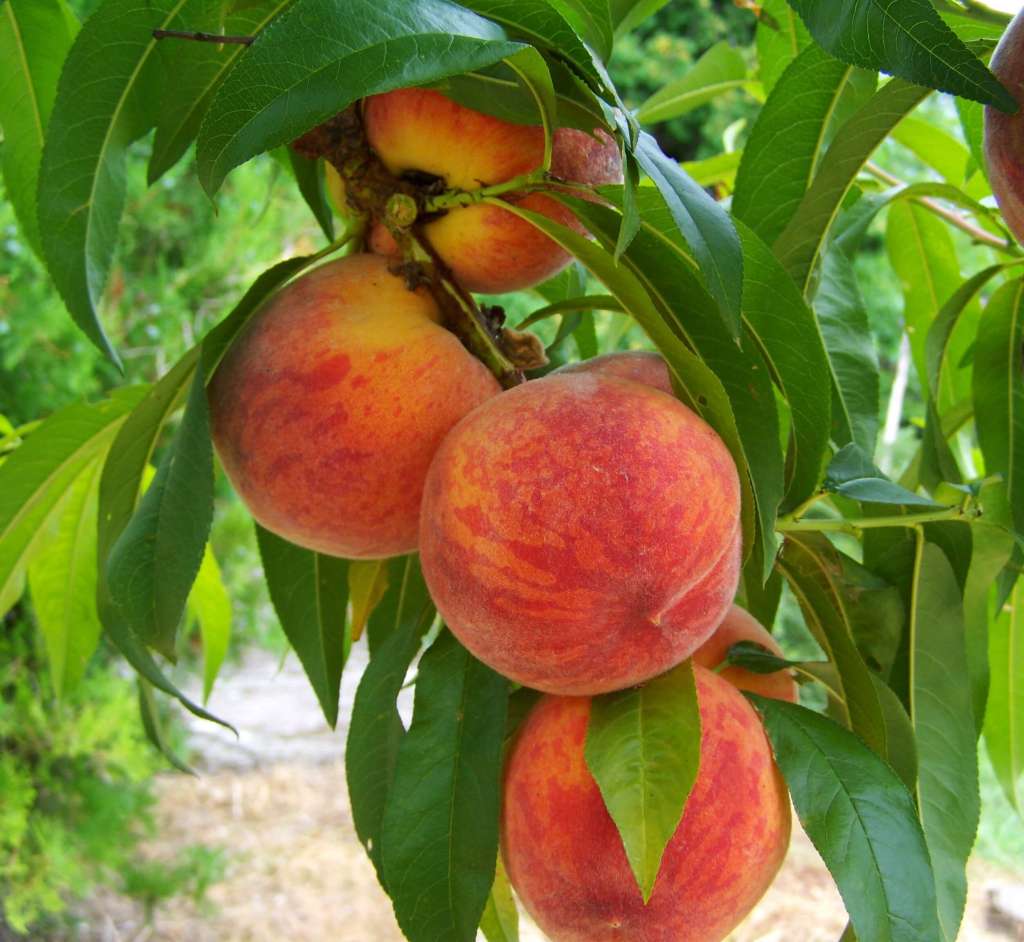
Growing peaches requires careful planning, suitable conditions, and ongoing care. Below is our step-by-step guide to help you grow peaches successfully.
Planting Peach Trees
- Choose the Right Variety: Select a peach tree variety suited to your climate. Some varieties are more cold-hardy than others
- Select a Planting Site: Peach trees need full sun and well-drained soil. Avoid low areas where frost can settle
- Prepare the Soil: Test the soil pH (should be between 6.0 and 7.0). Amend the soil with compost to improve fertility and drainage
- Planting Time: Plant bare-root peach trees in late winter or early spring. Container-grown trees can be planted in spring or fall
- Dig the Hole: Dig a hole twice as wide as the root ball and just as deep. Space trees 15-20 feet apart
- Plant the Tree: Place the tree in the hole with the graft union (swollen area above the roots) 1-2 inches above the soil line. Backfill with soil, tamp down, and water thoroughly
- Mulch: Apply a 2-4 inch layer of mulch around the tree, keeping it a few inches away from the trunk
Growing Peach Trees
- Watering: Water the tree deeply and regularly, especially during dry spells. Young trees need more frequent watering
- Fertilizing: Fertilize in early spring with a balanced fertilizer (10-10-10). Avoid over-fertilizing, which can lead to excessive foliage growth at the expense of fruit production
- Pruning: Prune annually in late winter to early spring before new growth starts. Remove dead or diseased wood, thin out crowded branches, and shape the tree to an open center to allow sunlight and air circulation
- Thinning: Thin fruit when they are about the size of a nickel. Remove excess fruit to ensure the remaining peaches have room to grow and develop
Caring for Peach Trees
- Pest and Disease Control: Monitor for common pests such as aphids, borers, and peach twig borers. Use organic or chemical treatments as needed. Practice good sanitation by removing fallen fruit and debris
- Disease Prevention: Peach trees are susceptible to diseases like peach leaf curl, brown rot, and powdery mildew. Apply fungicides as needed and choose disease-resistant varieties
- Winter Care: Protect young trees from winter injury by wrapping the trunk with a tree guard. Mulch heavily around the base to insulate the roots
- Harvesting: Peaches are ready to harvest when they are fully colored and slightly soft to the touch. Pick peaches gently to avoid bruising
Peach Growing Zone
Peaches thrive best in USDA Hardiness Zones 4 through 9. The specific requirements for growing peaches include:
- Chill Hours: Peaches need a certain number of chill hours (hours below 45°F) to break dormancy and produce fruit. The required chill hours can vary depending on the variety, but generally, peaches need between 600 to 1,000 chill hours
- Temperature: Peaches prefer a warm climate with temperatures between 75°F and 85°F during the growing season. They can tolerate short periods of higher temperatures but prolonged heat above 90°F can affect fruit development
- Sunlight: Peaches require full sun, at least 6 to 8 hours of direct sunlight daily, to produce the best fruit
Growing Peaches FAQ
Peaches thrive in regions with a temperate climate. They need cold winters to satisfy their chilling requirement and warm summers to ripen the fruit. Zones 4-9 are typically ideal.
The best time to plant peach trees is in the late winter or early spring while the trees are still dormant.
Common pests include peach tree borers, aphids, and mites. Diseases such as peach leaf curl, brown rot, and bacterial spot can also affect peach trees. Regular monitoring and appropriate treatments are necessary.
Peach trees usually start bearing fruit 3-4 years after planting. The harvest time varies by variety but generally occurs in late spring to early summer.
Peaches are ready to harvest when they have developed full color, are slightly soft to the touch, and easily come off the tree with a gentle twist.
Thinning the fruit, which involves removing some of the young peaches when they are about the size of a marble, can improve the size and quality of the remaining fruit. Also, ensure proper fertilization and watering.
Yes, dwarf varieties of peach trees can be grown in containers. Use a large pot with good drainage and ensure the tree receives adequate sunlight and water.
Protect peach trees from frost by covering them with a frost cloth or blanket during unexpected cold snaps. Mulching around the base can also help protect the roots.
Peach trees typically live for 12-20 years, though their peak fruit production is usually in the first 10-12 years.
Peach trees can be propagated from seed, but for consistent quality, grafting is preferred. Grafting involves attaching a scion (a young shoot) from a desired variety onto a rootstock.
Yes, you can grow peach trees from pits. Start by cleaning and drying the pit, then subject it to a cold stratification process in the refrigerator for 4 to 8 weeks to simulate winter conditions. After stratification, plant the seed in a pot with well-draining soil, keeping it moist and in a sunny location.
Sign up to get our FREE weekly emails
Gardening guides, tips, & videos delivered right to your inbox!


