
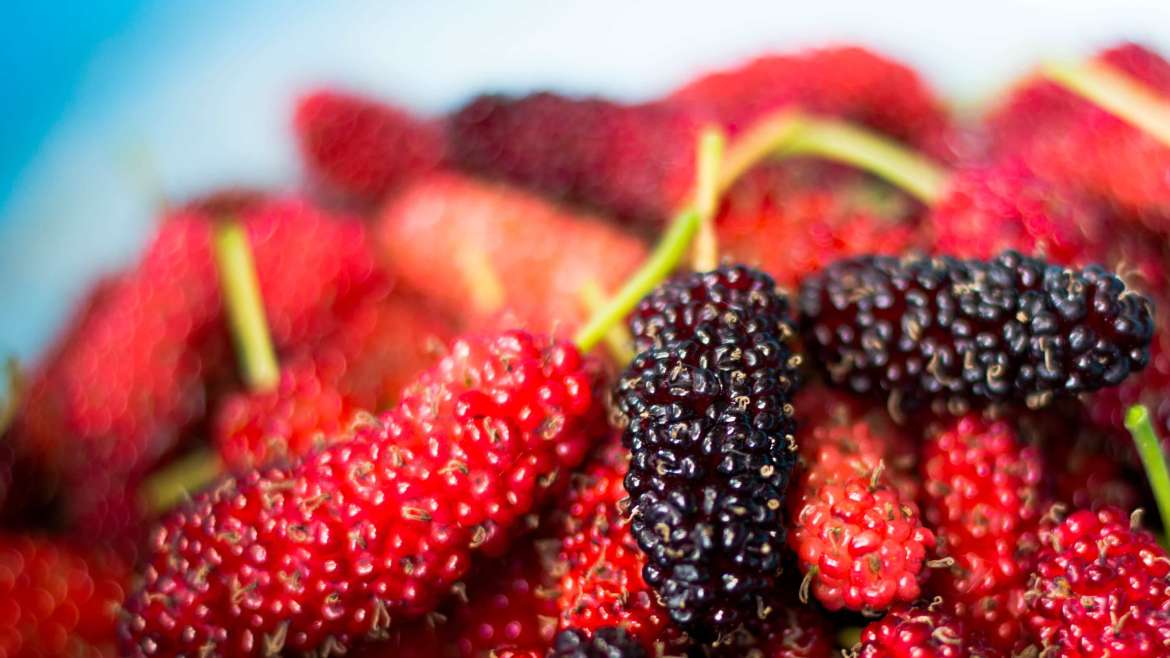
Mulberry. Not the first fruit that comes to mind, but once you’ve tasted one, you’ll wonder why it’s not on every fruit stand. Think of it as a cross between a blackberry and a raspberry, but with a unique twist of its own. Sweet, juicy, and slightly tangy, mulberries are the kind of fruit that make you want to keep coming back for more, even if you end up with purple-stained fingers.
These trees are pretty resilient, thriving in full sun and most soil types. They tend to flower in spring and bear fruit in early summer, and the best part? They grow fast. You’ll be snacking on your own mulberries in just a couple of years if you plant one from a healthy cutting. But don’t get too cocky—mulberries do best when they have space to spread out, so don’t crowd them. They like their room, especially if you’re planting more than one.

And let’s not forget the beauty of the tree itself. With lush, heart-shaped leaves and a graceful, weeping habit, a mulberry tree can be a showstopper in any garden. Plus, the leaves are a favorite snack for silkworms (so you can feel fancy and eco-friendly at the same time).
Mulberries are not only delicious but highly nutritious fruits. They are rich in vitamins, particularly vitamin C and vitamin K, and are a good source of iron, fiber, and antioxidants.
Aside from their culinary uses, mulberries have been used in traditional medicine for their potential health benefits, including improving digestion, boosting the immune system, and promoting heart health.
How to Grow Mulberry Trees

Growing mulberries can be a super exciting experience as they are quite easy to grow and produce delicious fruits. Below is a complete guide to help you get started.
Planting Mulberries
- Choosing the Right Location: Mulberries prefer full sun but can tolerate partial shade. Ensure the site has well-draining soil.
- Soil Preparation: Mulberries thrive in loamy, well-drained soil with a pH between 6.0 and 6.5. Amend the soil with compost if necessary.
- Planting Time: Plant mulberry trees in early spring or late fall.
- Spacing: Space the trees about 15-20 feet apart to accommodate their mature size.
- Planting the Tree:
- Dig a hole twice as wide and as deep as the root ball.
- Place the tree in the hole, ensuring the root collar (where the roots meet the trunk) is at ground level.
- Fill the hole with soil, gently firming it around the roots.
- Water thoroughly to settle the soil.
Growing Mulberries
- Watering: Mulberries need regular watering, especially during dry spells. Water deeply once a week.
- Mulching: Apply a 3-4 inch layer of mulch around the base of the tree to retain moisture and suppress weeds, keeping it a few inches away from the trunk.
- Fertilizing: Fertilize in early spring with a balanced fertilizer (10-10-10). Follow the package instructions for the amount.
- Pruning: Prune the trees in late winter to remove dead or diseased branches and to shape the tree. Summer pruning can help control size.
- Pest and Disease Control: Watch for pests like aphids, spider mites, and caterpillars. Use insecticidal soap or neem oil if necessary. Mulberries are generally disease-resistant, but root rot can occur in poorly drained soils.
Harvesting Mulberries
- When to Harvest: Mulberries are typically ready to harvest in late spring to early summer, depending on the variety and location. The fruits are ripe when they are plump, dark, and easily come off the stem.
- How to Harvest:
- Hand Picking: Gently pick the berries by hand to avoid damaging them.
- Shaking: Place a tarp or sheet under the tree and gently shake the branches. The ripe berries will fall onto the tarp.
- Post-Harvest Handling:
- Rinse the berries gently with water to remove any dirt or insects.
- Mulberries can be eaten fresh, frozen, or used in jams, jellies, and baked goods.
Mulberry Growing Zone
Growing mulberries is possible in a wide range of zones, depending on the variety. Here is a general guide for the main types of mulberry trees:
- White Mulberry (Morus alba): Hardy in USDA zones 4-8. This variety is quite adaptable and can tolerate colder climates.
- Red Mulberry (Morus rubra): Hardy in USDA zones 4-9. Native to North America, it is more tolerant of the colder regions within this range.
- Black Mulberry (Morus nigra): Hardy in USDA zones 6-10. This variety prefers warmer climates and is less cold-tolerant compared to the white and red mulberries.
For best results, always check the specific requirements of the mulberry variety you are interested in planting and consider the local climate conditions in your area.
Additional Tips
- Varieties: If you’re growing mulberries, choose tree varieties suitable for your climate. Common types include black, red, and white mulberries.
- Propagation: Mulberries can be propagated from cuttings or seeds. Cuttings taken in late winter root well, and seeds should be stratified before planting.
- Longevity: Mulberry trees can live and produce fruit for decades with proper care.
Growing Mulberry FAQ
Mulberry trees thrive in well-drained soil with full sun exposure. Choose a location with plenty of space as mulberry trees can grow quite large, often reaching heights of 30-50 feet.
Plant your mulberry tree in early spring or fall. Dig a hole twice the size of the root ball, place the tree in the hole, and fill it with soil. Water thoroughly and mulch around the base to retain moisture and prevent weeds.
Mulberry trees generally do well without fertilization. However, you can apply a balanced fertilizer in early spring if the soil is poor or if you notice slow growth.
Mulberry trees typically start producing fruit 2-4 years after planting. The fruiting season varies by species and location but usually occurs in late spring to early summer.
Yes, most mulberry trees are self-pollinating, meaning they do not require another tree to produce fruit. However, planting multiple trees can increase fruit yield.
Harvest mulberries by gently shaking the branches over a sheet or tarp. The ripe berries will easily fall off. Mulberries can be eaten fresh, dried, or used in various recipes like jams and pies.
Yes, dwarf mulberry varieties can be grown in containers. However, it’s better to grow mulberry trees in-ground.
Sign up to get our FREE weekly emails
Gardening guides, tips, & videos delivered right to your inbox!


1 Comment
Shaila S
I don’t see any flowers in my 3 year old Pakistani mulberry tree . I was hoping to see some fruits this year…..