
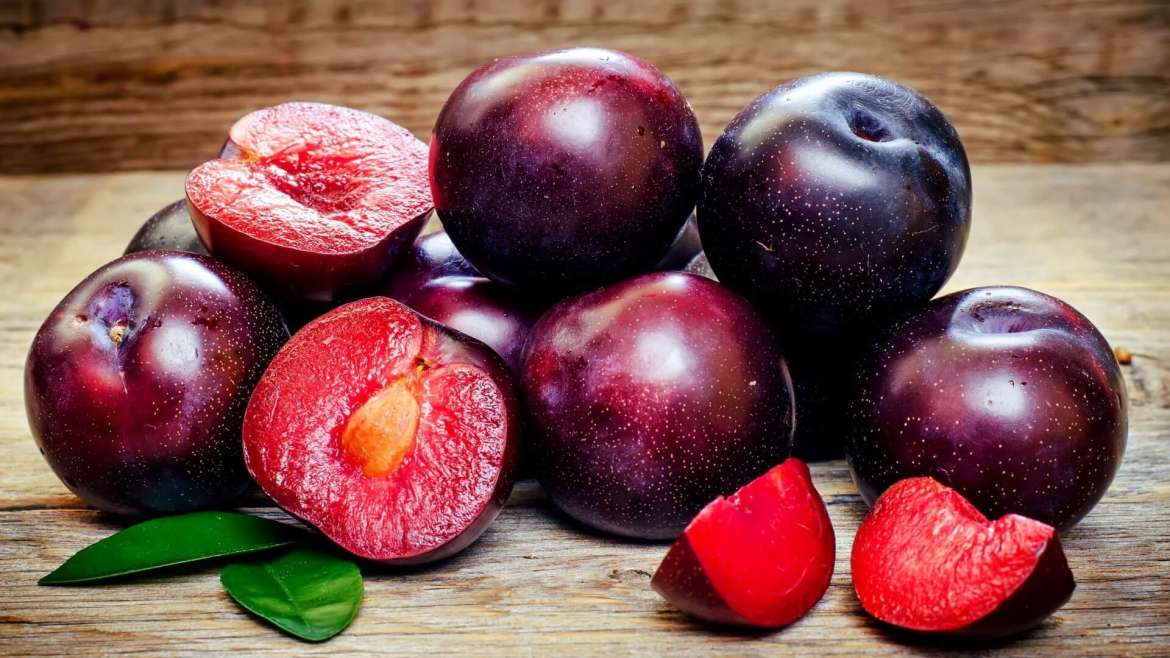
Plums. Sweet, juicy, and just a little bit sassy. If you’ve never had one, imagine biting into a fruit that’s like a cherry’s cousin with a better attitude—rich, tart, and oh-so-satisfying. Plums are the kind of fruit you just can’t help but love, whether you’re eating them fresh, making jam, or turning them into a pie that’ll make your grandma jealous.
They bloom in spring, ripen in late summer, and yes, they can even handle the heat. But don’t go planting them willy-nilly. Plums like their space, so give them some room to stretch out in the soil. They’re not into confined spaces, so if you’re thinking of throwing them in a container, think again.
The tree? Beautiful. A mix of soft greens and bold purples, with a neat, compact shape that’s perfect for your backyard. And those leaves? Some people say they’re good for more than just shade—maybe even medicinal. Who knew that a tree with fruit this good could have its own health benefits too?
Rich in vitamins C and K, as well as dietary fiber, plums offer so many health benefits, including aiding digestion and supporting a healthy immune system. Whether enjoyed on their own, added to salads, or baked into desserts, plums are a delightful addition to any diet, bringing a burst of flavor and nutrition.
How to Grow Plum Trees

Growing plums can be a rewarding experience. Below is a comprehensive guide to help you get started.
Choosing the Right Plum Variety
- European Plums: Good for cooler climates and making prunes.
- Japanese Plums: Better suited for warmer climates and are typically eaten fresh.
Planting Plums
- Location: Choose a sunny spot with well-drained soil. Plum trees need at least 6-8 hours of sunlight daily.
- Soil: Plum trees prefer slightly acidic to neutral soil (pH 5.5 to 6.5).
- Planting Time: Plant in early spring or late fall when the tree is dormant.
- Spacing: Space trees 15-20 feet apart for standard trees, and 8-10 feet apart for dwarf varieties.
- Planting Process:
- Dig a hole twice as wide and just as deep as the root ball.
- Place the tree in the hole, ensuring the graft union (the bump where the tree was grafted onto the rootstock) is above soil level.
- Fill the hole with soil, water thoroughly, and mulch around the base to retain moisture.
Growing Plums
- Watering: Water young trees deeply every week during the growing season. Mature trees need less frequent watering but should not be allowed to dry out.
- Fertilizing: Fertilize in early spring with a balanced fertilizer. Avoid over-fertilizing, as this can lead to poor fruit production.
- Pruning:
- Prune in late winter while the tree is dormant.
- Remove dead or diseased branches, thin out overcrowded branches, and shape the tree to allow sunlight to penetrate.
- Pest and Disease Control: Watch for pests like aphids, plum curculio, and diseases such as brown rot and black knot. Use appropriate organic or chemical treatments if necessary.
Harvesting Plums
- Timing: Plums are typically ready to harvest in late summer to early fall. The exact timing depends on the variety and your climate.
- Signs of Ripeness: Plums should be fully colored, slightly soft to the touch, and easily come off the tree when gently twisted.
- Harvesting Technique: Use your hand to twist the fruit gently from the tree, or use pruning shears to cut the stem if necessary.
- Post-Harvest: Store plums in the refrigerator if not consuming immediately. They can last for about a week in the fridge.
Common Issues and Solutions
- Poor Fruit Production: This can result from improper pruning, lack of pollinators, or environmental stress. Ensure proper care and possibly plant more than one variety for cross-pollination.
- Fruit Drop: Often caused by weather conditions or pests. Regular care and monitoring can help mitigate this issue.
Enjoying Your Harvest
- Plums can be enjoyed fresh, dried (as prunes), or used in cooking and baking.
Plums Growing Zone
Plums typically grow well in USDA hardiness zones 3 to 9, depending on the variety. Some varieties, like the European plums, are better suited to cooler climates (zones 3-7), while Japanese plums prefer warmer climates (zones 5-9).
It’s important to choose a variety that matches your specific growing zone to ensure healthy growth and fruit production.
Growing Plums FAQ
Depending on the variety, plum trees typically begin to bear fruit 3-6 years after planting.
Some plum varieties are self-pollinating, but many require cross-pollination from another compatible plum tree. Planting two different varieties nearby can increase your chances of a good harvest.
Yes, plums can continue to ripen after being picked, but the extent of ripening depends on how mature they were at the time of picking. If the plums were picked when they were nearly ripe, they will soften and sweeten a bit more as they sit at room temperature.
Harvest plums when they are fully colored, slightly soft to the touch, and easily come off the tree with a gentle twist. The exact timing will vary depending on the variety and your local climate.
Mulch around the base of the tree to protect the roots from freezing. In colder climates, consider wrapping the trunk with burlap to prevent frost cracks.
Plums typically grow in temperate regions around the world, where they thrive in climates with cold winters and warm summers.
Sign up to get our FREE weekly emails
Gardening guides, tips, & videos delivered right to your inbox!


