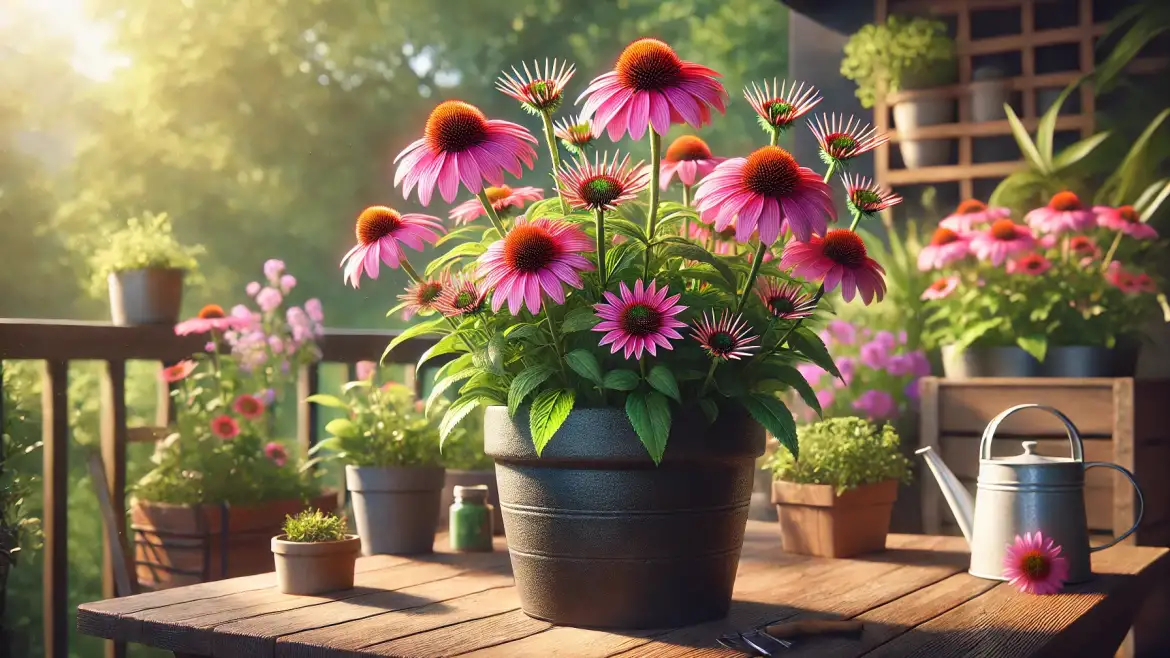
Do you love the idea of growing beautiful echinacea plants but don’t have a large garden space? Fear not! With the right techniques, you can successfully cultivate vibrant and healthy echinacea in containers.
In this article, we will share the secrets to unlocking the full potential of your echinacea plants in confined spaces. Whether you have a balcony, patio, or small backyard, you can still enjoy the beauty and benefits of growing echinacea.
Growing Echinacea in Pots

With our expert tips and step-by-step instructions, you’ll learn how to choose the right container, prepare the soil, and provide the necessary care to ensure your echinacea thrives.
We’ll cover everything from selecting the right variety to watering and fertilizing techniques, all while keeping your plants happy and healthy.
Don’t miss out on transforming your small space into a colorful oasis with flourishing echinacea plants. Read on to discover the secrets of successful echinacea growth in containers.
Advantages of Growing Echinacea in Containers
Growing echinacea in containers offers a myriad of advantages that make it an appealing option for gardeners with limited space. One of the primary benefits is the flexibility that container gardening provides. Whether you have a small balcony, a patio, or a tiny backyard, you can easily incorporate vibrant echinacea plants into your outdoor decor.
Containers can be moved around to catch the best sunlight or to create a visually appealing arrangement, allowing you to design your space creatively. This adaptability means that even urban dwellers can enjoy the beauty of echinacea without the need for a vast garden.
Additionally, container gardening allows for better control over the growing conditions. In a pot, you can regulate soil composition, moisture levels, and drainage, which can be particularly beneficial for echinacea, as they thrive in well-draining soil. This control can help prevent common issues like root rot, which can occur in the ground if the soil retains too much moisture.
Furthermore, pots can be filled with a custom soil mix tailored specifically for echinacea, ensuring optimal growth conditions for the plants. This level of control can lead to healthier and more robust plants.
Another advantage of growing echinacea in containers is the ease of maintenance. Container gardening typically requires less weeding than traditional gardening since the confined space limits weed growth. Moreover, it allows for easier access when it comes to pest management and harvesting.
You can inspect your plants closely without having to bend down or navigate through a larger garden space. This simplicity can be particularly beneficial for those who may have physical limitations or for beginners who are just starting to explore the world of gardening.
Selecting the Right Container for Echinacea
Choosing the right container is a crucial step in ensuring the successful growth of echinacea. The first consideration should be the size of the container. Echinacea plants can grow quite large, so opt for pots that are at least 12 inches deep and wide.
A larger container allows the roots more space to spread and access nutrients, which is essential for healthy growth. If you’re planting multiple echinacea plants in one container, ensure that the pot is spacious enough to accommodate the additional root systems without overcrowding.
Material also plays a significant role in container selection. Common materials include plastic, clay, and ceramic. Each has its advantages and drawbacks. Plastic pots are lightweight, retain moisture well, and are generally more affordable, making them a popular choice.
Clay pots, on the other hand, are porous, allowing for excellent drainage but may require more frequent watering as they dry out faster. Ceramic pots provide an aesthetic appeal but can be heavy and may not offer the same drainage benefits as other materials. Consider your environment and the care you’re willing to provide when selecting the material for your pots.
Drainage is perhaps the most critical factor to consider when choosing a container. Echinacea plants thrive in well-drained soil, so ensure that your chosen pot has drainage holes at the bottom. If you find a pot without holes, you can create one by using a drill or select a liner pot that fits inside a decorative outer pot. Proper drainage prevents water from pooling at the base of the container, reducing the risk of root rot and promoting healthy plant growth.
Choosing the Right Soil for Echinacea Containers
The soil you use for your echinacea containers is essential for their overall health and growth. Echinacea thrives in well-draining, nutrient-rich soil. A high-quality potting mix specifically formulated for flowering plants is an excellent choice as it often contains the necessary nutrients and amendments.
Look for a mix that includes components like peat moss, perlite, or vermiculite—these materials enhance drainage while retaining some moisture, creating an ideal balance for echinacea’s needs.
You might also consider creating your own soil mix for a tailored approach. A good recipe could include one part potting soil, one part compost, and one part perlite or sand. This combination ensures that the soil is rich in nutrients while maintaining excellent drainage properties.
Compost adds essential organic matter that enriches the soil, promoting healthy root development and overall plant vigor. Be cautious not to use garden soil, as it can compact in containers and lead to poor drainage and root health.
pH levels can also impact echinacea growth, so it’s worth testing your soil’s pH before planting. Echinacea prefers a slightly acidic to neutral pH, ideally between 6.0 and 7.0. If necessary, you can adjust the soil pH by adding lime to raise it or sulfur to lower it. Ensuring the right pH level will create an optimal environment for nutrient uptake, allowing your echinacea plants to flourish.
Planting and Caring for Echinacea in Containers
When planting echinacea in containers, timing is essential. The best time to plant is in the spring, after the last frost, or in early fall. Begin by filling your container with the prepared soil, leaving about an inch of space at the top to prevent overflow during watering.
Gently remove the echinacea plant from its nursery pot, being careful not to damage the roots, and place it in the center of your container. Fill in around the roots with soil, ensuring that the crown of the plant is level with the soil surface. Press the soil gently to eliminate air pockets, but avoid compacting it too tightly.
Once planted, proper care is crucial for the health of your echinacea. Regular monitoring of the plant is essential to ensure it is thriving. Look for signs of stress, such as wilting or yellowing leaves, which may indicate issues with watering or nutrient levels.
Echinacea plants typically prefer full sun, so place your container in an area that receives at least six hours of direct sunlight daily. If you notice the plants leaning or stretching towards the light, it may be worth rotating the pot periodically to encourage even growth.
In addition to sunlight, providing adequate airflow around your echinacea is important. Overcrowding can lead to fungal diseases, particularly in humid conditions. If you’re growing multiple containers, space them out sufficiently to allow air to circulate freely.
This practice not only helps prevent disease but also promotes healthy growth and flowering. Regularly deadhead spent blooms to encourage prolonged flowering and prevent the plant from diverting energy into seed production.
Watering and Fertilizing Echinacea in Containers
Watering is one of the most critical aspects of caring for echinacea in containers. These plants prefer their soil to dry out slightly between watering sessions. This approach encourages deep root growth and prevents waterlogging, which can lead to root rot. When watering, thoroughly soak the soil until water drains from the bottom of the container.
This ensures that the roots receive adequate moisture while also promoting proper drainage. It’s advisable to check the soil moisture regularly by inserting your finger about an inch into the soil; if it feels dry, it’s time to water.
Fertilizing echinacea plants is also essential for encouraging healthy growth and vibrant blooms. A balanced, slow-release fertilizer can be applied at the beginning of the growing season, providing a steady supply of nutrients throughout the summer months.
Look for a fertilizer with equal parts nitrogen, phosphorus, and potassium (e.g., 10-10-10) to promote overall plant health. Alternatively, you can use a liquid fertilizer every four to six weeks during the growing season, ensuring your plants receive the nutrients they need without overwhelming them.
Be cautious not to over-fertilize, as this can lead to excessive foliage growth at the expense of blooms. Echinacea plants thrive on moderate fertilization, so it’s better to err on the side of less rather than too much.
If you notice lush green growth but fewer flowers, consider cutting back on fertilizer application. Observing your plants closely can help you determine the right balance to achieve a vibrant display of echinacea flowers.
Common Pests and Diseases of Echinacea in Containers
While echinacea is generally a hardy plant, they can still be susceptible to certain pests and diseases, especially when grown in containers. Common pests include aphids, spider mites, and whiteflies, all of which can damage your plants by sucking sap and weakening them.
Regularly inspecting your plants for signs of infestation is key. If you spot any pests, treat them promptly using insecticidal soap or neem oil, which are effective and safe options for managing pests on edible and ornamental plants.
Fungal diseases are another concern, particularly in humid conditions. Echinacea can be affected by powdery mildew, which appears as a white, powdery coating on leaves. To mitigate this issue, ensure that your plants are adequately spaced for airflow and avoid overhead watering, which can lead to damp leaves. If mildew does occur, remove affected leaves and consider applying a fungicidal spray to manage the spread. Additionally, keeping your containers clean and free from debris can help reduce disease risk.
In some cases, container-grown echinacea may face stress due to environmental factors such as inadequate light or poor watering practices. Addressing these issues early on can prevent the development of further problems.
If your echinacea appears stunted or unhealthy, assess their growing conditions and make necessary adjustments, whether it’s relocating the container, altering your watering routine, or addressing nutrient deficiencies. Staying vigilant and proactive can help you maintain healthy echinacea plants in your containers.
Harvesting and Using Echinacea Grown in Containers
One of the joys of growing echinacea in containers is the ability to harvest and use the plants for various purposes. Echinacea is well-known for its medicinal properties, particularly in supporting the immune system.
When harvesting, it’s best to wait until the flowers are fully open, as this is when they contain the most beneficial compounds. Use sharp scissors or pruning shears to cut the blooms at their base, taking care to leave some foliage intact to support continued growth.
In addition to flowers, you can also harvest echinacea leaves and roots. Leaves can be harvested throughout the growing season, while roots are typically harvested in the fall when the plant is entering dormancy.
For root harvesting, gently dig around the plant’s base, being careful not to damage the root system. Once harvested, you can use echinacea in various forms, such as teas, tinctures, or dried for later use.
When using echinacea for medicinal purposes, it’s essential to research proper preparation methods to ensure safety and efficacy. Echinacea tea can be made by steeping fresh or dried leaves and flowers in hot water for several minutes.
Tinctures are typically made by soaking the plant material in alcohol to extract its beneficial properties. Always consult with a healthcare professional before using echinacea for medicinal purposes, especially if you are pregnant, nursing, or taking other medications.
Troubleshooting Common Issues with Echinacea in Containers
Even with the best care, you may encounter some common issues with your container-grown echinacea. One frequent problem is wilting, which can be caused by either over-watering or under-watering. If the soil is soggy and the leaves are wilting, it’s likely a sign of over-watering.
In this case, allow the soil to dry out completely before watering again, and check that your container has adequate drainage. Conversely, if the soil feels dry and the leaves are wilting, it’s time to give your plants a good soak.
Another issue could be yellowing leaves, which may indicate a nutrient deficiency or poor soil conditions. Inspect the soil and consider whether your echinacea has received adequate fertilization. If you suspect a nutrient deficiency, you can apply a balanced fertilizer to help replenish nutrients.
Additionally, yellowing can also be a sign of root rot, so check the roots for signs of decay. If you notice mushy or blackened roots, you may need to repot your plant in fresh soil and a clean container to help it recover.
Lastly, if your echinacea plants are failing to bloom, it could be due to insufficient sunlight or overcrowding in the container. Ensure your plants are receiving at least six hours of direct sunlight daily. If they are in a shaded area, consider relocating them to a sunnier spot.
If multiple plants are in a single container, thinning them out may be necessary to reduce competition and allow for better air circulation and light penetration, ultimately leading to more abundant flowering.
Conclusion and Final Tips for Successful Echinacea Container Gardening
In conclusion, growing echinacea in containers is a rewarding endeavor that allows you to enjoy the beauty and benefits of these vibrant plants, even in limited spaces. By understanding the advantages of container gardening, selecting the right containers and soil, and providing proper care, you can create a thriving environment for your echinacea. Remember to monitor your plants regularly for any signs of stress or pests, and take action promptly to ensure their continued health.
As a final tip, consider experimenting with different echinacea varieties to find the ones that best suit your taste and aesthetic preferences. Echinacea comes in a variety of colors and sizes, and mixing different types can create a stunning display.
Don’t forget to enjoy the process and learn from your experiences, as gardening is as much about personal growth as it is about nurturing your plants. With patience and care, your container-grown echinacea will flourish, providing beauty and possibly even health benefits for years to come. Happy gardening!

FAQs
Yes, Echinacea can thrive in pots if the container is large enough to accommodate its deep root system. A pot with a minimum diameter of 12–18 inches is ideal.
Water when the top 1–2 inches of soil feel dry. Echinacea is drought-tolerant but needs consistent moisture while establishing. Avoid overwatering, as it can lead to root rot.
Yes! Potted Echinacea is just as attractive to bees, butterflies, and other pollinators as garden-grown plants.
Yes, but it requires patience. Start seeds indoors 6–8 weeks before the last frost or sow directly in the pot after frost danger has passed. Germination can take 10–20 days.
With proper care, Echinacea can live for several years in pots. Divide the plant every 3–4 years to rejuvenate it and provide more space for roots.
Sign up to get our FREE weekly emails
Gardening guides, tips, & videos delivered right to your inbox!