

Growing clover in pots offers numerous benefits for gardeners and plant enthusiasts alike. First, clover is an excellent nitrogen-fixer, which means it improves soil fertility by converting nitrogen from the air into a form usable by plants. This makes it an ideal companion for other potted plants, reducing the need for chemical fertilizers.
Clover’s compact growth habit and dense foliage also help prevent soil erosion in pots, keeping the soil in place during watering. Its ability to thrive in various conditions makes it low-maintenance and perfect for small urban spaces, balconies, or patios.
Additionally, clover provides environmental and aesthetic benefits. Its vibrant green leaves and delicate flowers attract pollinators like bees and butterflies, promoting biodiversity even in small-scale gardens.
Clover is also drought-tolerant, requiring less water compared to traditional grass or other ornamental plants. This makes it an eco-friendly option for sustainable gardening. By growing clover in pots, gardeners can enjoy its practical benefits while creating a lush, green environment that enhances both the beauty and health of their space.
Growing Clover in a Pot
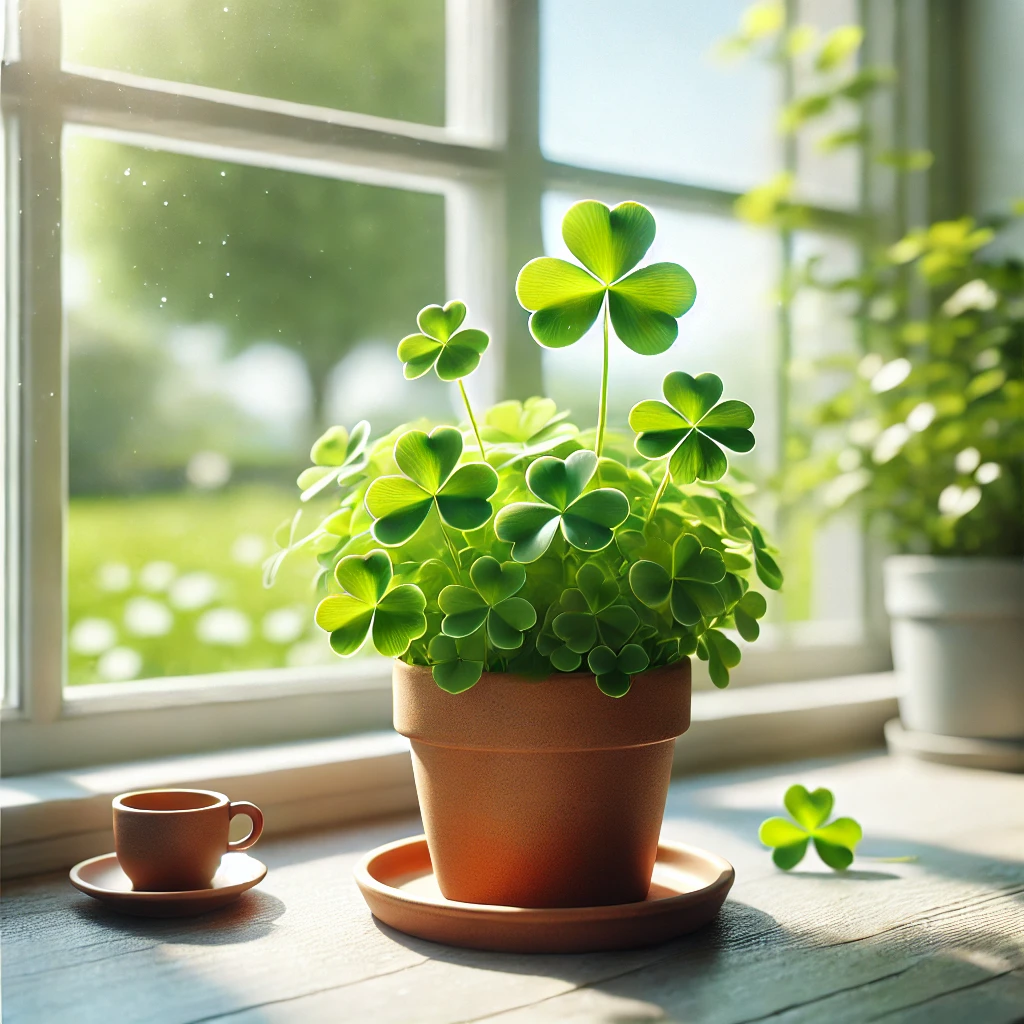
Step 1: Choosing the Right Clover Variety
There are several types of clover to consider:
- White Clover (Trifolium repens): A popular choice for its low-growing habit.
- Red Clover (Trifolium pratense): Larger and taller, with vibrant red blooms.
- Microclover: A miniature variety perfect for small pots or decorative purposes.
Choose a variety based on your space and aesthetic preferences.
Step 2: Selecting the Pot
- Size: Clover has shallow roots, so a pot 6-8 inches deep is sufficient.
- Material: Use pots made of terracotta, ceramic, or plastic.
- Drainage: Ensure the pot has drainage holes to prevent waterlogging.
Step 3: Preparing the Soil
- Soil Mix: Use a well-draining potting mix. Mix equal parts of garden soil, compost, and sand.
- pH Level: Clover thrives in slightly acidic to neutral soil (pH 6.0-7.0).
- Fertilizer: Add a slow-release fertilizer or compost to boost initial growth.
Step 4: Planting Clover Seeds
- Soak the Seeds: Soak clover seeds in water for 2-4 hours to improve germination.
- Sow the Seeds:
- Scatter seeds evenly on the soil surface.
- Press them gently into the soil but do not cover them completely, as they need light to germinate.
- Water: Mist the soil lightly to moisten it without overwatering.
Step 5: Providing Ideal Growing Conditions
- Light: Place the pot in a location with 4-6 hours of sunlight daily. Partial shade is acceptable for most varieties.
- Watering: Keep the soil consistently moist but not soggy. Water lightly when the top inch of soil feels dry.
- Temperature: Clover grows best in temperatures between 60-75°F (15-24°C).
Step 6: Maintenance
- Thinning: If seedlings are overcrowded, thin them out to allow adequate air circulation and growth.
- Trimming: Trim clover regularly to encourage dense growth and prevent flowering if you prefer a lush green look.
- Pest Control: Watch for aphids or mites. Use insecticidal soap or neem oil if necessary.
- Fertilization: Clover generally doesn’t need additional fertilizer because it fixes nitrogen in the soil.
Step 7: Troubleshooting Common Problems
- Yellowing Leaves: Indicates overwatering or poor drainage.
- Sparse Growth: May be due to insufficient light or overcrowding.
- Stunted Growth: Could result from nutrient-poor soil. Add compost or a balanced liquid fertilizer.
Step 8: Harvesting (Optional)
If you’re growing clover for culinary or medicinal purposes:
- Harvest Leaves: Pick tender leaves as needed.
- Harvest Flowers: Collect blooms when they are fully open for teas or crafts.
Creative Ideas for Using Potted Clover
- Indoor Decor: Use small pots as table centerpieces.
- Outdoor Accent: Combine clover with other flowering plants in mixed containers.
- Functional Use: Utilize as a living mulch for larger potted plants.
Growing clover in pots is an enjoyable and rewarding project. With minimal effort, one can enjoy lush greenery that beautifies your space while contributing to a healthier environment. Regardless whether you’re a gardening enthusiast or a beginner, clover is an excellent choice for your potted garden!
FAQs
Yes, clover grows well in pots as long as it has adequate sunlight, water, and soil. It’s a hardy plant that thrives in various conditions, making it ideal for container gardening.
Water clover when the top inch of soil feels dry. Avoid overwatering, as it can lead to root rot.
To control spreading, regularly trim the clover and check for runners that might escape the pot. Using pots with a smooth rim can also help.
While clover prefers outdoor conditions, it can grow indoors if placed near a sunny window or under grow lights.
Yes, clover makes an attractive ground cover in pots and pairs well with other plants due to its vibrant green foliage and delicate flowers.
Clover can be propagated by seeds or by dividing established plants. Sow seeds evenly on the soil surface and lightly cover them for even growth.
Sign up to get our FREE weekly emails
Gardening guides, tips, & videos delivered right to your inbox!


