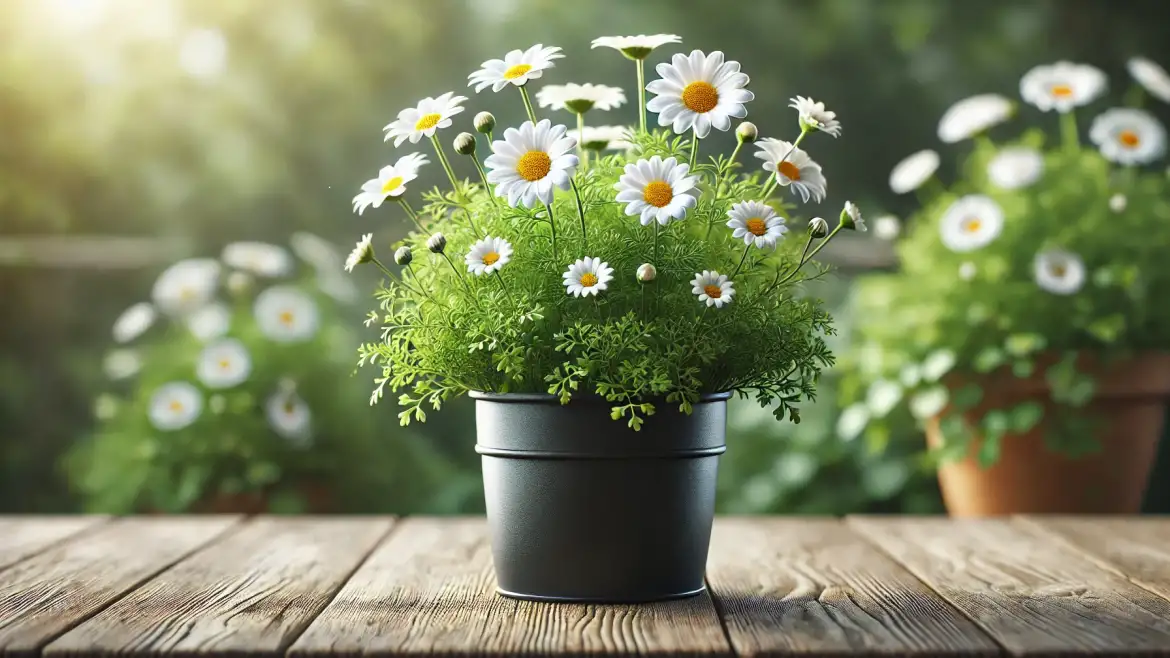
Growing daisies in pots offers several benefits, making it a practical and delightful choice for gardening enthusiasts. Potted daisies provide the flexibility to create vibrant displays in limited spaces, such as balconies, patios, or small gardens. They are easy to move, allowing you to optimize sunlight exposure or protect them from adverse weather conditions.
Also, growing daisies in pots reduces the risk of soil-borne diseases and pests, as you have better control over the soil quality and conditions. With proper care, daisies in pots bloom consistently, brightening your space with their cheerful appearance and enhancing the aesthetic appeal of your home.
Another advantage of potted daisies is their suitability for diverse environments and their low-maintenance nature. Containers allow you to customize soil mixtures and drainage to meet the specific needs of your daisies, ensuring healthier growth and vibrant flowers.
Furthermore, daisies in pots can be strategically placed to complement your interior or exterior decor, acting as natural air purifiers and bringing a touch of nature indoors. Their compact size makes them ideal for urban gardeners or those looking to experiment with different floral arrangements without committing to a full garden bed.
Growing Daisies in Containers
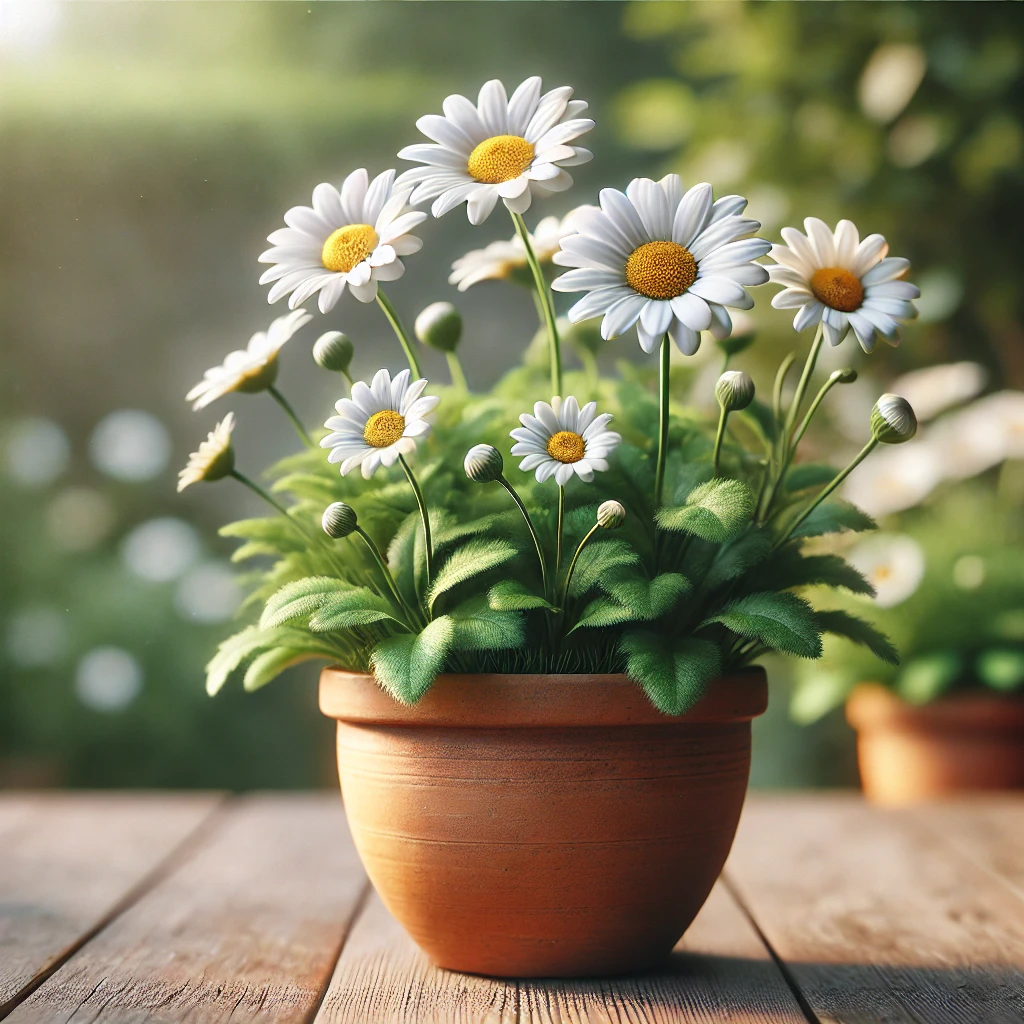
Growing daisies in pots is a delightful way to bring cheerful blooms to patios, balconies, or even indoor spaces. This guide covers everything you need to know to successfully grow and care for daisies in containers.
1. Choosing the Right Daisy Variety
Several types of daisies can thrive in pots. Popular varieties include:
- Shasta Daisy (Leucanthemum x superbum): Classic white petals with yellow centers.
- English Daisy (Bellis perennis): Compact size and vibrant colors.
- African Daisy (Osteospermum): Drought-tolerant with unique colors like purple and orange.
- Gerbera Daisy (Gerbera jamesonii): Known for its large, colorful blooms.
2. Selecting the Right Pot
- Size: Choose a pot that is at least 12 inches in diameter to accommodate the plant’s root system.
- Material: Use ceramic, plastic, or terracotta pots with drainage holes.
- Drainage: Ensure the pot has good drainage to prevent root rot.
3. Preparing the Soil
- Use a well-draining potting mix. A mix of regular potting soil with added perlite or sand works well.
- Daisies prefer slightly acidic to neutral soil (pH 6.0–7.0).
4. Planting the Daisies
Steps:
- Prepare the Pot: Fill the pot with the prepared soil, leaving about 2 inches from the top.
- Plant the Daisy: Gently remove the daisy from its nursery pot and place it in the center of the new pot.
- Cover the Roots: Fill around the root ball with soil, pressing gently to secure the plant.
- Water Thoroughly: Water the plant until it drains from the bottom.
5. Positioning
- Sunlight: Place the pot in a location with at least 6 hours of direct sunlight daily.
- Temperature: Keep daisies in a spot with moderate temperatures (60–75°F/15–24°C).
6. Watering and Fertilizing
- Water daisies when the top inch of soil feels dry.
- Avoid overwatering; soggy soil can lead to root rot.
- Reduce watering during cooler months when growth slows.
- Feed daisies with a balanced liquid fertilizer every 4–6 weeks during the growing season (spring and summer).
- Avoid excessive fertilization, as it can lead to more foliage and fewer flowers.
7. Pruning and Deadheading
- Deadheading: Remove spent blooms to encourage more flowers.
- Pruning: Trim any yellowing or dead leaves to keep the plant healthy and tidy.
8. Pest and Disease Control
- Pests: Watch for aphids, spider mites, and whiteflies. Treat with insecticidal soap or neem oil if needed.
- Diseases: Prevent fungal issues by avoiding overhead watering and ensuring good air circulation.
9. Overwintering
- If you live in a cold climate, bring pots indoors before the first frost.
- Place them in a sunny indoor location or a protected area like a greenhouse.
- Water sparingly during winter.
10. Repotting
- Repot daisies every 1–2 years to refresh the soil and provide room for growth.
- Choose a slightly larger pot and follow the planting steps.
11. Propagation
- By Division: Divide the plant in spring or fall to create new plants.
- From Seeds: Sow daisy seeds in pots indoors in late winter for spring blooms.
FAQs
Yes, daisies thrive in pots as long as they are provided with the right growing conditions, such as well-draining soil, sufficient sunlight, and regular watering.
Potted daisies can come back every year if they are perennial varieties and provided with proper care, including protection from frost and adequate winter maintenance.
Daisies love full sun and need at least 6-8 hours of direct sunlight daily. Place the pot in a sunny location, such as a balcony or patio.
Water when the top inch of soil feels dry. Avoid overwatering, as soggy soil can lead to root rot. In hot weather, you may need to water more frequently.
Regularly remove spent blooms by snipping the stem just above a leaf node. This encourages the plant to produce more flowers.
Sign up to get our FREE weekly emails
Gardening guides, tips, & videos delivered right to your inbox!