
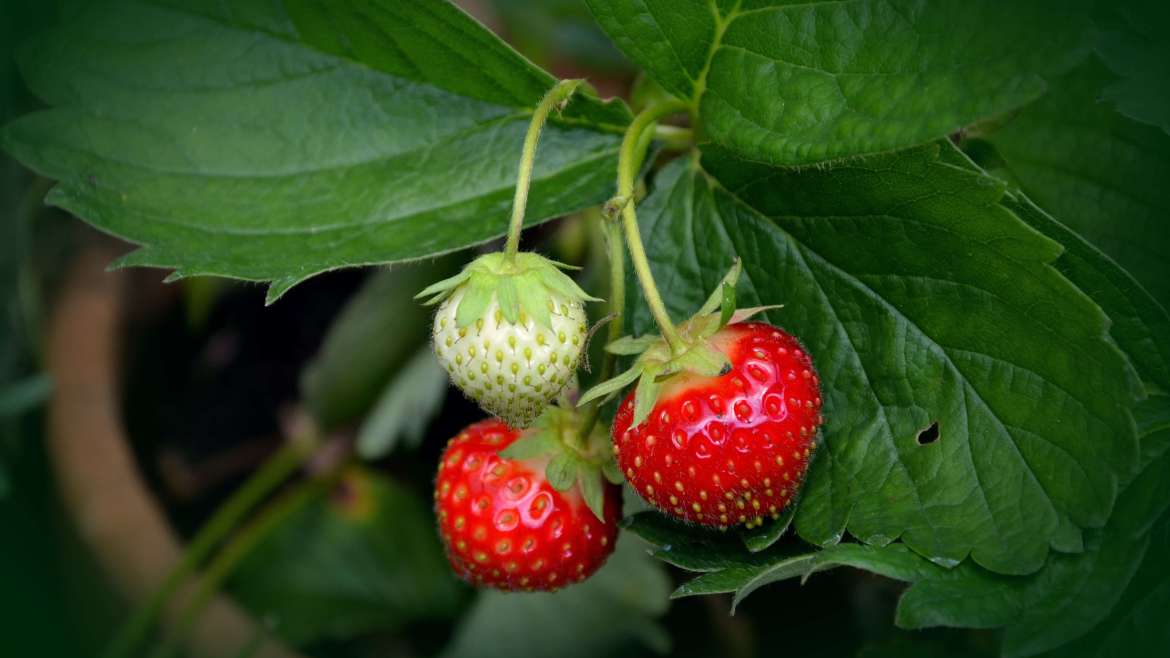
Strawberries. Simple name, incredible fruit. If you’ve never had one, picture the perfect balance between sweet and tart, like if a sun-kissed sugar cube and a tangy little burst of citrus had a deliciously juicy love child. Fresh, vibrant, and irresistibly snackable, strawberries are the little red jewels of summer.
They start off as tiny, unassuming blossoms in early spring, and by late spring to early summer, they’re popping up everywhere, ready for you to pluck and savor. A bonus for impatient gardeners: strawberry plants are often pretty quick to produce, sometimes giving you fruit in just a few months.
Also, here’s the thing, the thrive well in containers. You can grow them wherever you want. And if you’re growing them from bare roots, give them a little extra care for the first year—water, well-drained soil, and maybe a word of encouragement or two (hey, it works!).
As for the plants themselves? Delightfully charming. Their green leaves are lush, and they even produce a few delicate flowers, giving your garden that added touch of beauty before the fruit steals the show. A must-have for any garden that’s about as low-maintenance as it is rewarding.
Strawberries got plenty of health benefits, they are a rich source of vitamin C, manganese, folate, and potassium, and they provide antioxidants, which are beneficial for heart health and blood sugar control.
Strawberries can be eaten fresh, added to salads, used in desserts, or made into jams and jellies. Growing strawberries is a relatively easy process. They thrive in well-drained, sandy soil with a pH between 5.5 and 6.8 and need full sun to produce the best fruit.
How to Grow Strawberries

Growing strawberries can be a rewarding experience. Below is our comprehensive guide to help you successfully grow strawberries in your garden.
Planting Strawberries
- Choose the Right Location:
- Sunlight: Strawberries need at least 6-8 hours of full sunlight daily
- Soil: Well-drained, sandy soil with a pH of 5.5 to 6.8 is ideal. Ensure the soil is rich in organic matter
- Types of Strawberries:
- June-bearing: Produce one large crop in late spring to early summer
- Everbearing: Produce two to three smaller crops from spring to fall
- Day-neutral: Produce fruit continuously throughout the growing season
- Planting Time:
- Plant strawberries in the spring as soon as the soil is workable
- Spacing:
- Space plants 18 inches apart in rows 4 feet apart
- For raised beds or containers, ensure proper spacing for air circulation
- Planting Steps:
- Prepare the soil by removing weeds and incorporating compost
- Dig a hole for each plant, making sure the roots are well-spread
- Plant the strawberries so that the crown is at soil level
- Water the plants well after planting
Growing Strawberries
- Watering:
- Keep the soil consistently moist, especially during the growing season
- Avoid overhead watering to prevent fungal diseases
- Mulching:
- Apply straw or mulch around plants to retain moisture, suppress weeds, and keep fruit clean
- Fertilizing:
- Fertilize with a balanced fertilizer in early spring and after the first harvest for June-bearing varieties
- Everbearing and day-neutral varieties may require more frequent feeding
- Weeding:
- Regularly remove weeds to prevent competition for nutrients and water
- Pruning and Training:
- Remove runners (the horizontal stems that form new plants) to encourage more fruit production
- Thin out excess plants to prevent overcrowding
Caring for Strawberries
- Pest and Disease Control:
- Watch for common pests like aphids, slugs, and spider mites
- Use organic or chemical controls as needed, and practice crop rotation to minimize disease
- Harvesting:
- Harvest strawberries when they are fully red and ripe
- Pick in the morning when the berries are cool and immediately refrigerate
- Winter Care:
- In colder regions, protect strawberries with a layer of straw mulch or fabric cover
- In warmer climates, reduce watering but do not let the plants dry out completely
- Renewing the Bed:
- Every 3-4 years, replace old plants with new ones to maintain productivity
- Rotate the strawberry bed location to prevent soil-borne diseases
Strawberry Growing Zone
Strawberries can be grown in a variety of climates, but they thrive best in certain zones. Here’s a breakdown of the optimal growing zones for strawberries in the United States based on the USDA Plant Hardiness Zone Map:
- Zones 3-10: Strawberries are versatile and can grow in these zones with proper care
- Zone 3: Requires winter protection such as mulching to protect plants from extreme cold
- Zone 4-6: Ideal for many strawberry varieties. These zones have cold winters and cool to warm summers
- Zone 7-8: Suitable for most strawberry varieties. Mild winters and warm summers provide a long growing season
- Zone 9-10: Varieties adapted to heat are best. These zones have hot summers and mild winters
Tips for Success
- Companion Planting: Grow strawberries with plants like spinach and lettuce to maximize garden space
- Container Growing: Use hanging baskets or pots with drainage holes if space is limited
- Continuous Harvest: Stagger planting times or grow different varieties to extend the harvest season
Growing Strawberries FAQ
Yes, strawberries can be grown in containers. Use a container with good drainage and fill it with high-quality potting mix. Ensure the container receives full sun and water regularly.
Yes, strawberries are perennials. This means they have a life cycle that extends over more than two years. Strawberry plants can continue to produce fruit year after year, typically peaking in productivity around the third year.
Start by selecting strawberry seeds and placing them in the refrigerator for 2-4 weeks to simulate winter dormancy. Plant the seeds in a seed tray filled with a well-draining seed-starting mix. Sow the seeds on the surface and lightly press them into the soil without covering them, as they need light to germinate. Keep the soil consistently moist and place the tray in a warm, sunny location or under grow lights. Germination can take 1-6 weeks.
Strawberries do not ripen after being picked. They are one of the few fruits that do not continue to ripen once harvested. Strawberries should be picked when they are fully ripe, which is indicated by a deep red color, as they will not increase in sweetness or improve in texture after being picked.
Yes, strawberries can be grown indoors as long as they receive plenty of light. Use a grow light to supplement natural light if necessary, and choose day-neutral varieties for the best results.
On average, it’s recommended to plant about 5-10 strawberry plants per person.
Strawberries are ready to harvest when they are fully red and have a glossy appearance. They should be picked with the stem attached to ensure longer shelf life.
Start by setting up a hydroponic system ensuring it provides adequate support and nutrient delivery. Use a high-quality nutrient solution tailored for strawberries. Plant strawberry seedlings in a suitable growing medium, such as coco coir or rock wool, and ensure they receive 14-16 hours of light daily using grow lights if necessary.
In colder climates, mulch your strawberry plants with straw or pine needles after the first frost to protect them from extreme cold. In milder climates, you might only need a light mulch.
The best time to plant strawberries is in early spring, as soon as the soil is workable. In warmer climates, you can also plant strawberries in the fall for an earlier harvest.
Sign up to get our FREE weekly emails
Gardening guides, tips, & videos delivered right to your inbox!


