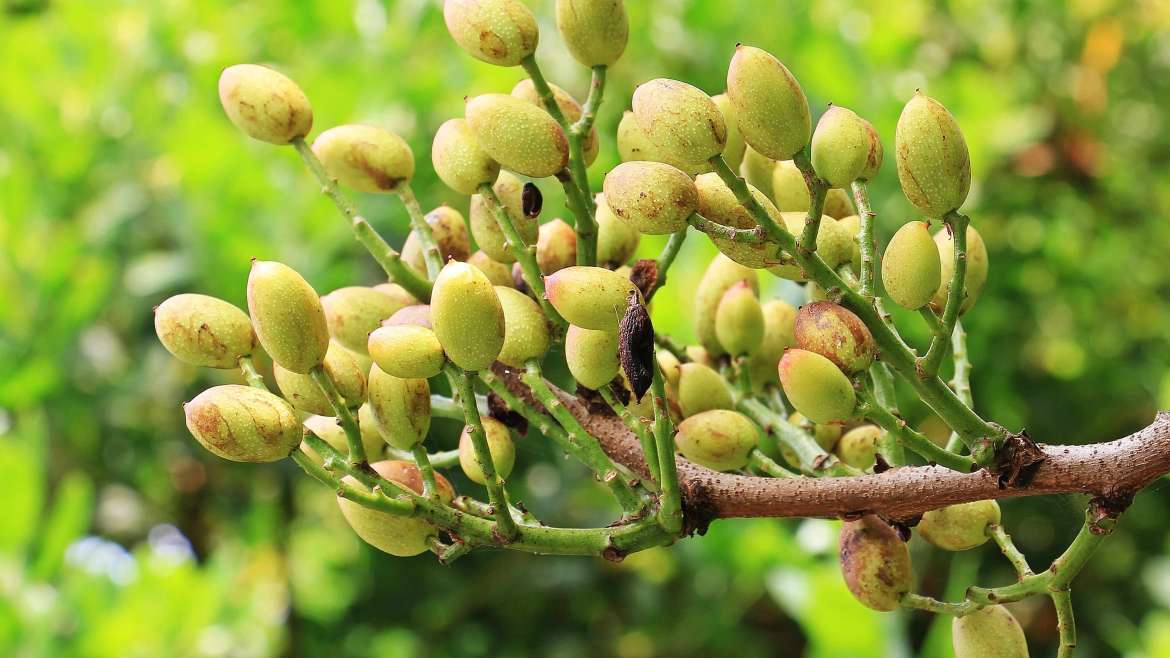
Pistachios. Sounds like a snack, right? Well, it is, but it’s also a small powerhouse of health benefits. If you’ve ever cracked open one of these little green gems, you know they’re like a crunchy bite of joy. But don’t let their size fool you—these tiny nuts pack a punch when it comes to nutrition. High in protein, fiber, and healthy fats, they’re the perfect snack if you’re looking to keep your energy up without wrecking your diet.
But the best part? They’re loaded with antioxidants, which help protect your body from oxidative stress. Plus, they’re heart-healthy, improving blood flow and lowering cholesterol—how many snacks can you say that about?
As for growing them, pistachios are no divas. They like dry, sunny spots and can thrive in the heat once they’re established. But like most things that are good for you, they take time. They grow slowly—about 5-7 years before they start producing, so be patient. They also prefer a friend or two nearby, so plant them in pairs for maximum yield.
And let’s not forget their versatility. You can snack on them straight from the shell, sprinkle them on salads, or toss them into desserts. Pistachios are the low-key superfood you didn’t know you needed.
How to Grow Pistachios

Growing pistachios can be a rewarding experience, but it requires patience and proper care due to the specific conditions pistachio trees need. Here’s a guide to help you through the process:
Planting Pistachios
Climate Requirements:
- Pistachio trees thrive in hot, dry climates with long, hot summers and cool winters. They are well-suited for USDA zones 7-10.
- They require full sun and well-drained soil with a pH of 7.0-7.8.
Selecting a Site:
- Choose a site with good air circulation and at least 8 hours of direct sunlight daily.
- Ensure the soil is well-drained to avoid root rot. Sandy loam or loam soils are ideal.
Planting:
- Plant pistachio trees in the early spring.
- Pistachio trees are usually propagated through grafting. You’ll need to plant both male and female trees for pollination, typically at a ratio of 1 male to 8-10 female trees.
- Dig a hole slightly larger than the root ball, place the tree in the hole, and fill it with soil. Water thoroughly after planting.
Growing Pistachios
Watering:
- Water young trees regularly to establish their roots. Mature trees are drought-tolerant but still need occasional deep watering, especially during dry periods.
- Avoid overwatering, as pistachios are sensitive to waterlogged soil.
Fertilizing:
- Apply a balanced fertilizer in the early spring before the growing season begins.
- After the first few years, you can use a nitrogen-based fertilizer to promote healthy growth.
Pruning:
- Prune the trees during their dormant season (late winter) to shape them and remove any dead or diseased branches.
- Pruning helps improve air circulation and light penetration, which is essential for fruit production.
Pests and Diseases:
- Pistachios can be affected by pests like aphids, spider mites, and borers. Monitor the trees regularly and use organic or chemical controls as needed.
- Diseases such as Verticillium wilt and root rot can also affect pistachio trees. Proper care and preventive measures like well-drained soil can minimize these risks.
Harvesting Pistachios
Timeframe:
- Pistachio trees take about 7-10 years to begin producing nuts, with full production occurring around 15-20 years.
- Harvest typically occurs in late summer to early fall, when the nuts start splitting open.
Harvesting Method:
- When the hulls split, and the nuts begin to show, it’s time to harvest. You can shake the branches to release the nuts or pick them by hand.
- Lay a tarp under the tree to collect falling nuts, which makes gathering easier.
Post-Harvest:
- Remove the outer hulls (if not split open already) within 24 hours to prevent staining and spoilage.
- Dry the nuts in the sun for 3-4 days, turning them regularly to ensure even drying. The nuts are ready for storage when they rattle inside their shells.
Storage:
- Store dried pistachios in an airtight container in a cool, dry place. They can last several months, or even longer if refrigerated or frozen.
Pistachios Growing Zone
Pistachios are typically grown in regions that have hot, dry summers and cool, wet winters. The ideal growing zones for pistachios are USDA Hardiness Zones 7-11.
These zones are characterized by mild winters and long, hot summers, which are necessary for the pistachio trees to thrive and produce nuts.
Growing Pistachios FAQ
Yes, pistachios do grow on trees. Pistachio trees are small to medium-sized, typically growing to about 20-30 feet (6-9 meters) in height.
Growing pistachios in a container is possible but challenging due to their deep root system. Large containers and regular pruning are necessary. It’s generally more successful to plant them in the ground where they can develop properly.
Pistachio trees should be planted 20 to 25 feet (6 to 8 meters) apart to allow adequate room for growth. This spacing helps ensure proper air circulation and sunlight exposure.
Pistachio trees typically take 7 to 9 years to start producing nuts and may take up to 15 years to reach full production.
Yes, pistachios are dioecious, meaning there are separate male and female trees. You need at least one male tree to pollinate up to 8 female trees. Pollination occurs through wind, not bees.
Pistachios are usually harvested in late summer to early fall when the outer husk starts to split naturally, revealing the shell. Harvesting is typically done by shaking the trees to drop the nuts.
Pistachio trees thrive in regions with hot, dry summers and cool winters, making them well-suited for Mediterranean climates. They are commonly grown in countries like Iran, Turkey, Greece, and Italy, where these conditions are prevalent. In the US, pistachios are primarily grown in California.
Sign up to get our FREE weekly emails
Gardening guides, tips, & videos delivered right to your inbox!