
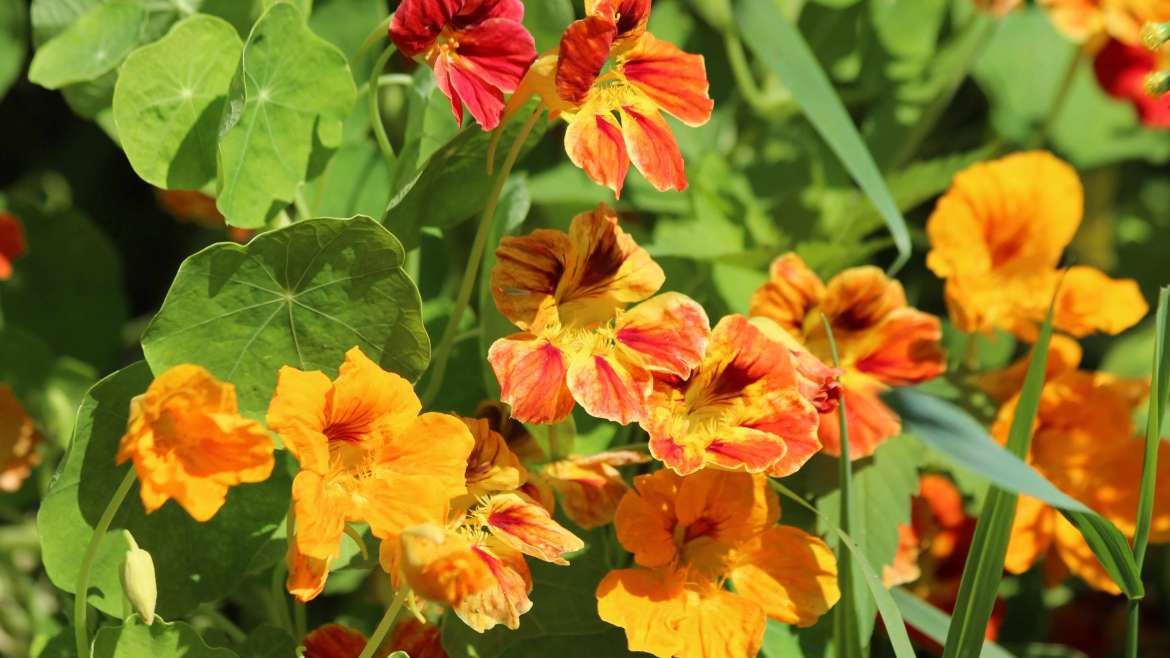
Nasturtiums. Not just a pretty face, these flowers pack a punch. Bright, bold, and as edible as they are eye-catching, nasturtiums are the perfect blend of beauty and utility in any garden. With peppery leaves and vibrant blooms in shades of red, orange, and yellow, they’re like nature’s little fireworks, lighting up your garden or balcony without needing much care.
They thrive in poor soil, which is great if you’re a gardener who tends to forget about fertilizing—nasturtiums will still be there, doing their thing. They love the sun and don’t mind the heat, making them perfect for those hot summer months when other plants are starting to wilt.
And here’s the bonus: every part of the nasturtium is edible. The leaves, the flowers, even the seeds can spice up your salads, and you can pickle the seeds for a fun twist on capers. So, if you’re looking for a plant that’s both ornamental and practical, nasturtiums are a no-brainer. Just don’t expect them to play by the rules—they’ll grow in almost anything, even in a neglected corner of the garden, and still look fabulous.
How to Grow Nasturtiums
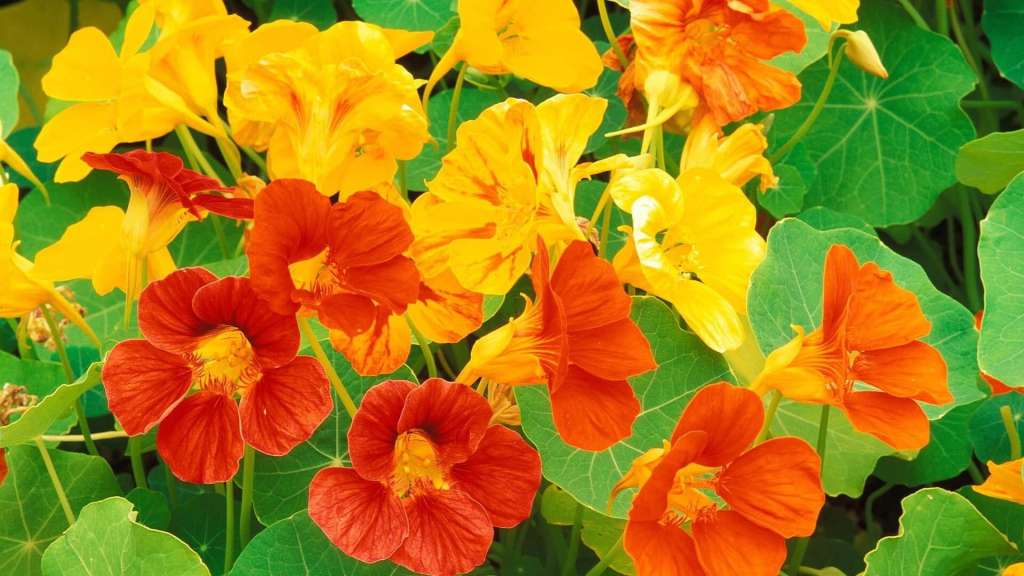
Growing nasturtiums is a fun and exciting gardening experience, especially for gardeners of all levels. These vibrant, easy-to-grow flowers are not only visually appealing with their bright colors but also serve multiple purposes.
They can be grown in garden beds, containers, or even hanging baskets. Nasturtiums thrive in poor soil conditions and require minimal care, making them ideal for beginners.
Planting Nasturtiums
- Choosing a Location:
- Sunlight: Nasturtiums thrive in full sun but can tolerate partial shade. In hot climates, they might benefit from some afternoon shade.
- Soil: They prefer well-drained, moderately fertile soil. Interestingly, nasturtiums do better in soil that is not too rich, as overly fertile soil can lead to more foliage and fewer flowers.
- When to Plant:
- Seeds: Sow nasturtium seeds directly in the garden after the last frost date when the soil has warmed up. They can also be started indoors 4-6 weeks before the last frost.
- Spacing: Plant seeds about 1/2 inch (1.25 cm) deep and space them 10-12 inches (25-30 cm) apart.
Growing Nasturtiums
- Watering:
- Keep the soil moderately moist, especially during dry spells, but be careful not to overwater as nasturtiums can be susceptible to root rot.
- Fertilizing:
- Nasturtiums generally do not need fertilizer. If you feel the plants are underperforming, a light application of a balanced, slow-release fertilizer can be used, but avoid high nitrogen fertilizers.
- Support:
- Bush Types: These will grow low to the ground and require no support.
- Climbing Types: These will need a trellis or other support to climb on.
- Pests and Problems:
- Nasturtiums are relatively pest-resistant, but aphids can sometimes be a problem. They can be managed with insecticidal soap or by attracting beneficial insects like ladybugs.
Caring for Nasturtiums
- Pruning:
- Deadheading (removing spent flowers) will encourage more blooms. Prune back any overgrown or leggy stems to maintain a tidy appearance.
- Harvesting:
- The flowers, leaves, and seeds of nasturtiums are edible and can be harvested anytime. The flowers are often used in salads, and the seeds can be pickled and used as a substitute for capers.
- Overwintering:
- In colder climates, nasturtiums are treated as annuals. However, in warmer regions, they may survive mild winters. You can also collect seeds to plant the following year.
Nasturtiums Growing Zone
Nasturtiums generally hardy in USDA growing zones 9 to 11, where they can thrive as perennials.
However, they are often grown as annuals in cooler climates, including zones 2 through 8, where they do well in the warmer months but will not survive freezing temperatures.
Growing Nasturtiums FAQ
Nasturtiums (Tropaeolum majus) are colorful, easy-to-grow flowering plants that are known for their bright blooms and edible leaves and flowers. They are often used in gardens for ground cover, in containers, or as climbing plants.
Nasturtiums should be planted in the spring after the last frost date in your area. They can be started indoors 4-6 weeks before the last frost or directly sown into the garden.
Water nasturtiums regularly, especially during dry periods. However, they are fairly drought-tolerant once established and do not require excessive watering. Overwatering can lead to root rot.
Yes, nasturtiums are well-suited to container gardening. Choose a container with good drainage, and use a light, well-draining potting mix. They can trail over the sides or climb if given support.
Yes, both the leaves and flowers of nasturtiums are edible. They have a peppery flavor similar to watercress and are often used in salads, garnishes, or as a decoration on dishes.
Nasturtiums typically bloom from late spring through the summer and into early fall, depending on the climate. Regular deadheading (removing spent flowers) can encourage more blooms.
After the flowers fade, nasturtiums produce large seeds that are easy to collect. Let the seeds dry on the plant, then harvest them before they drop. Store the seeds in a cool, dry place for planting the following year.
Sign up to get our FREE weekly emails
Gardening guides, tips, & videos delivered right to your inbox!


