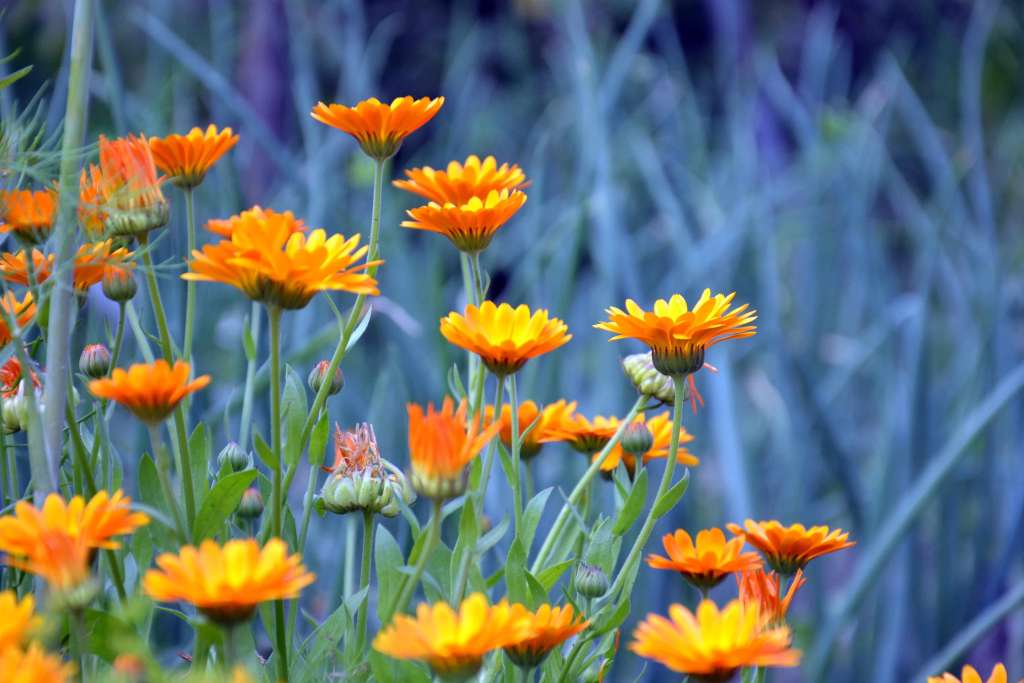
Calendula. Sounds like something you’d hear at a spa, but trust me, this flower is more than just a pretty face. If you’ve never seen one, imagine a sunflower’s cousin who’s a little less flashy but just as reliable. It’s also known as pot marigold by the way! Bright orange or golden petals, and a heart that’s all about healing. It’s not just a garden plant; it’s a skincare superhero in disguise.
Calendula blooms in late spring and keeps at it through the summer, always bringing a splash of color. And if you’ve got a patch of garden, this beauty doesn’t ask for much. Just a sunny spot, some well-drained soil, and a little water—and she’ll be off to the races.
But the real magic? The petals. They’re packed with antioxidants, so not only do they look stunning in your garden, but they’re also great for soothing cuts, burns, and skin irritations. Some people even toss them into teas or homemade lotions. It’s the kind of flower that feels like it’s doing more for you than just sitting pretty.
And here’s the kicker: Calendulas are tough cookies. They can handle some neglect and still keep on blooming, so don’t be afraid to let them do their thing. Give them a little space, a bit of attention, and they’ll reward you with vibrant blooms and a touch of nature’s healing touch.
How to Grow Calendula / Pot Marigold
Growing Calendula, which is also known as pot marigold, is an exciting gardening activity. It is a versatile, easy-to-grow herb.
The plant’s flower adds bright color to gardens and serves various medicinal and culinary purposes. Below is a guide on how to plant, grow, and harvest calendula.
Planting Calendula
- Choosing a Location:
- Calendula prefers full sun but can tolerate partial shade, especially in hot climates.
- Plant in well-drained soil that is rich in organic matter.
- When to Plant:
- Sow seeds directly in the garden in early spring, a few weeks before the last expected frost.
- You can also start seeds indoors 6-8 weeks before the last frost date.
- Planting Seeds:
- Sow seeds 1/4 inch deep and space them about 6-12 inches apart.
- Keep the soil moist until seeds germinate, which usually takes 5-15 days.
Growing Calendula
- Watering:
- Calendula prefers moderate watering. Keep the soil evenly moist but not waterlogged.
- Reduce watering once the plants are established, but avoid letting the soil dry out completely.
- Fertilizing:
- Calendula does not require heavy feeding. A light application of compost or a balanced organic fertilizer once or twice during the growing season is sufficient.
- Deadheading:
- Regularly remove spent flowers to encourage continuous blooming throughout the season.
- Pests and Diseases:
- Calendula is relatively pest-resistant, but watch for aphids, slugs, and powdery mildew. Treat with organic insecticidal soap or neem oil if necessary.
Harvesting Calendula
- When to Harvest:
- Harvest calendula flowers when they are fully open and vibrant, usually in the morning after the dew has dried.
- For medicinal or culinary use, pick flowers regularly to encourage more blooms.
- How to Harvest:
- Snip the flower heads off the plant, leaving a short stem attached.
- Use clean, sharp scissors or pruning shears to avoid damaging the plant.
- Drying Calendula:
- Spread the flowers out in a single layer on a drying rack or screen in a well-ventilated, dry area out of direct sunlight.
- Turn the flowers daily to ensure even drying, which should take about 1-2 weeks.
- Store dried calendula in an airtight container in a cool, dark place.
Uses for Calendula
- Culinary: Add fresh or dried petals to salads, soups, and herbal teas.
- Medicinal: Use calendula in salves, balms, and lotions for its anti-inflammatory and healing properties.
- Decorative: The bright, cheerful blooms make lovely cut flowers for indoor arrangements.
Calendula Growing Zone
Calendula, also known as pot marigold, is a hardy annual that can be grown in a wide range of climates. It thrives in USDA hardiness zones 2 to 11.
This means it can be grown almost anywhere in the United States, from colder northern regions to warmer southern areas.
However, the ideal growing conditions for calendula are cooler temperatures, typically between 60°F and 70°F (15°C to 21°C).
In hotter climates, it may not perform as well during the peak of summer but can be grown successfully during cooler months or as a winter annual.
Growing Calendula FAQ
Calendula, also known as pot marigold, is a flowering herb known for its bright yellow and orange flowers. It’s popular in gardens and is also used for its medicinal properties.
Sow seeds directly into the garden, about 1/4 inch deep. Space the seeds about 8-12 inches apart.
Yes, Calendula can be started indoors 6-8 weeks before the last frost. Transplant them outside once the weather warms up.
Calendula is an annual plant, meaning it usually completes its life cycle in one growing season. In mild climates, it may self-seed and come back the following year.
Sign up to get our FREE weekly emails
Gardening guides, tips, & videos delivered right to your inbox!