Growing artichokes in pots offers a range of benefits, especially for gardeners with limited space or those looking for flexibility in plant care. Potted artichokes allow you to manage soil quality, drainage, and sunlight exposure more effectively than planting them in the ground.
One can customize the soil mix to ensure ideal conditions, such as a well-draining, nutrient-rich environment that artichokes thrive in. This also helps minimize issues like soil-borne diseases and pests. Containers can be moved easily, enabling you to find the best sun exposure throughout the growing season or protect the plants from harsh weather conditions, extending their growing period.
In addition to all of that, growing artichokes in pots is an excellent way to add a unique, decorative element to patios, balconies, or small gardens, as artichoke plants have striking, silvery foliage. Since artichokes are perennial in mild climates, having them in containers allows you to overwinter the plants more easily by moving them to sheltered areas. This mobility is particularly advantageous for regions with unpredictable weather.
Container gardening also promotes better control over invasive growth, making artichokes easier to maintain and harvest. Overall, potted artichokes combine practicality and visual appeal, making them a rewarding choice for both experienced and novice gardeners.
Growing Artichokes in Containers

Artichokes (Cynara scolymus) are not only delicious and nutritious, but their ornamental foliage can also add a touch of beauty to patios, balconies, or small gardens. While traditionally grown in the ground, artichokes can thrive in pots with the right care and conditions. This guide will walk you through each step to grow healthy artichokes in containers, covering everything from choosing the right container to harvesting your artichokes.
What You’ll Need
- Artichoke Seeds or Seedlings: Popular varieties include ‘Green Globe,’ ‘Imperial Star,’ and ‘Purple of Romagna.’
- Large Pot: At least 20 inches in diameter and 20 inches deep.
- Potting Mix: Well-draining, nutrient-rich mix with peat moss, compost, and perlite.
- Fertilizer: Balanced, slow-release fertilizer (e.g., 10-10-10).
- Watering Can or Hose
- Mulch: Straw or bark chips.
- Garden Stakes or Supports (optional)
Choosing the Right Pot
Artichokes need deep roots, so use a container that is at least 20 inches in diameter and depth. Ensure the pot has good drainage holes. Terracotta or plastic pots are ideal, as long as they are sturdy.
Preparing the Potting Mix
Use a high-quality, well-draining potting mix. Add compost or aged manure for nutrients. For improved drainage, mix in perlite or sand.
Planting Artichokes
From Seeds
- Start seeds indoors 8-10 weeks before the last frost date.
- Plant seeds 1/4 inch deep in seed-starting mix.
- Keep the soil moist and warm (around 70°F or 21°C).
- Seedlings typically sprout in 10-20 days.
From Seedlings
- Harden off seedlings before transplanting them outdoors.
- Plant one seedling per pot to allow room for growth.
- Ensure the crown is just above the soil surface and gently firm the soil around the roots.
Optimal Growing Conditions
Sunlight
Artichokes need 6-8 hours of full sun daily. Choose a sunny, sheltered spot on your patio or balcony.
Temperature
Artichokes grow best in temperatures between 60°F and 75°F (15°C to 24°C). Protect the plant from extreme heat and frost.
Watering
Keep the soil consistently moist but not waterlogged. Water deeply when the top inch of soil feels dry.
Fertilizing Artichokes
- Initial Feeding: Mix a balanced fertilizer (10-10-10) into the soil at planting.
- Ongoing Feeding: Apply a balanced liquid fertilizer every 4 weeks.
- Mid-Season Boost: Side-dress with compost halfway through the growing season.
Mulching
Add a layer of mulch around the base to retain moisture and suppress weeds. Organic mulches like straw or bark chips work well.
Supporting the Plant
Artichokes can become top-heavy. Use stakes or supports if necessary to keep the plant upright.
Pests and Diseases
Common Pests
- Aphids: Spray off with water or apply insecticidal soap.
- Slugs and Snails: Remove manually or use slug traps.
- Earwigs: Trap them with oil-based traps.
Common Diseases
- Powdery Mildew: Improve air circulation and avoid overhead watering.
- Botrytis Blight: Remove affected leaves and ensure good drainage.
Pruning and Maintenance
Remove damaged or yellowing leaves to encourage healthy growth. Deadhead spent flower buds to direct energy back into the plant.
Harvesting Artichokes
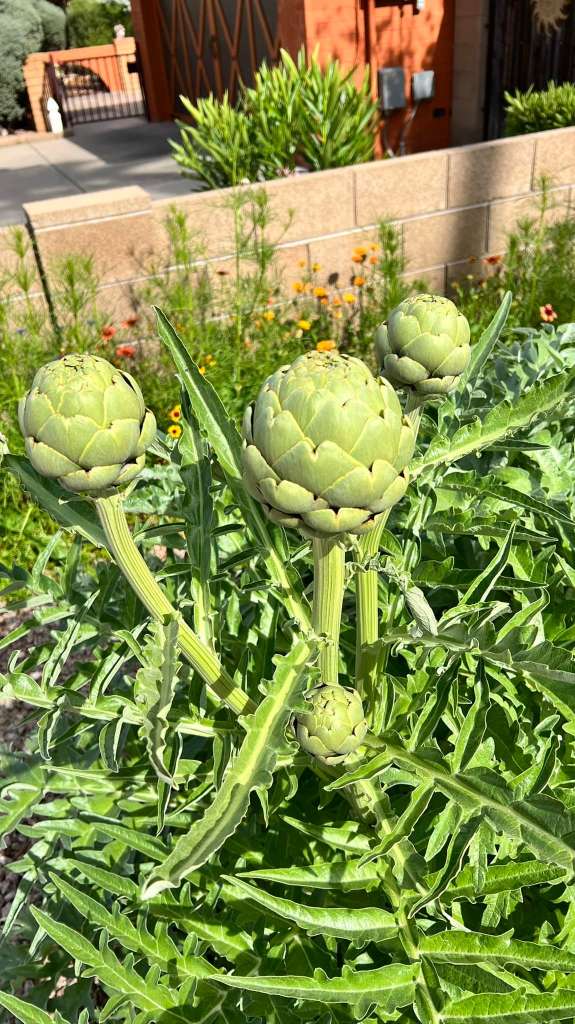
Artichokes are ready to harvest when the buds are firm and tightly closed, usually 4-6 months after planting. Cut the bud with 2-3 inches of stem. Harvest regularly to encourage more buds to form.
Overwintering
In colder climates, protect artichokes during winter by moving the pot to a cool, frost-free area like a garage. Water sparingly during this period. Return the plant outdoors in spring.
Tips for Success
- Repot Every 2 Years: Refresh the soil and provide more space for root growth.
- Companion Planting: Grow artichokes with peas, lettuce, or thyme to help deter pests.
- Rotate Pots: Turn the pot every few weeks to promote even growth.
FAQs
Yes, artichokes can be successfully grown in containers if the pots are large enough and provide proper care.
Water regularly to keep the soil consistently moist but not waterlogged. Artichokes need about 1 inch of water per week, more during hot weather.
In zones where temperatures drop below freezing, bring the containers indoors or insulate them with mulch or blankets. Artichokes are perennial in USDA Zones 7-11.
While challenging due to their size and sunlight requirements, artichokes can be grown indoors if provided with grow lights and ample space.
They can grow between 3-5 feet tall, so ensure the container location accommodates their height.
Sign up to get our FREE weekly emails
Gardening guides, tips, & videos delivered right to your inbox!