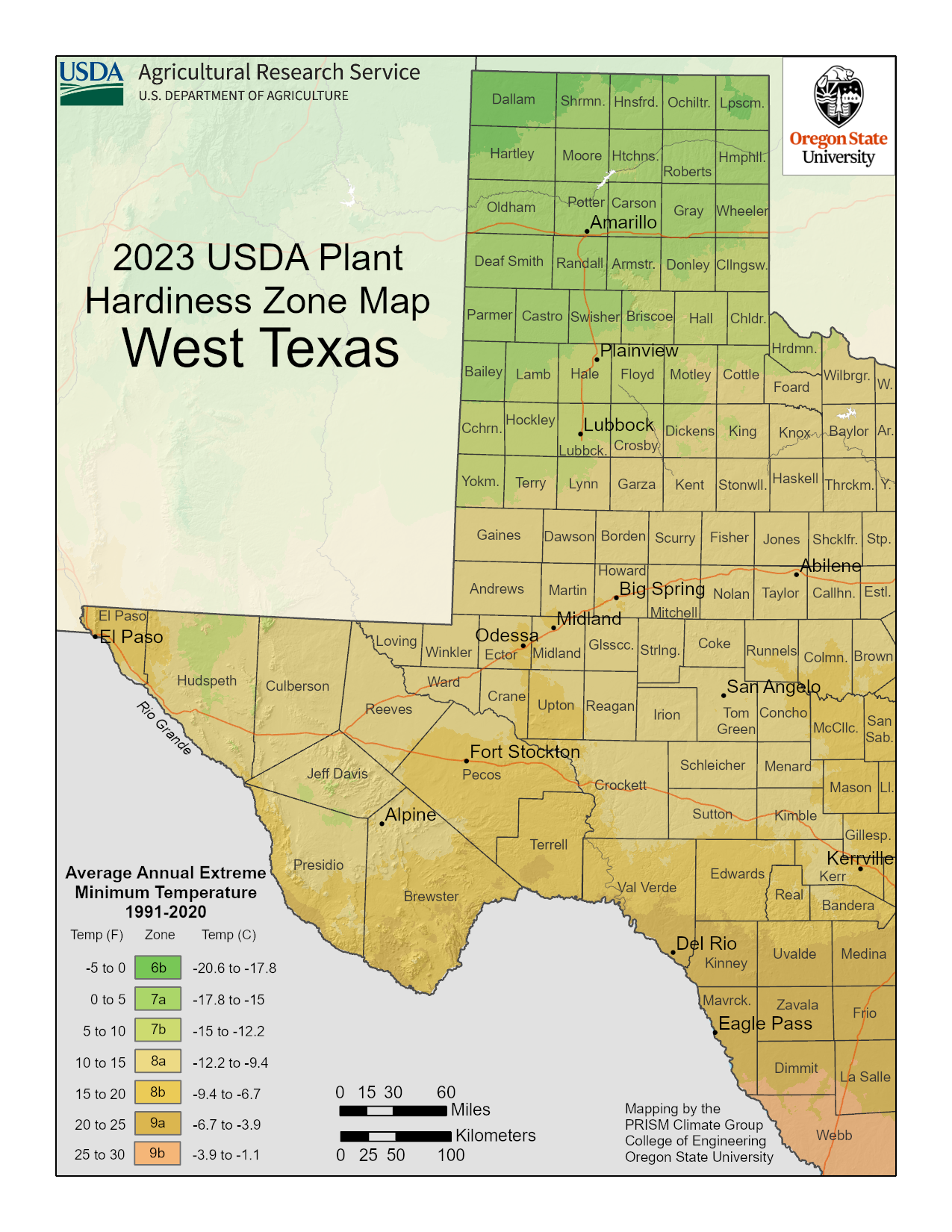
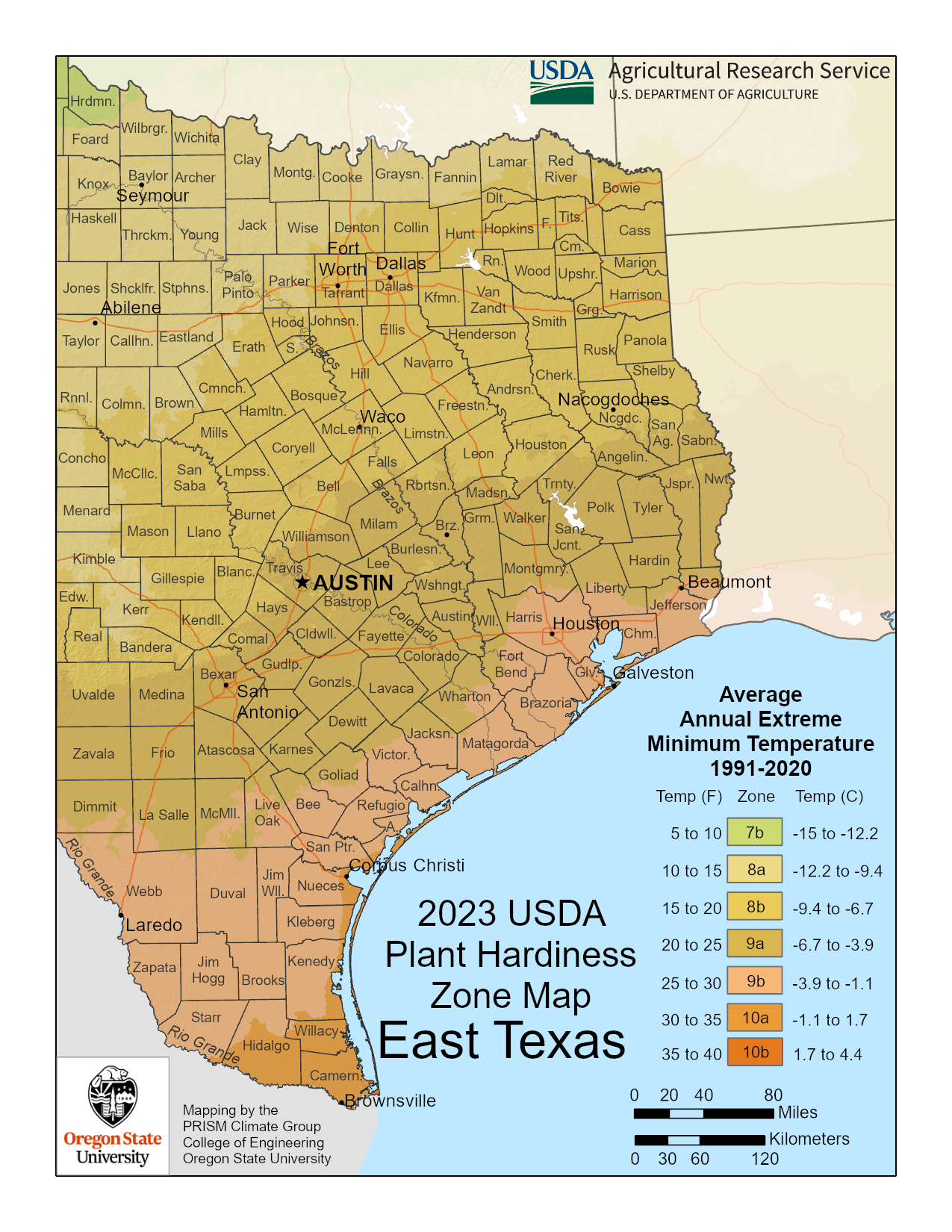
The USDA map below can help find the appropriate hardiness zone for your area. Understanding the exact zone for where you live in Texas can help you have a thriving garden.
Texas Planting Zones


Click here to see a larger version of the West Texas map. For a larger version of the East Texas map, click here.
The Texas USDA planting map designates 6b as the warmest zone, which is located in the northern region of the state.
The climate in the rest of Texas is consistently mild, even during the winter months. The remaining Texas zones are 7a, 7b, 8a, 8b, 9a, 10a, and 10b. Depending on the region of the state, winter lows may range from -5 degrees F. to as high as 20 degrees F.
The zone information presented in the Texas planting zones map, as demonstrated above, is relied upon by gardeners. Your gardening zone will help you choose appropriate plants that will thrive in your area.
The new USDA plant hardiness map, which was released at the end of 2023, represents a significant improvement over the 2012 map, which was not nearly as sophisticated.
Additionally, the new zone divisions evaluate factors such as urban heat, proximity to a large body of water, and elevation. However, the Texas zone map does offer a solid basis for garden design, despite the fact that it does not guarantee the survival of plants.
When evaluating the success or failure of a specific shrub, flower, or tree, other factors, such as soil condition, humidity, and sowing location, may be relevant.
Upon getting a plant that is appropriate for your growing zone, it is crucial to adhere to the planting care instructions meticulously.
Top Questions
Texas growing zones span 6b to 10a.
Texas’ eastern region is subtropical, while its western region is arid desert.
You can use the USDA map to find which Texas gardening zone you live in. You can use the map by simply looking at it and finding your location, or you can use the USDA’s zip code tool.
Sign up to get our FREE weekly emails
Gardening guides, tips, & videos delivered right to your inbox!