Since 1960, the USDA has been producing a plant hardiness map that has become a significant factor in determining the success of plants in specific regions of the country, despite the fact that there are numerous factors that contribute to this determination.
Oklahoma Planting Zones
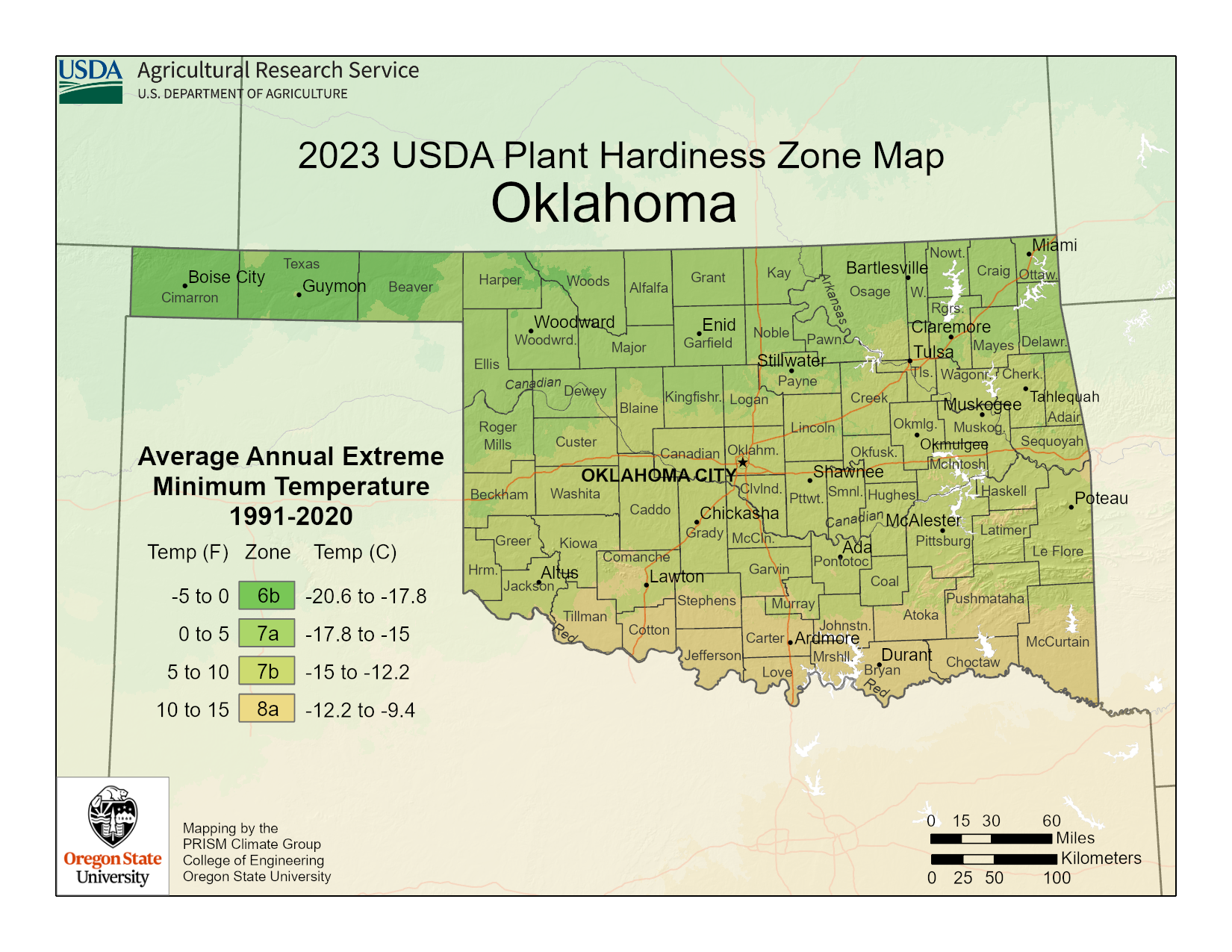
Click here for full resolution USDA Oklahoma growing zones map
The country is divided into hardiness zones by the planting map, which is based on the average extreme winter low temperature information that has been accumulated over a period.
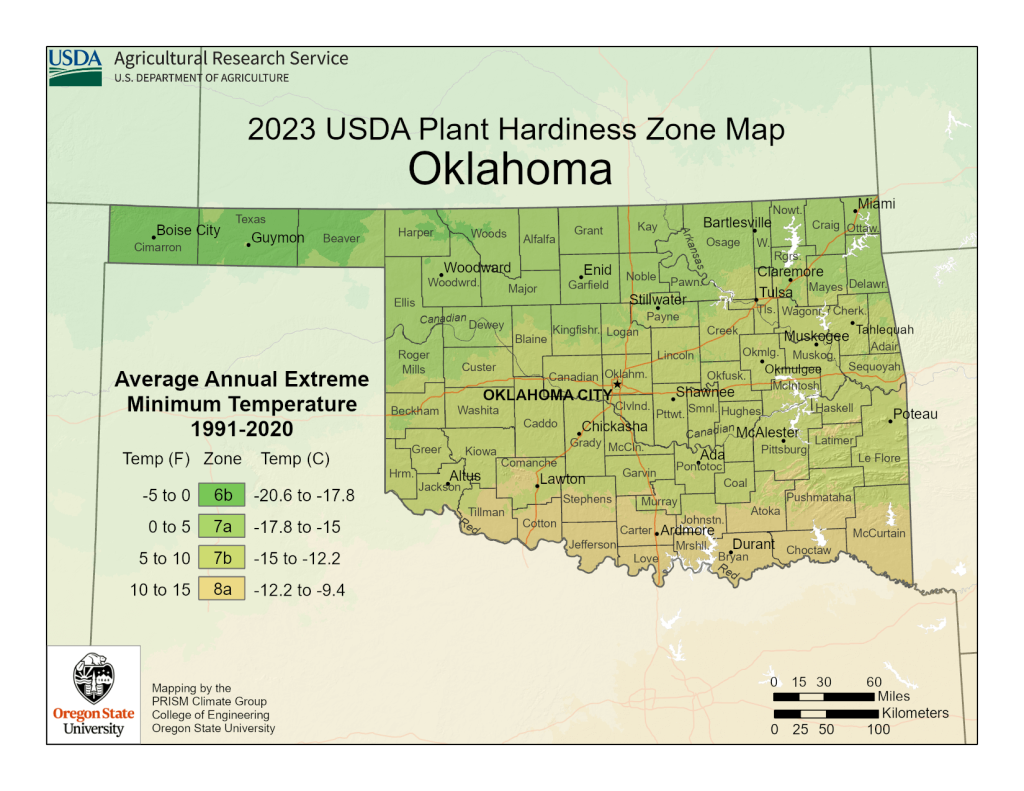
The Oklahoma planting zones map is shown above, and by clicking on it, you can enlarge it to identify your growing zone. The state is divided into zones based on 10-degree increments.
In the southeastern region of the state, Oklahoma encompasses zones 6b, 7a, 7b, and a minor portion of 8a. It is beneficial for both novice and experienced cultivators to be aware of their zone.
The most updated 2023 USDA map provides gardeners with an excellent resource, despite the fact that the plant hardiness information it contains is not entirely accurate.
It is crucial to remember that the success rate of specific plants in a specific region is also influenced by other factors. Humidity, winter sun, wind, and microclimates that generate milder regions are among the factors that contribute to this phenomenon.
Nevertheless, it is recommended to check and understand to the planting zones for Oklahoma and choose plants that are designated as “safe” for your specific climate.
Top Questions
Oklahoma is in USDA plant hardiness zones 6, 7, and 8.
Oklahoma has a humid subtropical climate in the east and a semi-arid one in the west.
Sign up to get our FREE weekly emails
Gardening guides, tips, & videos delivered right to your inbox!