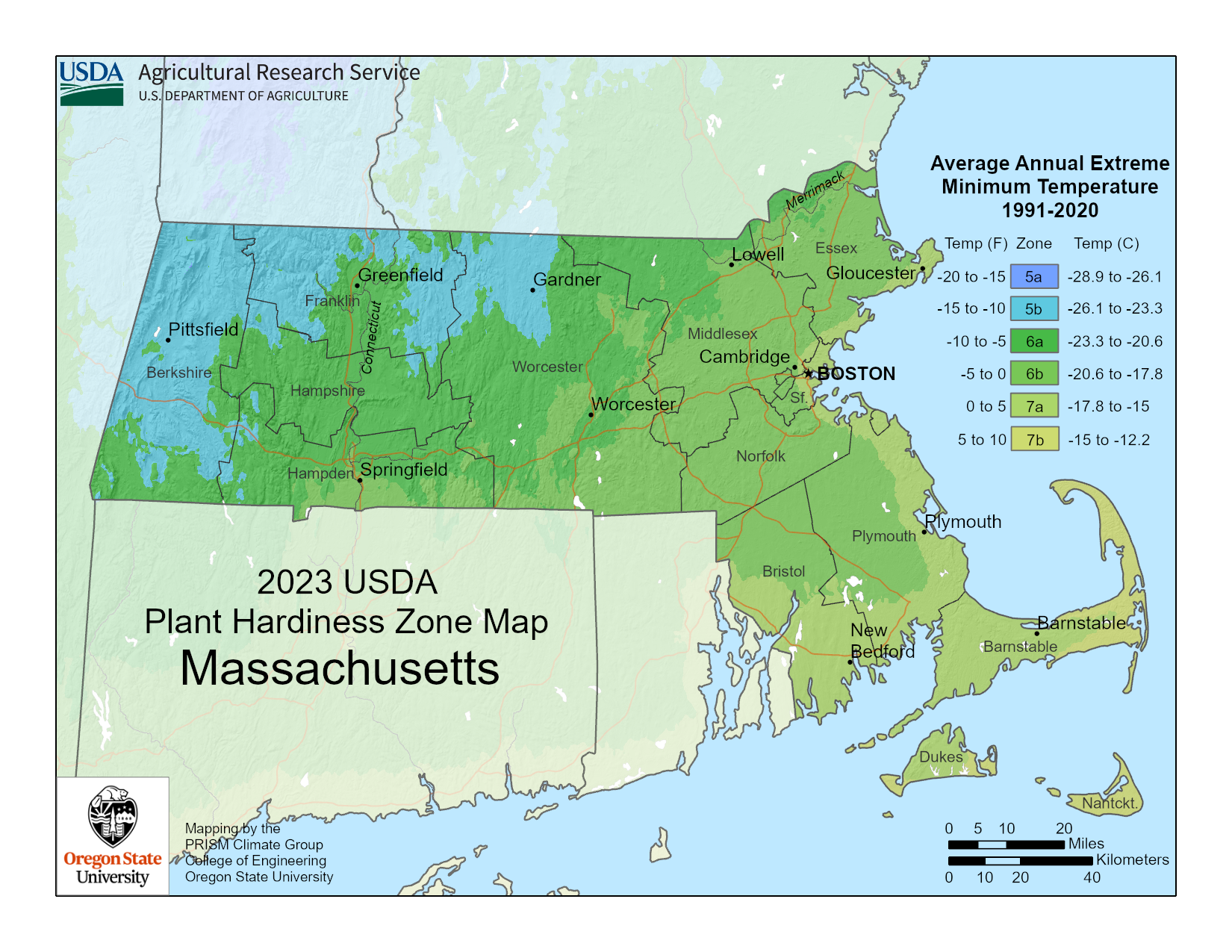
The USDA released a plant hardiness map for 2023 that reflects average winter low temperatures over the last few decades.
Massachusetts Planting Zones
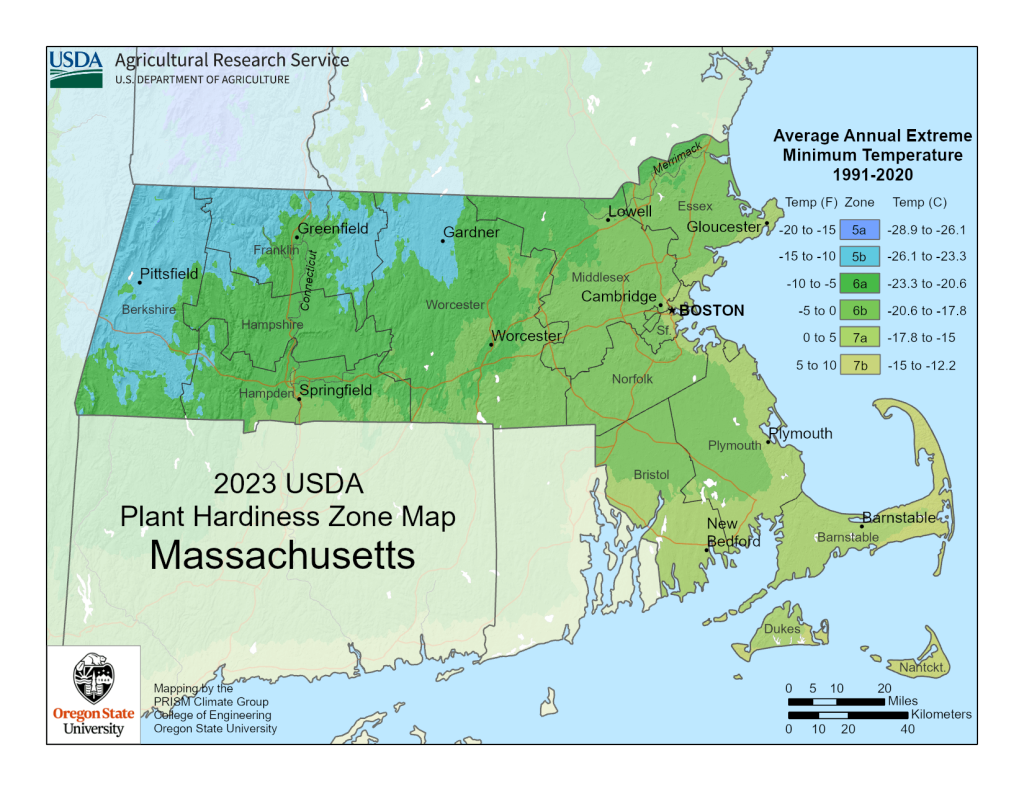
Click here for full resolution USDA Massachusetts growing zones map
In order to account for the general winter warming trend throughout the nation, the map has undergone a few changes from previous versions.
To determine your Massachusetts growing zone, try to find your location on the map, you can use this information to find the best plants suited for your Massachusetts gardening zone.
It is important to note that the USDA plant hardiness map is useful as a foundational tool when selecting plants. The vitality of plants in a specific region is influenced by a variety of other factors. These factors encompass wind, soil, humidity, winter sunlight, pollution, and the manner in which plants are planted and maintained.
The USDA plant hardiness map is used by most nurseries and is noted on the plant label. Most local nurseries will sell only plants that will survive in the area in which they are located.
Top Questions
Massachusetts is located in USDA Hardiness Zones 5, 6, and 7.
Massachusetts has a humid continental climate, with hot, humid summers, cold, snowy winters and abundant precipitation.
According to the most recent USDA Hardiness Zone Map which was released in 2023, Boston, MA is in Zones, 6b and 7a.
Weather and temperature conditions are known to vary between the eastern and western regions of Massachusetts. In the summer, temperatures can range from the low 70s F to the high 90s F. The temperature during the fall season fluctuates between 50F and 70F. Winter temperatures usually hover around freezing and sometimes lower.
You can use the USDA map to find which Massachusetts planting zone you are in. You can use the map by looking at it and finding where you live, or you can use the USDA’s zip code tool.
Sign up to get our FREE weekly emails
Gardening guides, tips, & videos delivered right to your inbox!