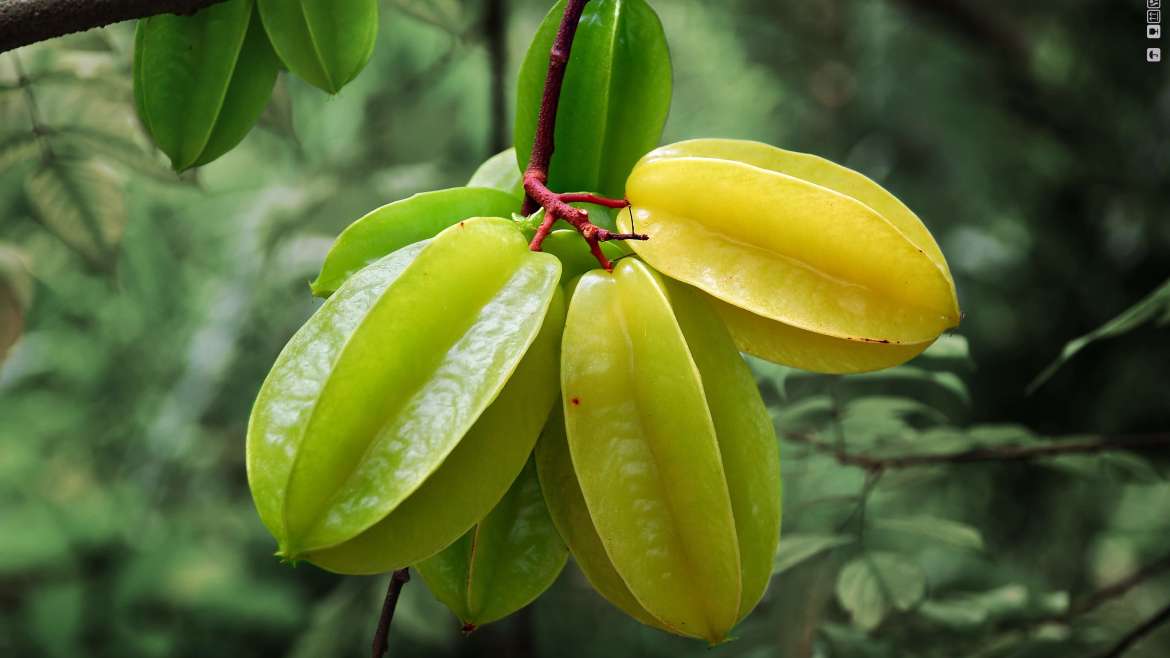
Starfruit, also known as carambola. Not your everyday fruit, but damn, it’s a showstopper. Imagine if a lemon and an apple had a baby that took a vacation in the tropics. It’s got that crisp, juicy bite with a refreshing, almost floral sweetness that hits just right. The best part? The shape—it’s like eating a little star, perfect for adding some sparkle to your fruit salad or just impressing your friends with your exotic fruit game.
Starfruit trees are surprisingly easygoing. They’ll start flowering in spring and, if you’re lucky, you’ll be munching on their fruit by late summer. And get this—they tend to fruit pretty young, so you won’t have to wait forever to taste that sweet, tangy goodness.
But here’s the catch: these trees are picky about their space. They’re not fans of containers, so give them room to stretch out and grow. They love full sun, but for the first few years, they’ll need a little extra care—regular watering and maybe a bit of shade until they’re really settled in.
The tree itself? A beauty. With smooth, waxy leaves that practically scream “tropical paradise,” it’s like having a slice of the tropics in your backyard. Plus, rumor has it that the fruit’s not just tasty, but good for you too. So, why not give it a shot? Your taste buds (and your garden) will thank you.
Native to Southeast Asia, starfruit is now grown in various tropical regions worldwide. Nutritionally, it is a rich source of vitamin C, antioxidants, and fiber, making it a refreshing and healthy addition to the diet.
How to Grow Starfruit Trees

Growing starfruit trees, also known as carambola, requires understanding their specific needs for optimal growth and fruit production. Below is a step-by-step guide to help you grow starfruit trees successfully.
Planting Starfruit
- Choosing the Right Location:
- Climate: Starfruit thrives in tropical and subtropical climates. It needs a warm, frost-free environment.
- Sunlight: Full sun exposure is ideal for the best growth and fruit production.
- Soil: Well-draining, slightly acidic to neutral soil (pH 5.5-6.5) is preferred. Ensure the soil is rich in organic matter.
- Planting Steps:
- Propagation: Starfruit can be grown from seeds, cuttings, or grafted plants. Grafted plants are recommended for better fruit quality.
- Planting Time: Best planted in the spring after the last frost.
- Spacing: Plant trees 20-30 feet apart to allow for proper growth and air circulation.
- Planting Depth: Dig a hole twice as wide and as deep as the root ball. Place the tree in the hole and fill it with soil, making sure the root crown is at ground level.
Growing Starfruit
- Watering:
- Keep the soil consistently moist but not waterlogged. Starfruit trees need regular watering, especially during dry periods.
- Mulching around the base can help retain moisture and regulate soil temperature.
- Fertilizing:
- Use a balanced fertilizer (e.g., 10-10-10 NPK) every 2-3 months during the growing season.
- Incorporate compost or well-rotted manure to enhance soil fertility.
- Pruning:
- Prune young trees to develop a strong structure and remove any crossing or weak branches.
- Maintain a manageable size by pruning mature trees after the harvest season.
- Pest and Disease Management:
- Watch for pests like fruit flies, aphids, and scale insects. Use appropriate insecticides or organic methods like neem oil.
- Prevent diseases by ensuring good air circulation and avoiding overhead watering.
Harvesting Starfruit
- Maturity Indicators:
- Starfruit is typically ready to harvest 60-75 days after flowering.
- The fruit will change color from green to yellow-orange and will develop a waxy sheen.
- Harvesting Technique:
- Gently twist or cut the fruit from the tree when it is fully colored.
- Handle with care to avoid bruising, as starfruit is delicate.
- Post-Harvest Handling:
- Store starfruit in a cool, dry place or refrigerate to extend shelf life.
- Use or process the fruit within a few days for the best flavor and quality.
Starfruit Growing Zone
Starfruit, also known as carambola, thrives best in tropical and subtropical regions. It typically grows in USDA hardiness zones 8 and higher.
These zones provide the ideal temperature range for starfruit, which requires warm temperatures and is sensitive to frost.
Growing Starfruit FAQ
Starfruit, also known as Carambola, is a tropical fruit native to Southeast Asia. It is recognized for its distinctive star shape when cut crosswise and its sweet-tart flavor.
Starfruit trees prefer well-draining, slightly acidic to neutral soil with a pH range of 5.5 to 7.0. Sandy loam or loamy soils are ideal, but they can tolerate a variety of soil types as long as drainage is adequate.
Prune Starfruit trees to maintain their shape, remove dead or diseased branches, and improve air circulation. Pruning should be done after the fruiting season, typically in late winter or early spring.
Starfruit trees usually begin to bear fruit 2-3 years after planting if grown from a grafted tree. Seed-grown trees may take longer, around 5-7 years.
Starfruit is ripe when it turns yellow or yellow-orange and the edges start to brown slightly. The fruit should be firm and have a sweet aroma.
Yes, Starfruit can be grown in large containers. Choose a dwarf variety and ensure the container is at least 18-24 inches in diameter with good drainage.
Starfruit can be propagated through seeds, cuttings, or grafting. Grafting is the most reliable method to produce trees with desirable fruit characteristics. Seeds should be planted fresh, and cuttings should be taken from healthy, mature trees.
Sign up to get our FREE weekly emails
Gardening guides, tips, & videos delivered right to your inbox!