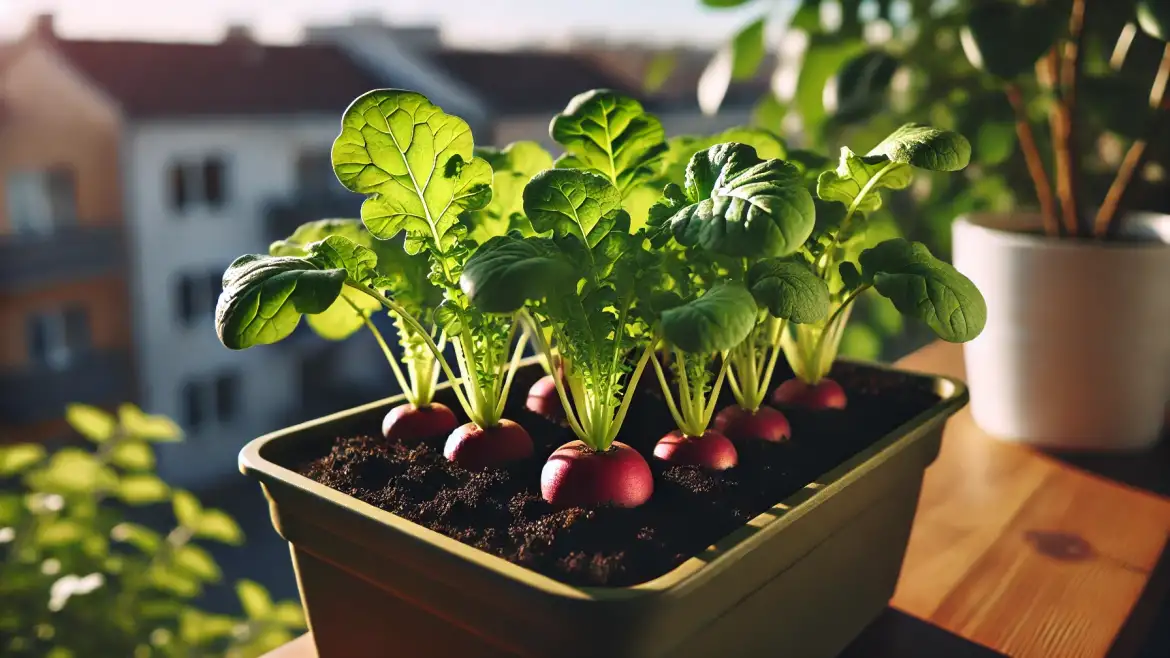
Growing radish greens in containers is an easy and rewarding way to enjoy fresh, nutrient-rich greens even if you have limited garden space.
Radishes are one of the easiest and fastest-growing vegetables, and while most gardeners focus on the crunchy roots, the leafy tops—known as radish greens—are an often-overlooked treasure. These nutrient-rich greens are packed with vitamins and minerals, making them a versatile and healthy addition to salads, soups, stir-fries, and smoothies.
If you’re limited on space, don’t worry! Radish greens can be grown successfully in containers year-round. Whether you’re gardening on a balcony, patio, or even indoors, this guide will walk you through everything you need to know to cultivate fresh radish greens in containers.
Why Grow Radish Greens in Containers?

Growing radish greens in containers offers several advantages:
- Space Efficiency: Containers allow you to grow radishes even in small spaces like balconies, patios, or windowsills.
- Year-Round Growing: With the right setup, you can enjoy fresh radish greens throughout all seasons, indoors or outdoors.
- Portability: Containers can be moved to follow the sunlight or brought indoors during harsh weather.
- Pest Control: Growing in containers can help minimize the risk of pests and diseases common in open gardens.
- Quick Harvest: Radish greens can be harvested as soon as 10-14 days after planting, providing a continuous supply of fresh greens.
Materials You Need
Before getting started, gather these supplies:
- Containers or Pots: Any pot or container with a depth of at least 6 inches (15 cm) and drainage holes will work. Rectangular planters or wide pots are ideal for growing multiple plants.
- Potting Soil: A high-quality, well-draining potting mix enriched with organic matter.
- Radish Seeds: Any variety of radish seeds will work, though some varieties are better for greens, such as ‘Daikon’ or ‘French Breakfast.’
- Fertilizer: A balanced organic fertilizer for vegetables.
- Watering Can or Spray Bottle: For gentle watering.
- Grow Lights (Optional): For indoor growing during low-light conditions.
Step-by-Step Guide to Growing Radish Greens
1. Choose the Right Container
Select a container that is at least 6 inches deep and wide enough to plant several seeds. Ensure the container has adequate drainage holes to prevent waterlogging. For continuous harvesting, consider using multiple containers to stagger your planting schedule.
2. Prepare the Potting Soil
Fill your container with high-quality potting soil. Radishes prefer loose, well-draining soil rich in organic matter. To enhance nutrient content, you can mix in compost or an organic vegetable fertilizer according to package instructions.
Pro Tip: Avoid using garden soil, as it may compact in containers and hinder root and green growth.
3. Plant the Seeds
- Spacing: Sow radish seeds about 1/2 inch deep and 1 inch apart. If growing only for greens, you can plant more densely.
- Cover and Water: Gently cover the seeds with a thin layer of soil and water thoroughly.
- Lighting: Place the container in a location that receives at least 6 hours of sunlight per day. For indoor growing, position it near a sunny window or under grow lights.
4. Watering
Radishes prefer consistently moist soil but do not tolerate waterlogged conditions. Keep the soil damp by watering regularly, ensuring it doesn’t dry out between waterings.
Tip: Use a spray bottle or watering can with a gentle spout to avoid disturbing the seeds and young seedlings.
5. Lighting Requirements
- Outdoor Growing: Ensure the container is in a sunny location, receiving at least 6 hours of direct sunlight per day.
- Indoor Growing: If sunlight is limited, use grow lights to provide 12-14 hours of light daily. Position the lights 6-8 inches above the plants and adjust as they grow.
6. Fertilizing
Radish greens grow quickly and typically don’t need heavy feeding. If you notice slow growth or pale leaves, apply a diluted liquid organic fertilizer every 2-3 weeks.
Caution: Avoid over-fertilizing, as this can lead to overly lush greens but poor root development.
7. Thinning the Seedlings
Once the seedlings are about 2 inches tall, thin them out if necessary. This ensures adequate airflow and prevents overcrowding. Use the thinned seedlings in salads or as microgreens.
Harvesting Radish Greens
Radish greens are ready to harvest in as little as 10-14 days after sowing. Here’s how to harvest them:
- Young Greens: For tender greens, harvest when the leaves are 3-4 inches tall.
- Continuous Harvesting: Use a pair of scissors to snip off the outer leaves, leaving the central growth intact. This allows the plant to continue producing new leaves.
- Full Harvest: If you want to harvest the entire plant, pull up the radish by the base.
Note: Radish greens are best used fresh but can be stored in the refrigerator for up to 3 days.
Common Issues and Solutions
1. Yellowing Leaves
- Cause: Overwatering or nutrient deficiency.
- Solution: Allow the soil to dry slightly between waterings and fertilize if necessary.
2. Pests (Aphids, Flea Beetles)
- Solution: Use insecticidal soap or neem oil. Growing indoors can also minimize pest issues.
3. Bitter or Tough Greens
- Cause: Harvesting too late or exposure to heat.
- Solution: Harvest greens when young and tender; consider growing indoors in a controlled climate.
Benefits of Growing Radish Greens Year-Round
- Nutrient Density: Radish greens are rich in vitamins A, C, and K, as well as calcium and iron.
- Fast Growing: Ideal for quick harvests and continuous planting.
- Sustainability: Growing greens in containers reduces food waste and encourages eco-friendly practices.
- Versatility: Radish greens can be used in various dishes, including salads, sautés, smoothies, and pestos.
FAQs
Yes! Radish greens are very adaptable and grow well in containers. They’re quick to sprout and can thrive in pots, window boxes, or planters.
Use a loose, well-draining potting mix enriched with organic matter. Radish greens prefer a soil pH between 6.0 and 7.0.
Keep the soil consistently moist but not soggy. Water when the top inch of the soil feels dry. Overwatering can lead to rot, while underwatering may cause tough or bitter greens.
Final Thoughts
Growing radish greens in containers is an excellent way to enjoy fresh, healthy produce year-round, even if you have limited space. With minimal effort and a bit of care, you can have a continuous supply of these nutrient-packed greens right at your fingertips.
Start small, experiment with different radish varieties, and soon you’ll have a thriving container garden providing you with fresh greens all year long. Happy gardening!
Sign up to get our FREE weekly emails
Gardening guides, tips, & videos delivered right to your inbox!