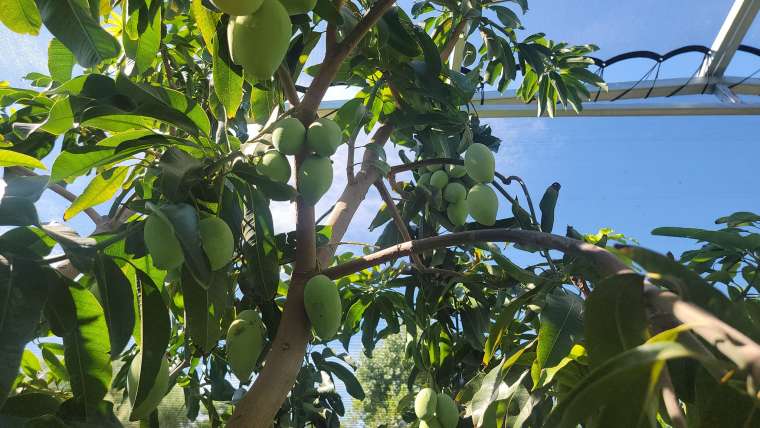
Papayas. They may not have the same ring as other fruits, but don’t let that fool you. This tropical gem is like the love child of a melon and a mango, with a personality all its own. Sweet, soft, and just a little bit musky, papayas are the kind of fruit you can’t stop eating once you start.
They ripen in the warmer months, usually around summer, making them the perfect treat for a sunny day. And here’s a secret: if you plant one, you might get lucky and see some fruit in just a couple of years. But here’s the catch—don’t try to grow them in a pot unless you’re okay with a struggle. Papayas like to spread out and get comfortable in the ground.
They need some pampering to start, especially those first few summers—plenty of sun, water, and, of course, patience. After that, they’ll reward you with fruit that feels like a tropical vacation in every bite.
The tree itself? Not bad to look at, with its large, fan-like leaves that scream “I’m here to turn your yard into a paradise.” Plus, did you know that papaya leaves have medicinal uses? People have been brewing them into teas for centuries. Go ahead, enjoy the fruit and get a bonus herbal remedy at the same time.
Well, in simple terms, papayas are tropical fruits known for their vibrant orange flesh and sweet, musky flavor. They are rich in vitamins, particularly vitamin C and vitamin A, as well as folate, fiber, and antioxidants.

Papayas can be eaten fresh, added to salads, blended into smoothies, or used in cooking and baking. The seeds of the papaya are also edible and have a slightly peppery taste, often used as a spice.
Additionally, papayas contain an enzyme called papain, which aids in digestion and is often used as a meat tenderizer.
Growing Papaya

Growing papaya plants can be a rewarding experience, as they produce delicious fruit and can be relatively easy to care for with the right conditions. Below are the steps to successfully grow a papaya plant.
Choosing the Right Location
- Climate: Papayas thrive in tropical and subtropical climates. They require warm temperatures (70-90°F or 21-32°C) and do not tolerate frost
- Sunlight: Full sun is essential for optimal growth. Ensure the chosen location gets at least 6-8 hours of direct sunlight daily
- Soil: Well-draining soil with a pH between 5.5 and 7.0 is ideal. Sandy loam soils are preferable
Planting Papaya Trees
- Seeds: Use fresh seeds from a ripe papaya fruit. Clean and dry the seeds before planting
- Germination: Sow seeds in a seedling tray or directly in the ground. Plant seeds ½ inch deep and space them about 1-2 feet apart
- Transplanting: Once seedlings reach 6-8 inches in height, transplant them to their permanent location. Space trees about 8-10 feet apart to allow adequate growth space
Watering and Fertilizing
- Watering: Papaya trees need consistent moisture but do not like to sit in water. Water regularly, keeping the soil moist but not waterlogged. Reduce watering during the rainy season
- Fertilizing: Apply a balanced fertilizer (10-10-10) every two months. Increase the nitrogen content slightly during the growing season to promote healthy foliage growth
Care and Maintenance
- Mulching: Use organic mulch around the base of the tree to retain soil moisture, regulate temperature, and suppress weeds
- Pruning: Minimal pruning is required. Remove any dead or damaged leaves and branches to maintain tree health
- Pest and Disease Control: Watch for common pests such as aphids, whiteflies, and spider mites. Use insecticidal soap or neem oil if needed. For diseases like root rot, ensure proper drainage and avoid overwatering
Harvesting Papayas
- Timing: Papayas typically start fruiting within 6-12 months after planting, depending on the variety and growing conditions
- Ripeness: Harvest papayas when they start to turn from green to yellow. The fruit should yield slightly to pressure when pressed
Papaya Growing Zone
Papayas are typically grown in tropical and subtropical regions. The ideal growing zones for papaya (Carica papaya) are USDA hardiness zones 9 through 12.
Additional Tips
- Pollination: Papaya trees can be male, female, or hermaphrodite. Planting hermaphrodite trees ensures self-pollination. If planting male and female trees, ensure there are enough males to pollinate the females
- Cold Protection: In colder climates, consider growing papayas in containers that can be moved indoors during frost or using frost covers
By following these guidelines, you can successfully grow and care for papaya trees, ensuring a healthy yield of delicious fruits.
Growing Papaya Questions & Answers
Papaya thrives in tropical and subtropical climates with temperatures between 70°F and 90°F (21°C to 32°C). They require warm weather year-round and are sensitive to frost.
Papaya trees need full sunlight to grow properly, which means they should receive at least 6 to 8 hours of direct sunlight daily.
Papaya trees need regular watering, especially during dry periods. However, overwatering should be avoided as it can lead to root rot.
Papaya trees can start producing fruit as early as 6 to 12 months after planting if conditions are ideal.
A papaya is ripe when it changes color from green to yellow and gives slightly to gentle pressure. The fruit should also have a sweet aroma.
Yes, papaya trees can be grown from seeds. To do this, extract seeds from a ripe papaya, clean them, and dry them for a day or two. Plant the seeds in well-draining soil, about 1/2 inch deep, and water them regularly. Germination typically occurs within 2 to 4 weeks.
runing is generally not necessary for papaya trees, but you can remove any dead or damaged leaves to keep the tree healthy. If the tree becomes too tall, you can cut back the main stem to encourage new growth from the base.
Sign up to get our FREE weekly emails
Gardening guides, tips, & videos delivered right to your inbox!