Growing hazelnuts in containers offers several benefits, particularly for those with limited space or less-than-ideal soil conditions. Container cultivation allows you to control soil quality, drainage, and nutrient levels, ensuring optimal growth for the plant. It also provides flexibility in placement, enabling you to move the plants to maximize sunlight exposure or protect them from harsh weather.
In addition to all of that, container-grown hazelnuts can be managed more easily in terms of pruning, watering, and pest control. This method is especially advantageous for urban gardeners or those in regions where hazelnuts might struggle to thrive in native soil, offering a productive and manageable way to cultivate this versatile nut.
Growing Hazelnuts in a Container
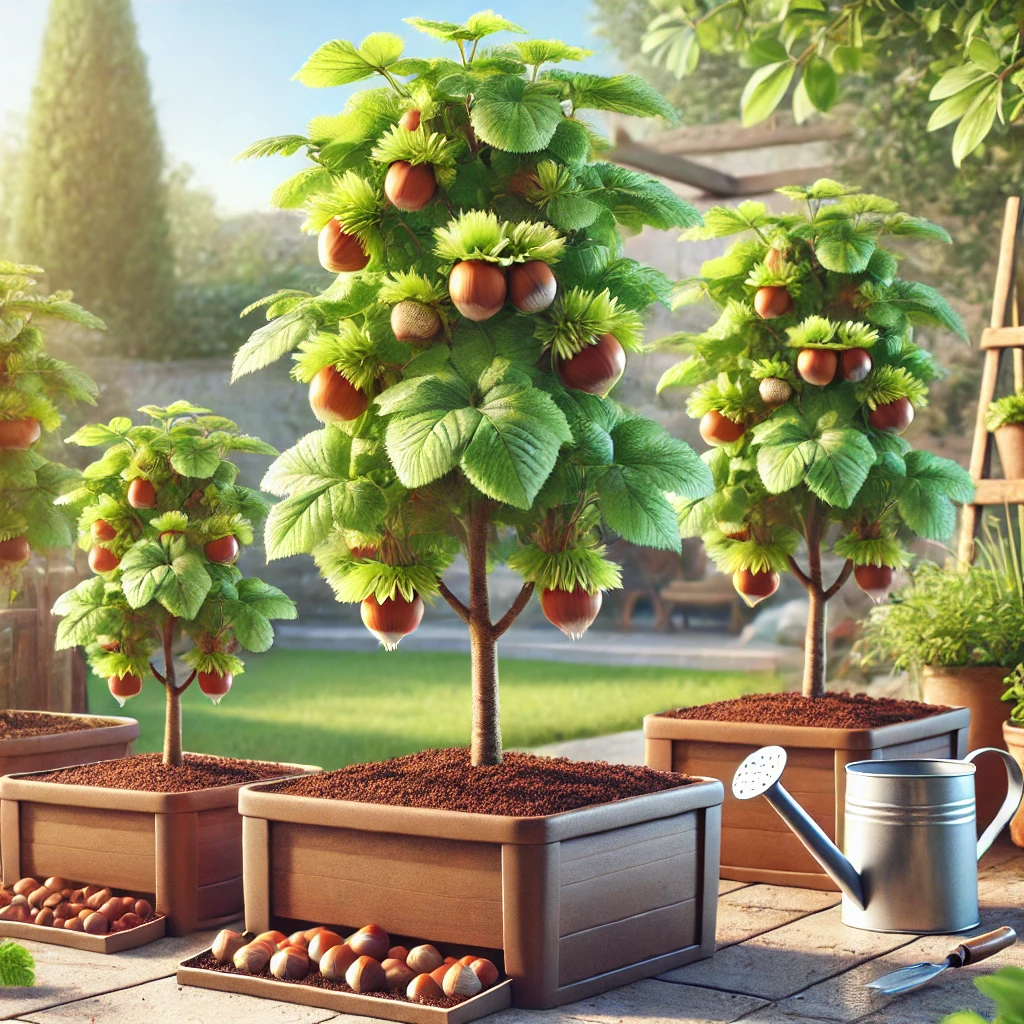
Growing hazelnuts in containers is an excellent way to enjoy fresh nuts in limited space, especially for gardeners without access to a full garden plot.
While hazelnut trees are typically grown in the ground, with proper care and management, they can thrive in pots. Here we provide you with a comprehensive guide to help you grow healthy hazelnuts in containers.
1. Selecting the Right Hazelnut Variety
Not all hazelnut trees are suitable for container growth. Choose dwarf or compact varieties that grow well in restricted spaces. Recommended options include:
- American Hazelnut (Corylus americana): Hardy and manageable size.
- Dwarf Filbert (Corylus avellana ‘Contorta’): A smaller, ornamental variety.
- Hybrid Varieties: Developed for compact growth, such as Jefferson or Yamhill.
2. Choosing the Container
- Size: Start with a container that holds at least 10-15 gallons (38-57 liters). Mature plants may require a larger pot (20-30 gallons).
- Material: Use durable materials like ceramic, plastic, or wood. Ensure the pot is sturdy enough to support the tree as it grows.
- Drainage: Ensure the container has adequate drainage holes to prevent waterlogging.
3. Soil Requirements
- Type: Use a well-draining, loamy potting mix. You can create your mix by combining:
- 1 part garden soil
- 1 part compost
- 1 part perlite or coarse sand
- pH Level: Hazelnuts prefer slightly acidic to neutral soil (pH 6.0-7.0). Test and adjust if needed.
4. Planting Your Hazelnut Tree
- Prepare the Pot: Fill the container with the prepared soil, leaving enough room to accommodate the root ball.
- Plant the Tree:
- Remove the tree from its nursery pot.
- Gently loosen the roots and place the tree in the center of the pot.
- Backfill with soil, ensuring the tree is at the same depth as it was in its original container.
- Water Thoroughly: Water the tree to settle the soil and eliminate air pockets.
5. Sunlight and Positioning
- Place the container in a location with full sun (6-8 hours daily).
- Hazelnuts tolerate partial shade but produce more nuts in sunny conditions.
- Protect the plant from strong winds, which can damage branches in exposed areas.
6. Watering
- Frequency: Water the tree consistently to keep the soil moist but not waterlogged. Allow the top inch of soil to dry out slightly between watering.
- Seasonal Adjustments: Reduce watering during the dormant winter season but ensure the soil does not completely dry out.
7. Fertilizing
- Use a balanced, slow-release fertilizer (e.g., 10-10-10) in early spring before new growth begins.
- Supplement with organic compost or well-rotted manure during the growing season.
- Avoid over-fertilizing, which can lead to excessive foliage growth at the expense of nut production.
8. Pollination
- Cross-Pollination: Hazelnuts are wind-pollinated and generally require at least two different varieties to produce nuts. If space allows, grow a second tree in a nearby container. Alternatively, ensure other compatible hazelnut trees are within a 50-foot radius.
- Pollen Timing: Check that the varieties bloom simultaneously for effective pollination.
9. Pruning and Maintenance
- Pruning: Prune in late winter or early spring to remove dead or damaged branches. Shape the tree to maintain an open structure for airflow and sunlight.
- Suckers: Remove suckers (shoots growing from the base) regularly to direct energy to the main tree.
10. Pest and Disease Management
- Common Pests: Look out for aphids, caterpillars, and hazelnut weevils. Use insecticidal soap or neem oil as needed.
- Diseases: Watch for signs of blight or mildew. Remove affected areas and improve air circulation around the tree.
- Prevention: Regularly clean up fallen leaves and debris to reduce the risk of disease.
11. Harvesting
- When to Harvest: Hazelnuts are ready when the husks turn brown and begin to crack open, usually in late summer or early fall.
- How to Harvest: Gently shake the tree or pick the nuts by hand.
- Storage: Dry the nuts in a warm, airy location for 2-4 weeks before storing them in a cool, dry place.
12. Winter Care
- Protection: Move the container to a sheltered location during extreme cold. Wrap the pot with insulating material to protect the roots from freezing.
- Dormancy: Hazelnuts require a period of cold dormancy for healthy growth and nut production. Avoid keeping them in overly warm conditions during winter.
13. Repotting
- Frequency: Repot the tree every 2-3 years to refresh the soil and provide more space for root growth.
- Timing: Repot in late winter or early spring before new growth begins.
FAQ
Yes, hazelnuts can be grown in pots as long as the pot is large enough to accommodate their root system. Dwarf or compact varieties are ideal for container growing.
Water the tree when the top inch of soil feels dry. Hazelnuts prefer consistent moisture but avoid overwatering, as it can lead to root rot.
Yes, hazelnuts are wind-pollinated and typically need two different varieties planted near each other to ensure good pollination and nut production.
Hazelnut trees usually begin producing nuts 4-6 years after planting, sometimes more, depending on the variety and growing conditions.
Prune in late winter or early spring to remove dead or diseased branches. Focus on maintaining a compact shape and allowing good air circulation.
Not really advised to grow them indoors, they are best suited for outdoor growing. They need natural seasonal changes, including winter dormancy, to thrive.
Sign up to get our FREE weekly emails
Gardening guides, tips, & videos delivered right to your inbox!