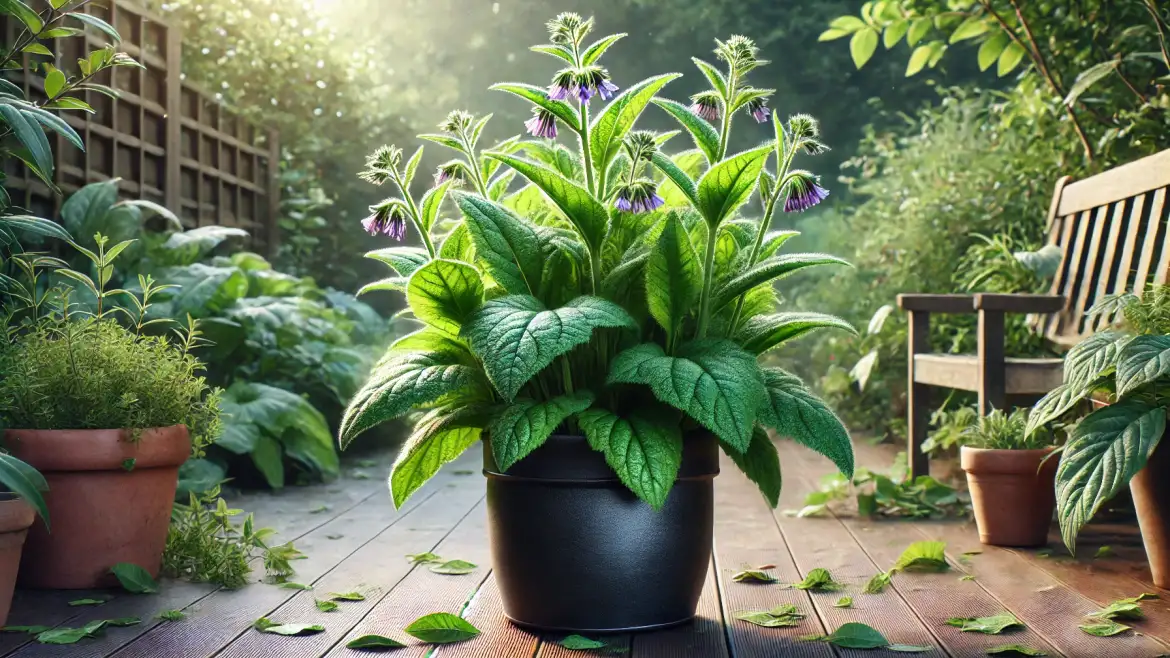
Growing comfrey in pots offers several benefits, particularly for gardeners with limited space or those seeking more control over their planting environment. Comfrey is a fast-growing herb with deep roots that can aggressively spread if planted directly in the ground. Growing it in pots helps contain its growth, preventing it from becoming invasive while allowing gardeners to harness its many uses.
Potted comfrey can be placed strategically to enrich soil in specific areas by making “comfrey tea” or using its leaves as mulch or compost activators. Additionally, the portability of pots enables gardeners to move the plant for optimal sunlight or protect it from adverse weather, ensuring its health and productivity.
Potted comfrey is also a practical choice for urban gardening or permaculture setups where space and soil quality may be constraints. Its deep root system, even in a pot, draws up nutrients from the soil, making its leaves rich in nitrogen, potassium, and phosphorus—ideal for organic fertilization.
Moreover, comfrey’s ability to attract pollinators with its flowers supports biodiversity even in small-scale gardening. The plant’s medicinal properties, including its use in salves and poultices, make it an excellent addition to an herb garden that can be managed efficiently in containers. Overall, growing comfrey in pots combines practicality, sustainability, and versatility, making it an excellent option for gardeners of all levels.
Growing Comfrey in a Pot
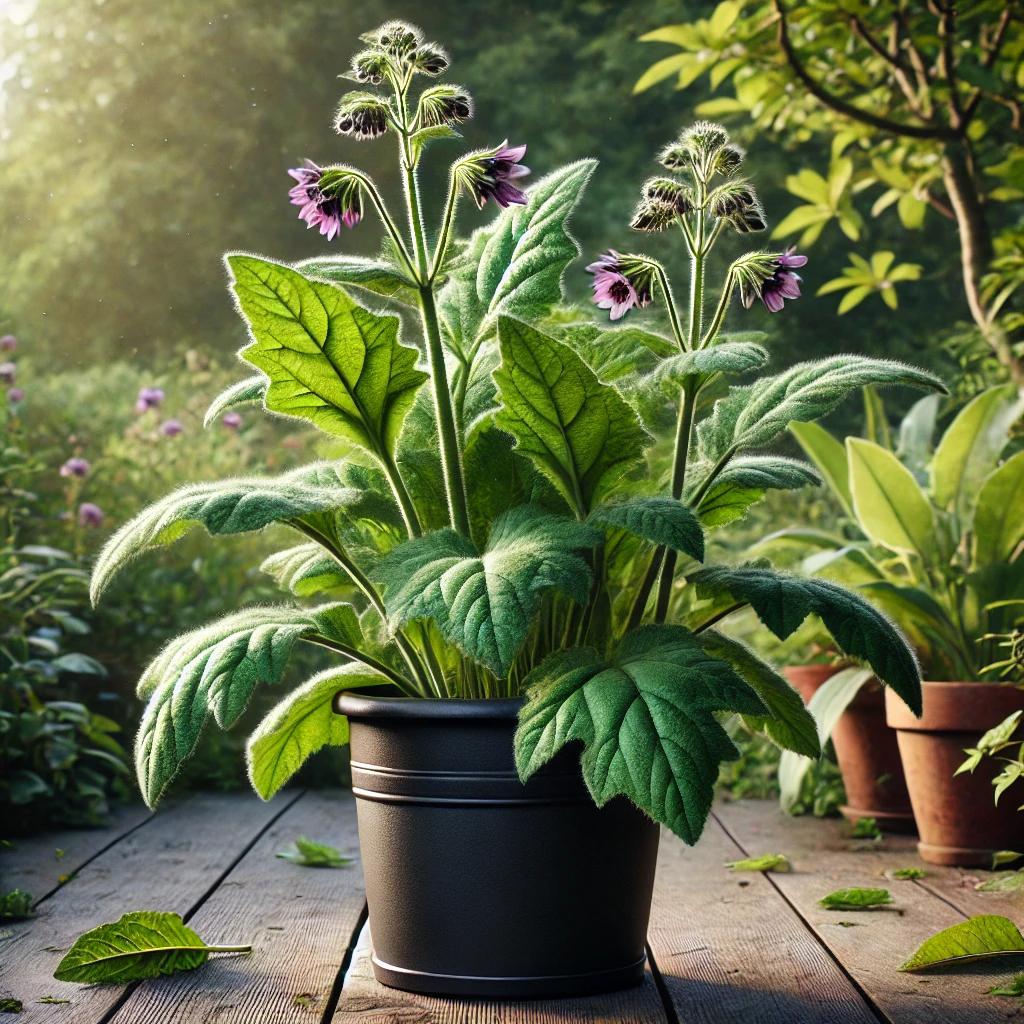
Comfrey is a versatile and nutrient-rich plant that has been used for centuries in traditional medicine, composting, and gardening. Growing comfrey in pots is a practical option if you have limited space or want to control its growth, as it can be invasive in open soil. This guide will take you through the process of successfully growing comfrey in pots.
Why Grow Comfrey in Pots?
- Space Constraints: Ideal for urban gardeners or those with limited garden space.
- Controlled Growth: Prevents the plant from spreading uncontrollably.
- Portability: You can move pots to optimize sunlight exposure or protect the plant from extreme weather.
- Specific Uses: Harvest leaves for compost tea, mulch, or medicinal purposes without worrying about affecting other garden plants.
Step-by-Step Guide
1. Choose the Right Pot
- Size: Comfrey has a deep root system, so select a pot at least 18 inches (45 cm) deep and 12-18 inches (30-45 cm) wide.
- Material: Terracotta, plastic, or fabric pots work well, but ensure the pot is sturdy and has proper drainage holes.
2. Select a Suitable Variety
- Common Comfrey (Symphytum officinale): Best for medicinal use.
- Russian Comfrey (Symphytum x uplandicum): Ideal for composting and mulch; often sterile, so it doesn’t produce seeds.
3. Prepare the Soil
- Type: Use a nutrient-rich, well-draining potting mix. A mix of compost, garden soil, and perlite works well.
- pH: Slightly acidic to neutral soil (6.0-7.0 pH) is ideal.
- Amendments: Add aged compost or organic matter to enrich the soil.
4. Planting Comfrey
- From Root Cuttings:
- Obtain root cuttings from a healthy plant.
- Place the cutting horizontally 2-3 inches (5-7 cm) deep in the soil.
- Cover with soil and water lightly.
- From Crowns:
- Position the crown in the center of the pot, burying it just below the soil surface.
- Water thoroughly after planting.
5. Provide Ideal Growing Conditions
- Light: Comfrey thrives in full sun but tolerates partial shade.
- Watering:
- Keep the soil consistently moist but not waterlogged.
- Water deeply once or twice a week, more often in hot weather.
- Temperature: Comfrey is hardy and can tolerate a wide range of climates, but it prefers temperatures between 60-85°F (15-30°C).
6. Fertilization
- Frequency: Feed the plant every 4-6 weeks during the growing season.
- Type: Use a balanced liquid fertilizer or compost tea for optimal growth.
7. Pruning and Maintenance
- Pruning: Cut back leaves to encourage new growth and prevent overcrowding.
- Deadheading: If your variety flowers, remove blooms to focus energy on leaf production.
8. Harvesting Comfrey
- When to Harvest:
- Wait until the plant is well-established, usually 2-3 months after planting.
- Harvest leaves before flowering for the highest nutrient content.
- How to Harvest:
- Use scissors or pruning shears to cut leaves at the base.
- Avoid cutting more than one-third of the plant at a time.
9. Overwintering
- Indoors: Move the pot to a sheltered area if your region experiences freezing winters.
- Outdoors: Apply a layer of mulch on the soil surface to protect the roots.
Benefits of Growing Comfrey
- Natural Fertilizer: Use comfrey leaves to make nutrient-rich compost tea or as mulch.
- Medicinal Uses: Comfrey has traditional applications for soothing minor wounds and inflammation.
- Pollinator-Friendly: Its flowers attract bees and other pollinators.
Potential Challenges and Solutions
- Overwatering: Ensure proper drainage to avoid root rot.
- Pests: Generally pest-resistant, but keep an eye out for slugs or aphids.
- Nutrient Deficiency: If growth slows, supplement with organic fertilizers.
Growing comfrey in pots is a rewarding way to add a versatile plant to your garden. With proper care, your potted comfrey will provide an abundance of nutrient-rich leaves for gardening, composting, or medicinal uses.
FAQs
Yes, comfrey can be successfully grown in pots, provided the pot is large enough to accommodate its deep roots and vigorous growth.
Yes, you can grow comfrey indoors, but it requires a large pot, bright light (preferably near a sunny window or under grow lights), and regular watering to thrive.
Water comfrey regularly to keep the soil moist but not soggy. It’s a drought-tolerant plant but performs better with consistent moisture.
Since comfrey is a nutrient-hungry plant, feed it monthly with organic compost tea, diluted liquid fertilizer, or add slow-release fertilizers to the soil.
Yes, comfrey is hardy and can survive winter outdoors in most climates. Cut the plant back in late autumn, and if you’re in a very cold area, insulate the pot by wrapping it in burlap or moving it to a sheltered location.
Yes, comfrey will flower in pots if given the right conditions. However, frequent harvesting of leaves can delay flowering.
Yes, you can propagate comfrey from root cuttings. Divide the root ball in early spring or late autumn and plant sections in new pots or directly in the ground.
Comfrey is a perennial plant that can live for many years with proper care. Dividing and repotting every 2-3 years keeps it healthy.
Yes, potted comfrey leaves are excellent for composting or as mulch. They are rich in nitrogen and potassium, enhancing soil fertility.
Sign up to get our FREE weekly emails
Gardening guides, tips, & videos delivered right to your inbox!