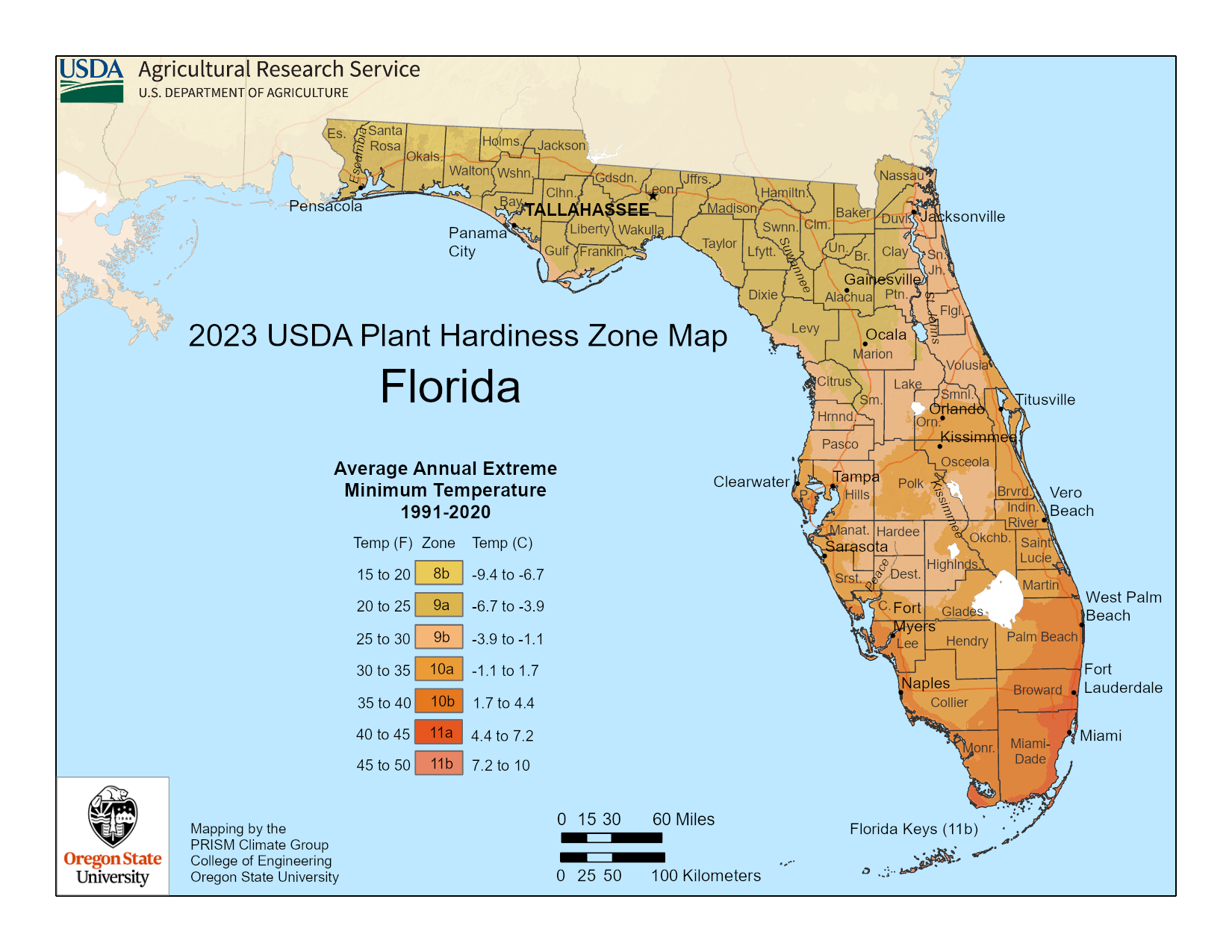
The map below is the Florida planting zones map for plant hardiness. This map highlights the different Florida growing zones.
Understanding planting zones in Florida is essential as this will help you decide which plants you can grow in your garden.
Florida Planting Zones
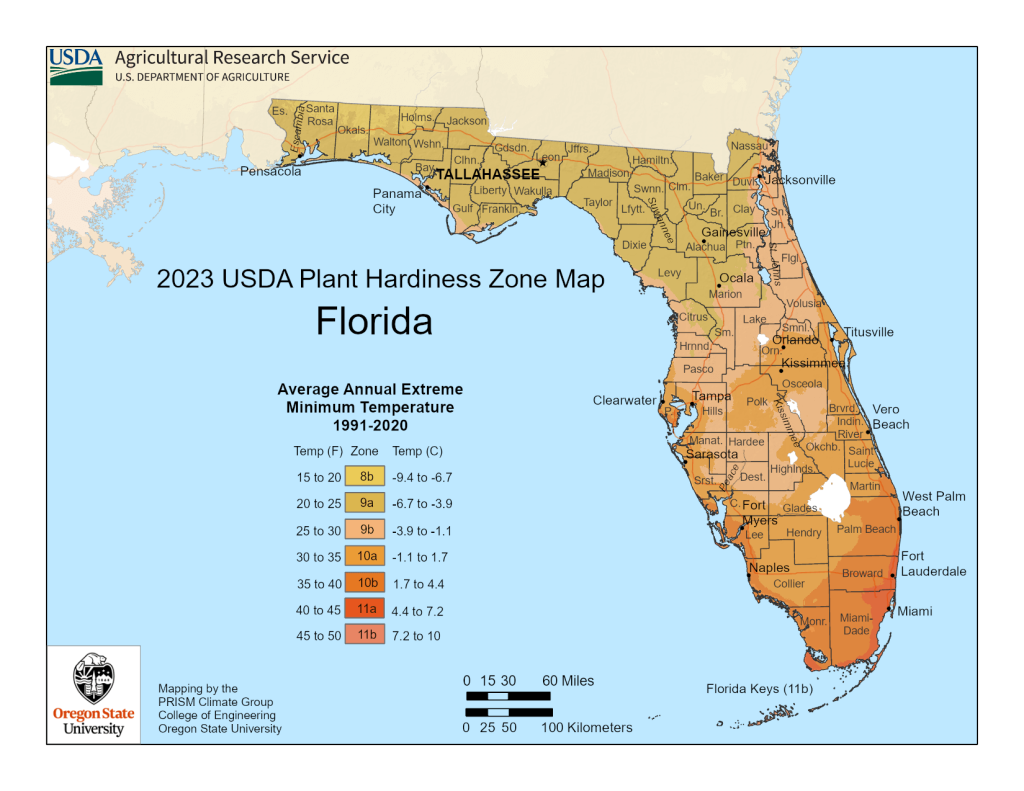
Click here for full resolution USDA Florida growing zones map
In order to identify the plant growing zone in Florida that applies to your area, determine where you live on the above Florida planting zone map. Take the color of that area and match it to the Florida planting zone map legend to the right. You will then be able to tell what hardiness zone you live in.
This Florida zone map for hardiness of plants is based on the 2023 USDA plant hardiness zone map. In 2023, the USDA reviewed the hardiness zone map and noticed, that due to climate change, the zones had shifted. This map was created to clarify the new hardiness zones.
It is important to understand what the planting zones for Florida are and which zone you live in because this will help you have a successful garden. Growing plants that are suitable for you zone will ensure that these plants thrive in your garden.
Local nurseries will carry plants that will be clearly marked with the zone that they will grow in. You can grow any plant in your zone or lower in your garden. If you wish to grow a plant that is in a zone that is higher than yours, you will need to provide extra protection for those plant and possibly even bring them indoor for the winter.
Top Questions
Florida is in 8, 9, 10 and 11 USDA plant hardiness zones.
Most of Florida lies within the extreme southern portion of the Northern Hemisphere’s humid subtropical climate zone, known for its long hot and humid summers and mild and wet winters.
Miami, Florida is in USDA Plant Hardiness Zone 11a.
Orlando, Florida is in USDA Plant Hardiness Zone 9b.
You can use the USDA map to find which Florida growing zone you garden in. The latest edition of the growing zone map has even more detail, making it easier to pinpoint your exact zone. You can use the map by simply looking at it and finding your location, or you can use the USDA’s zip code tool.
Sign up to get our FREE weekly emails
Gardening guides, tips, & videos delivered right to your inbox!