

Marshmallow, scientifically known as Althaea officinalis, is a delightful perennial plant famous for its medicinal uses and sweet, soft blooms. While marshmallow has long been revered for its role in soothing coughs and sore throats, it also brings beauty and uniqueness to any garden.
When grown in a garden setting, pairing marshmallow with the right companions can lead to enhanced growth, better pest control, and even improved flavor. If you are planning to grow marshmallow, understanding companion planting can be a game-changer for your garden’s success.
This guide explores the best companion plants for marshmallow, what to avoid planting nearby, and helpful tips for integrating these plants into your garden design.
Why You Should Consider Companion Planting for Marshmallow
Companion planting is an agricultural practice that involves planting different species close together to achieve mutual benefits. For marshmallow, companion planting can help to:
- Enhance growth and health: Some plants have a natural ability to provide nutrients that support the health of neighboring plants, such as fixing nitrogen in the soil or offering natural pest deterrence.
- Improve pest control: Certain plants act as natural pest repellents or attract beneficial insects that prey on common garden pests, reducing the need for harmful chemicals.
- Maximize space and productivity: By planting compatible species together, you can make the most out of your garden space and enhance the overall productivity of your garden.
- Increase biodiversity: Companion planting promotes a diverse ecosystem in your garden, encouraging healthy soil, minimizing plant disease, and attracting pollinators.
For marshmallow specifically, companion planting can provide advantages like protection from pests, promoting better air circulation, and reducing competition for nutrients.
But just as importantly, choosing the right companions helps prevent the marshmallow plant from being overshadowed or stressed by plants that don’t thrive in its conditions. Let’s take a closer look at the best companions for marshmallow and the plants to avoid.
Best Companion Plants for Marshmallow
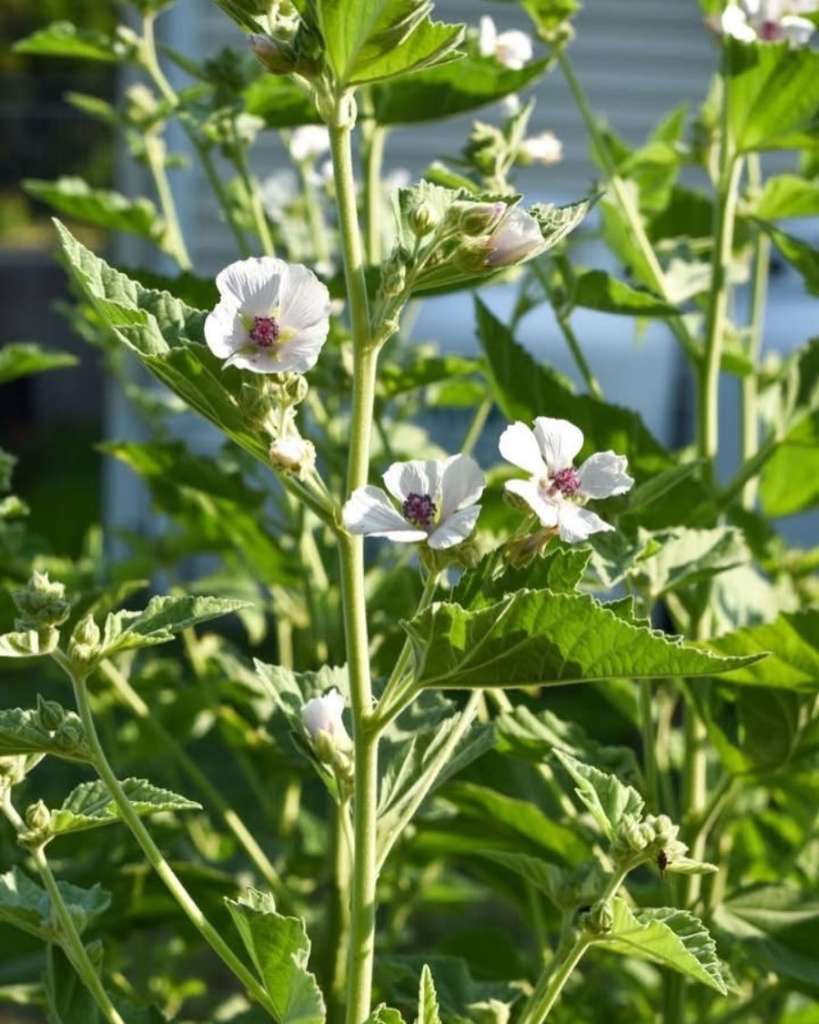
Marshmallow is known for its love of moist, well-drained soil and sunny to partially shaded spots. It’s a hardy plant that works well in various garden environments, especially near ponds, streams, or in herb gardens. Here are some of the best companion plants for marshmallow:
1. Comfrey
Comfrey is one of the best companion plants for marshmallow. This plant is known for its deep roots, which draw up minerals from the soil and make them available to nearby plants. Comfrey also attracts beneficial insects like bees and ladybugs. When planted next to marshmallow, comfrey can provide a natural fertilizer as its leaves break down and enrich the soil.
2. Yarrow
Yarrow is a versatile plant that works wonders as a companion to marshmallow. This herb has medicinal properties and attracts beneficial insects like ladybugs, hoverflies, and bees, which are all great for pollination and pest control. Yarrow also helps improve soil health, and its flowers provide a beautiful contrast to the marshmallow’s pale blooms.
3. Bee Balm
Bee balm is another excellent companion for marshmallow. Its bright, aromatic flowers not only attract pollinators, such as bees, but they also help deter pests like aphids. Bee balm’s vibrant color contrasts well with marshmallow’s soft, light blooms, making it a beautiful addition to your garden. Additionally, bee balm shares similar growing conditions with marshmallow, including a preference for full sunlight and slightly moist soil.
4. Lavender
Lavender is a well-known herb that is perfect for companion planting with marshmallow. The strong fragrance of lavender repels pests such as mosquitoes, moths, and aphids, helping to keep marshmallow plants safe. Lavender also thrives in well-drained, slightly alkaline soil, which complements marshmallow’s growing conditions.
5. Calendula
Calendula is another fantastic companion for marshmallow. Known for its beautiful orange or yellow flowers, calendula attracts beneficial insects such as ladybugs, lacewings, and bees, all of which can help control pests that target marshmallow. Calendula also helps improve the soil by adding nutrients, making it a great companion for a healthy marshmallow patch.
6. Chamomile
Chamomile is an excellent companion for marshmallow because of its similar growing conditions and its ability to promote good plant health. Chamomile naturally repels pests like aphids, whiteflies, and mites, which can be problematic for marshmallow plants. Additionally, chamomile’s gentle fragrance and tiny flowers attract pollinators, which will help boost the marshmallow’s bloom production.
7. Sweet Alyssum
Sweet alyssum is a fantastic ground cover plant that works well with marshmallow. It helps attract beneficial insects, particularly hoverflies and parasitic wasps, that control pest populations. Sweet alyssum also helps keep the soil moist and adds beauty to your garden with its tiny, fragrant flowers.
Plants to Avoid Planting Near Marshmallow
While many plants make great companions for marshmallow, there are some that could negatively affect its growth. These plants should be avoided in proximity to marshmallow due to their potential to compete for resources, harbor pests, or alter the soil environment in a way that is not conducive to marshmallow growth. Here are some plants to avoid:
1. Tomatoes
Tomatoes are notorious for attracting pests such as aphids and hornworms, which could pose a threat to your marshmallow plants. Additionally, tomatoes are heavy feeders and may compete with marshmallow for soil nutrients, potentially weakening the marshmallow’s growth.
2. Cabbage Family
Cabbage, kale, broccoli, and other plants in the cabbage family should be kept away from marshmallow. These plants are often heavy feeders that may deplete the soil of nutrients that marshmallow needs to thrive. They also attract pests such as cabbage moths and aphids, which can spread to marshmallow and cause damage.
3. Fennel
Fennel is known to release compounds that inhibit the growth of nearby plants, including marshmallow. Fennel’s allelopathic properties can stunt the growth of marshmallow, making it a poor companion plant. If you want to grow fennel, it’s best to keep it far away from marshmallow.
4. Mint
Mint is a highly invasive plant that can easily overtake nearby plants if left unchecked. While it’s beneficial in some situations, its aggressive growth can suffocate marshmallow and other plants, making it a poor companion. If you do decide to plant mint, keep it in a container to prevent it from spreading uncontrollably.
5. Carrots
Carrots should be avoided near marshmallow because they have different soil nutrient needs and growing habits. While they do not necessarily compete for space above ground, their root systems could interfere with the marshmallow’s roots, reducing its access to water and nutrients.
Tips for Growing Companion Plants with Marshmallow
When planting marshmallow with its companions, there are a few key tips to keep in mind to ensure your plants thrive together:
- Soil preparation: Marshmallow prefers slightly moist, well-drained soil. Ensure your soil is rich in organic matter and consider adding compost or organic fertilizers to improve its quality. A well-prepared soil base will benefit all your companion plants.
- Proper spacing: Give each plant enough space to grow without crowding. Overcrowding can lead to poor air circulation, which promotes disease. Follow spacing recommendations for each plant to ensure they all have room to thrive.
- Watering needs: Marshmallow likes consistent moisture, so be sure to water it regularly, especially during dry spells. Companion plants like bee balm, lavender, and chamomile have similar water needs, making them excellent choices for planting together. However, be mindful not to overwater, as this can lead to root rot.
- Mulching: Mulch around your marshmallow plants to retain moisture and suppress weeds. Organic mulch, such as straw or shredded leaves, works well in maintaining the moisture levels marshmallow prefers.
- Monitoring pests: Keep an eye out for pests like aphids, slugs, and snails, which can be attracted to marshmallow plants. Many of the companion plants mentioned, such as calendula and yarrow, attract beneficial insects that help control pests. Regularly check your plants for any signs of infestations.
- Pruning and deadheading: Keep your garden tidy by removing dead or damaged plant material. This will prevent disease and allow air to circulate freely, promoting healthy growth for all your plants.
Conclusion
Marshmallow is a versatile, beneficial plant that can be enhanced by companion planting. Whether you’re looking to attract pollinators, deter pests, or improve soil health, there are plenty of plants that make excellent companions for marshmallow.
By carefully selecting the right partners and avoiding incompatible plants, you can create a thriving, harmonious garden that benefits both your marshmallow and the other plants surrounding it. Keep in mind the growing conditions, spacing, and care needs for each plant, and your garden will flourish, yielding both beauty and abundance. Happy gardening!
Sign up to get our FREE weekly emails
Gardening guides, tips, & videos delivered right to your inbox!


