Growing ginger in pots offers numerous advantages, especially for those with limited garden space or living in colder climates. Pots provide the flexibility to move the plant indoors during harsh weather conditions, allowing ginger to thrive year-round. This mobility helps maintain the consistent warmth and humidity that ginger requires for optimal growth.
Container gardening also gives you greater control over soil quality, ensuring the rich, well-drained, and nutrient-dense environment ginger prefers. Additionally, growing ginger in pots reduces the risk of pests and diseases commonly found in garden soil, promoting healthier plants.
Another benefit of growing ginger in pots is the ease of harvesting. Since ginger rhizomes grow horizontally, a pot allows for straightforward access when it’s time to harvest, without the need for extensive digging. This method also minimizes root disturbance, ensuring the plant continues growing if partial harvests are preferred. Potted ginger can be grown indoors as a decorative and aromatic plant, enhancing your living space with lush green foliage.
Moreover, the convenience of having fresh ginger readily available supports a healthier lifestyle, as the plant is valued for its culinary uses and medicinal properties, including aiding digestion and boosting immunity.
Growing Ginger in a Pot
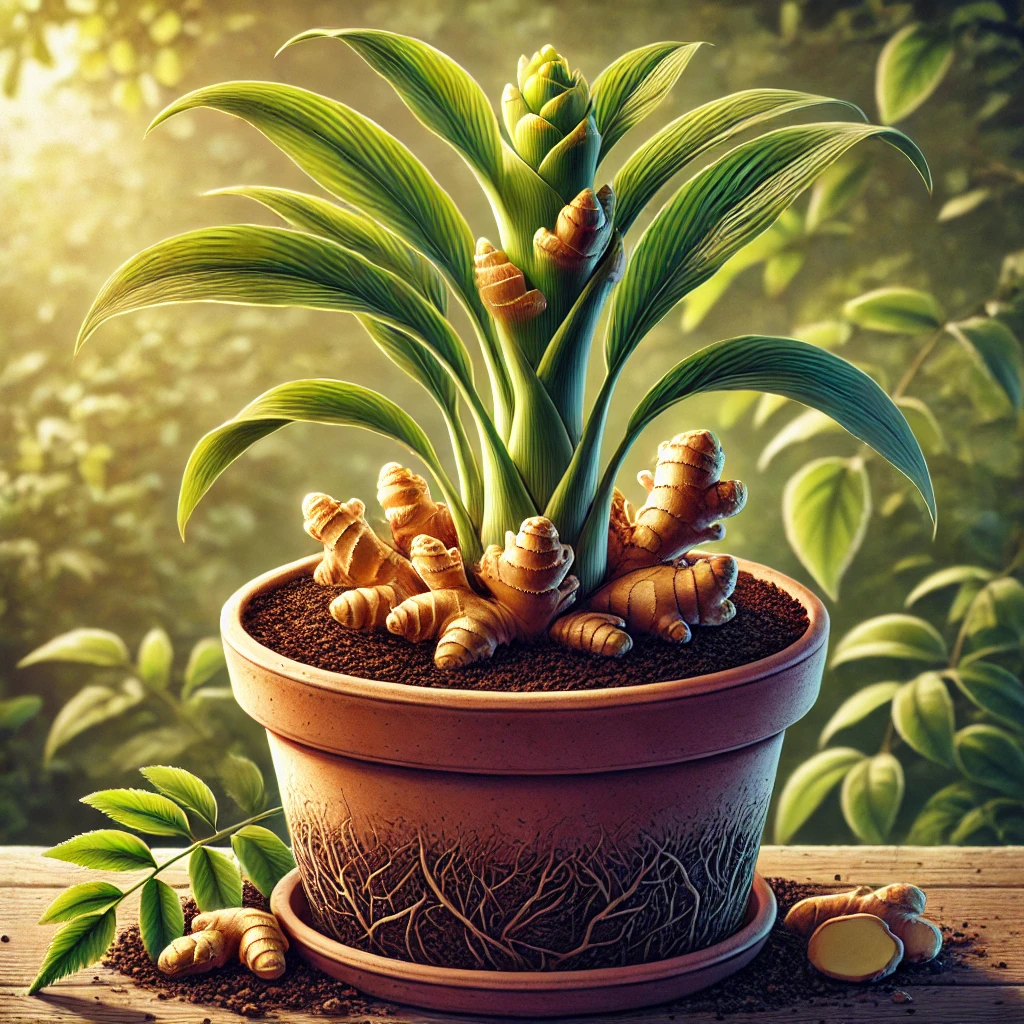
Ginger (Zingiber officinale) is a versatile, aromatic spice with medicinal properties that can be easily grown at home, even if you lack garden space.
Growing ginger in pots is an excellent way to enjoy a continuous supply of fresh ginger year-round. Here’s a step-by-step guide to help you grow ginger successfully in pots.
1. Choosing the Right Ginger Rhizome
Selecting Seed Ginger
- Purchase fresh, plump ginger rhizomes from a garden center, nursery, or organic grocery store.
- Look for pieces with multiple “eyes” or growing buds, which appear as small nubs or points on the rhizome.
- Avoid wrinkled, dry, or moldy rhizomes.
Preparing the Rhizome
- Soaking: Soak the ginger rhizome in water for 24 hours before planting. This helps to wake up the buds.
- Cutting: If the rhizome is large, cut it into pieces with at least 2–3 eyes each. Let the cut pieces dry for a day to form a protective callus.
2. Choosing the Right Pot and Soil
Selecting a Pot
- Size: Choose a pot at least 12 inches (30 cm) deep and 12 inches (30 cm) wide.
- Material: Use clay, plastic, or ceramic pots with adequate drainage holes at the bottom.
- Depth: Ginger grows horizontally, so wide pots are better than deep ones.
Ideal Soil Mix
- Use a rich, well-draining potting mix.
- Ideal composition:
- 2 parts potting soil
- 1 part coco coir or peat moss
- 1 part perlite or coarse sand for drainage
- Add organic compost to boost nutrients.
3. Planting Ginger
- Fill the Pot: Fill the pot with soil mix, leaving about 2 inches (5 cm) of space at the top.
- Planting Depth:
- Lay the ginger rhizome horizontally, with the buds facing up.
- Cover it with 1–2 inches (2.5–5 cm) of soil.
- Watering: Lightly water the soil until moist but not soggy.
4. Caring for Your Ginger Plant
Watering
- Keep the soil consistently moist but not waterlogged.
- Water when the top 1 inch (2.5 cm) of soil feels dry.
- Avoid overwatering, which can lead to root rot.
Light Requirements
- Ginger prefers partial shade or indirect sunlight.
- Provide 2–5 hours of dappled sunlight per day.
- Avoid intense direct sunlight, which can scorch the leaves.
Temperature
- Ginger thrives in temperatures between 75°F–85°F (24°C–29°C).
- Protect the plant from temperatures below 50°F (10°C).
Humidity
- Ginger loves humidity. If growing indoors, mist the plant occasionally or place a tray of water near the pot to maintain humidity.
Fertilization
- Feed with a balanced liquid fertilizer (e.g., 10-10-10) every 4–6 weeks during the growing season.
- Alternatively, use compost tea or a slow-release organic fertilizer.
Pruning
- Remove dead or yellowing leaves to promote new growth.
- Pruning is generally minimal for ginger.
Mulching
- Apply a thin layer of mulch (e.g., straw or leaves) to retain moisture and regulate soil temperature.
5. Common Issues and Pests
Pests
- Watch out for:
- Aphids: Spray with neem oil or insecticidal soap.
- Spider Mites: Increase humidity and wash leaves with water.
- Fungus Gnats: Allow the soil surface to dry out between waterings.
Diseases
- Root Rot: Caused by overwatering. Ensure the pot has good drainage.
- Leaf Spot: Treat with fungicide if necessary.
6. Harvesting Ginger
When to Harvest
- Partial Harvest: After 4–6 months, you can carefully dig up small pieces from the edges and re-cover the plant.
- Full Harvest: After 8–10 months, the leaves will turn yellow and die back, signaling that the ginger is mature and ready to harvest.
How to Harvest
- Carefully dig around the rhizome to avoid damage.
- Lift the rhizome out of the soil.
- Wash off the soil and let it dry before storing.
7. Storing Fresh Ginger
- Refrigeration: Store unpeeled ginger in a ziplock bag with a paper towel for up to 1 month.
- Freezing: Peel and freeze ginger in chunks or grated form.
- Drying: Slice and dry ginger to make a powder or tea.
8. Growing Ginger Indoors Year-Round
- Ginger can be grown indoors during colder months.
- Place the pot near a south-facing window or under grow lights.
- Maintain warmth and humidity for continuous growth.
Quick Tips for Success
- Use Fresh Rhizomes with healthy buds.
- Avoid Overwatering to prevent root rot.
- Provide Indirect Light to keep leaves healthy.
- Fertilize Regularly for optimal growth.
- Harvest Gradually for a continuous supply of ginger.
FAQs
Yes, ginger thrives in pots. This allows you to control soil quality, moisture levels, and temperature, making it ideal for growing indoors or in small spaces.
Keep the soil consistently moist but not soggy. Water when the top inch of soil feels dry. Avoid overwatering to prevent root rot.
Yes, you can grow ginger indoors year-round as long as you provide the right temperature, humidity, and light conditions.
Sign up to get our FREE weekly emails
Gardening guides, tips, & videos delivered right to your inbox!