Understanding growing zones in illinois will make gardening much easier for you. In order to learn more about Illinois growing zones, it’s essential to take a look at the USDA plant hardiness zones map. This not only gives hardiness zones for all states but will also indicate you what growing zone Illinois is.
Illinois Planting Zones

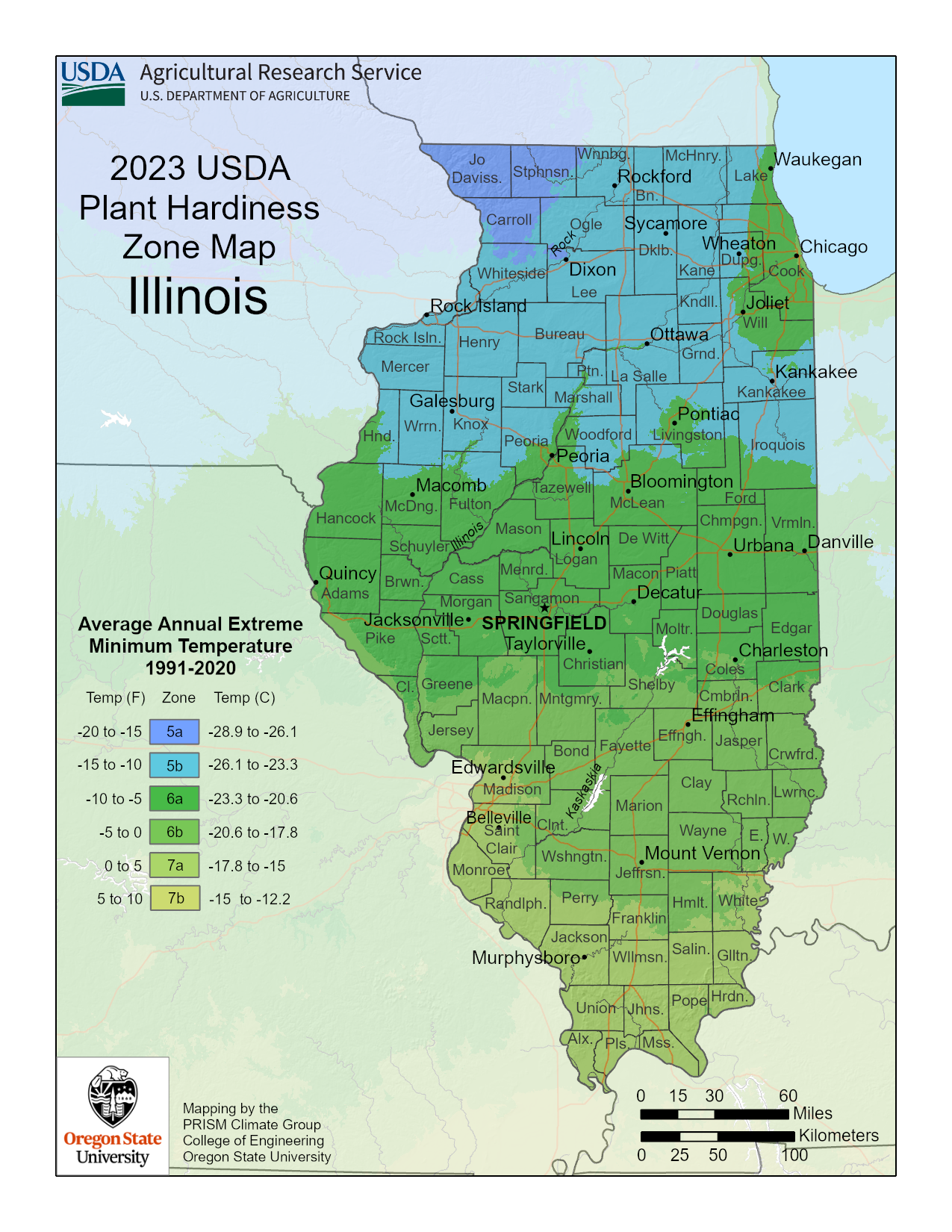
Click here for full resolution USDA Illinois growing zones map
The map above here is for the Illinois hardiness planting zone, which should help identify the most adaptable plants for your region.
Illinois planting zones range from zones 5a to 7b. By looking at the provided map and locating the area in which you live, you will be able to figure your Illinois hardiness planting zone.
Simply compare the color-coded zones for your area with those of the legend on the right of the map.
This map of Illinois gardening zones is based on the updated USDA planting zones released in 2023 due to climate changes and increasingly rising temperatures. Knowing your Illinois hardiness planting zones can help you to select the best plants for your location.
Selecting plants that tolerate cold conditions—such as a zone lower—will usually help ensure their winter survival for regions bordering different zones since less hardy plants will need more protection. Most local nurseries have plants appropriate for Illinois growing zones.
Remember that only respectable nurseries will have these obviously designated as such; they specialize in providing plants suitable for your area’s hardiness zone.
Top Questions
Illinois USDA Hardiness zones are zones 5, 6, and 7.
Most of Illinois state has a humid continental climate with hot, humid summers and cool to cold winters.
Chicago is located in USDA Hardiness Zone 5 and 6.
You can use the USDA map to find which Illinois growing zone you live in. You can use the map by simply looking at it and finding your location, or you can use the USDA’s zip code tool.
Sign up to get our FREE weekly emails
Gardening guides, tips, & videos delivered right to your inbox!