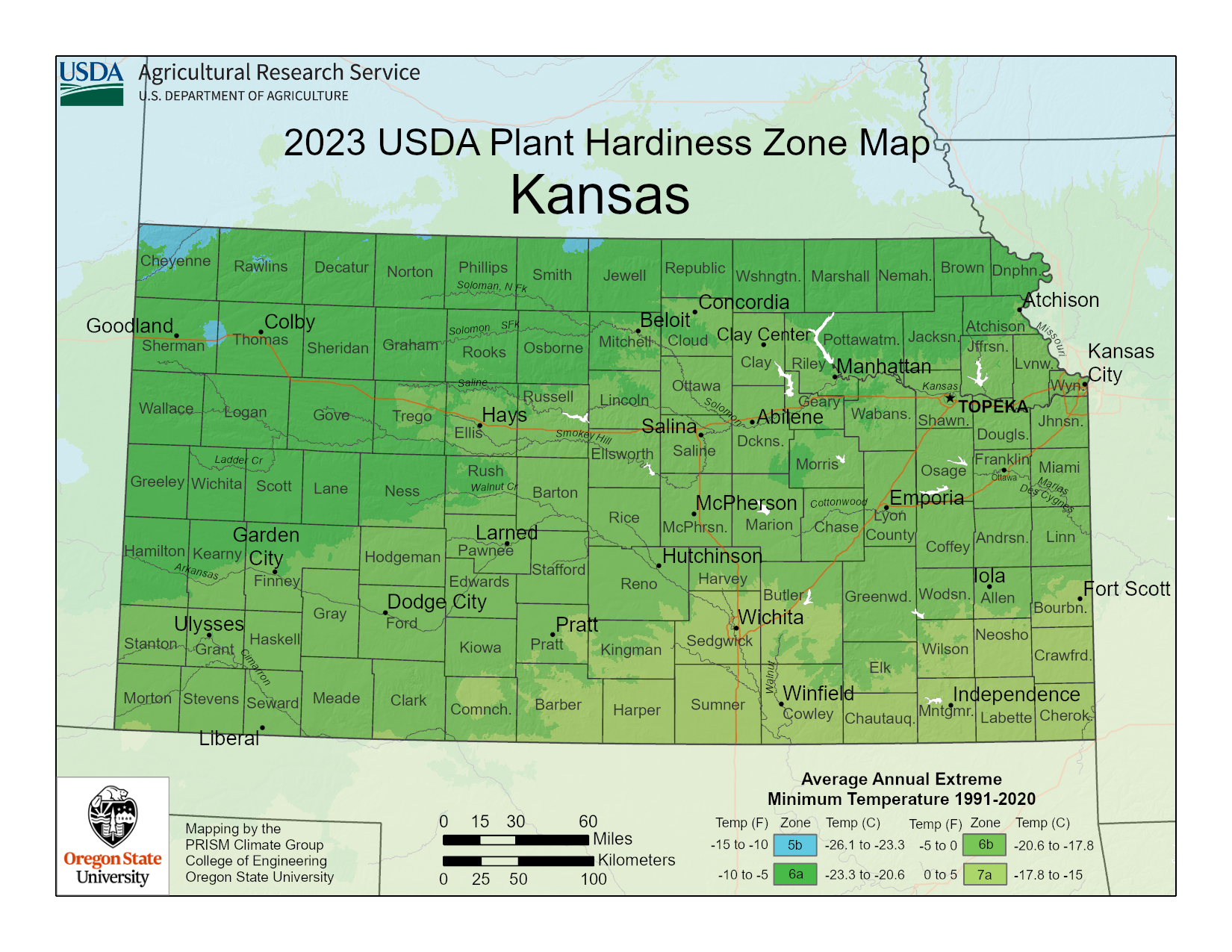
It’s important to consult the USDA plant hardiness zones map for information about plant hardiness. This not only provides hardiness growing zones for all states but will also tell you the growing zones for USDA in Kansas.
Kansas Planting Zones

Click here for full resolution USDA Kansas growing zones map
The above map is for the Kansas planting zones and can be used to identify the most hardy plants for your region.
By checking the Kansas growing zones map above and locating the approximate area in which you live, you will be able to determine your hardiness growing zone. Simply compare the zone colors on the Kansas zones map for your area with those found on the legend to the right.
Due to climate changes and increasingly warmer climate, this map of Kansas USDA zones is based on the updated version of the USDA in Kansas that was announced in 2023.
More and more areas are finding that warmer hardiness growing zones are moving northward. It is important to understand your Kansas zone map in order to choose the most appropriate plants for your area. For regions bordering separate zones, choosing plants that tolerate cooler conditions, such as a zone lower, will oftentimes help ensure their winter survival, as those that are less hardy will require additional winter protection.
Your local nursery can provide plants that are suitable for USDA in Kansas.
Top Questions
Kansas is located in USDA Hardiness Zones 5, 6, and 7.
Kansas has a temperate continental climate, with extremes between summer and winter temperatures.
The annual average temperature in Kansas is 5 °F.
Kansas is situated in the central Great Plains, where it is situated at the intersection of the transition from semiarid conditions (less than 20 inches annually) in the west to relatively abundant precipitation (more than 45 inches annually) in the southeast, which supports forests and rain-fed agriculture.
Sign up to get our FREE weekly emails
Gardening guides, tips, & videos delivered right to your inbox!