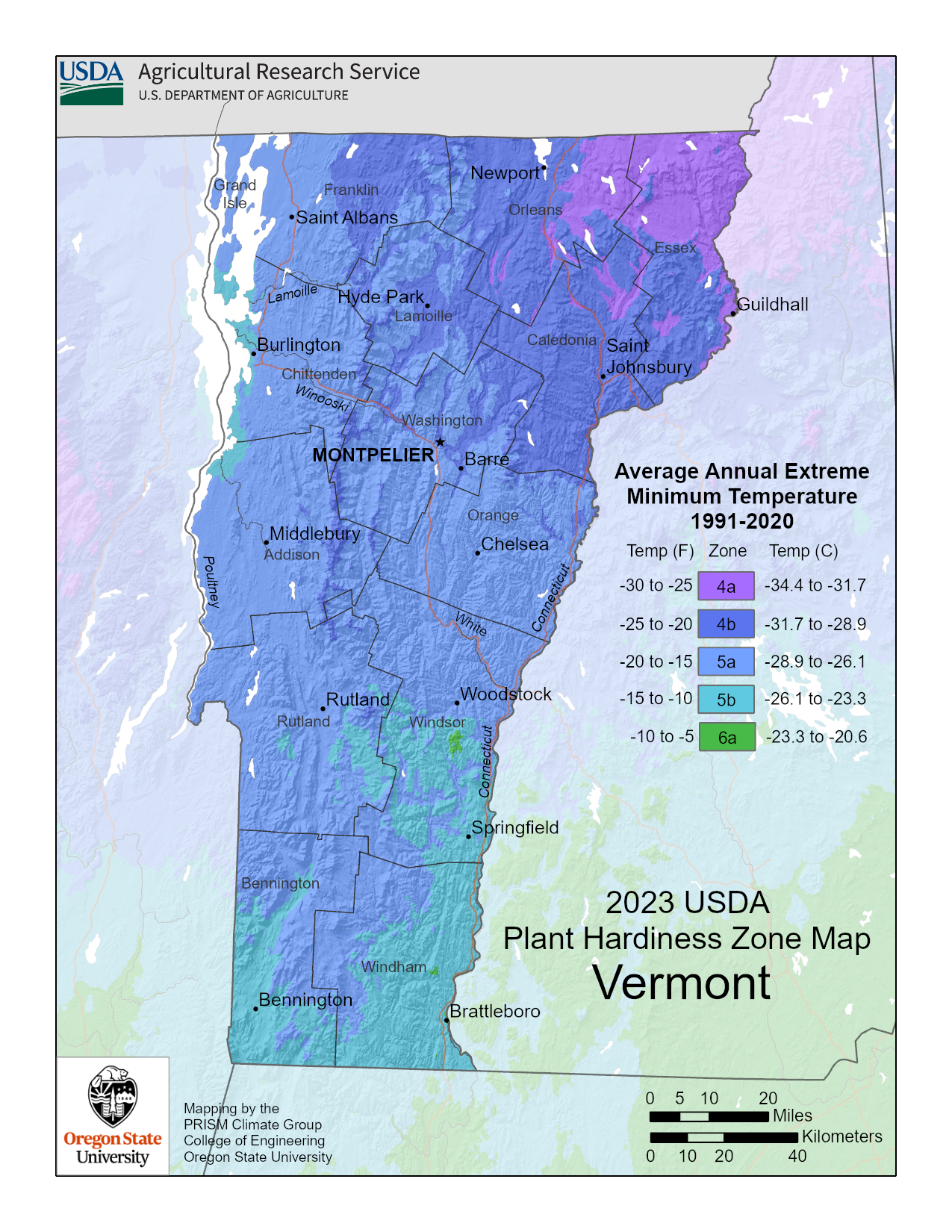
The USDA map below can help find the appropriate hardiness zone for your area. Understanding the exact zone for where you live in Vermont can help you with your gardening journey.
Vermont Planting Zones
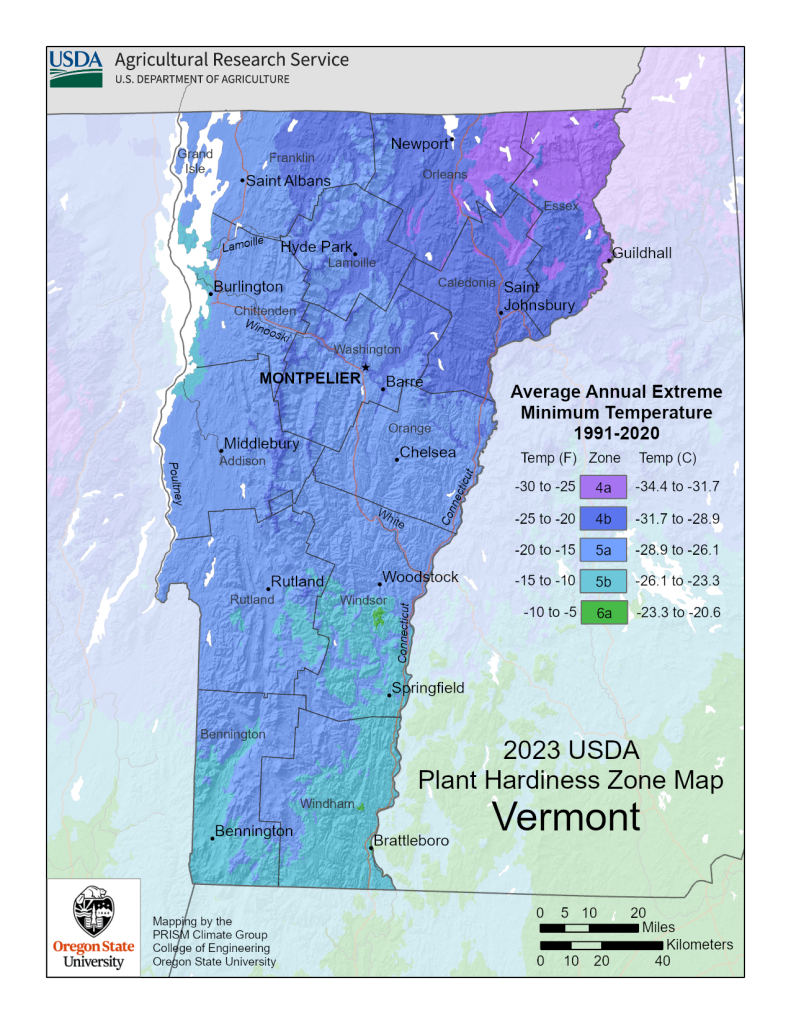
Click here for full resolution USDA Vermont growing zones map
According to the USDA, the country is divided into “plant hardiness zones.” The gathering of thirty years of weather information is illustrated by these zones, which increase in temperature by ten degrees.
Several zones have been altered in the new map, which was published at the end of 2023. Additionally, factors such as elevation, urban heat, and proximity to a large body of water have been considered.
As demonstrated above, the Vermont planting zones map is a valuable resource for gardening enthusiasts and is derived from the most recent data.
When selecting plants that can survive the cold winter temperatures in your region, it is extremely beneficial to be aware of the zone in which you located. An enlarged version of the map can be viewed by clicking on it.
Vermont includes a small enclave of 4a, while the central region of the state is divided into zones 4b and 5a. The southern section is located within zone 5b. Only a few pockets of 6a are present in the southern interior of the province.
Vermont experiences a very brief growing season and some cold average extreme winter lows that reach as low as -30 degrees F. Although numerous plants are capable of withstanding and adapting to this form of extreme weather, it is crucial to select only those that are designated for your region.
Plants that are plainly marked with the USDA planting zones that are appropriate for the plant being sold will only be available at local nurseries in your area.
The Vermont USDA planting map is an exceptional resource for gardeners; however, it is insufficient to replace the necessary care and planting that are essential for the growth of plants.
Top Questions
Vermont has five different plant hardiness zones: 4a, 4b, 5a, 5b, and 6a. The lower the zone number, the colder the temperatures reached in winter.
Vermont has a humid continental climate.
Sign up to get our FREE weekly emails
Gardening guides, tips, & videos delivered right to your inbox!