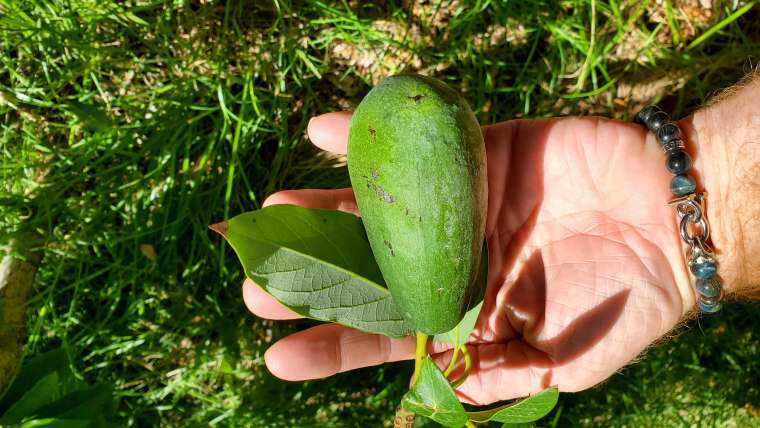
Sapote. Not the most glamorous name, but trust me, this fruit is worth remembering. If you’ve never tasted it, think of it as a creamy, sweet combo between a pear and a banana, with a touch of vanilla. It’s like the tropical fruit that’s secretly the best-kept dessert in the world. Smooth, rich, and utterly satisfying, sapote feels like a guilty pleasure, minus the guilt.
These beauties take their time, ripening late in the season, around late fall to winter, but the wait is totally worth it.
The tree itself? A leafy beauty with large, glossy leaves that practically scream “tropical paradise.” And here’s the kicker: if you grow it right, this tree can last for decades, providing fruit year after year.
But like any high-maintenance superstar, sapote trees aren’t a fan of containers. They need space to stretch their roots out, so plant them in the ground.
Also, don’t be surprised if they need a little extra care during their first couple of summers—shade, water, maybe some soft encouragement—and then, voilà, they’ll be ready to shine in full sun.
The sapote fruit, also called Sapodilla, originating from Central America, is a tropical delight known for its unique flavor and creamy texture. This versatile fruit comes in several varieties, such as the black sapote, mamey sapote, and white sapote, each offering a distinct taste experience.
The black sapote, often referred to as the “chocolate pudding fruit,” has a rich, dark flesh that tastes remarkably like chocolate pudding when ripe. Mamey sapote, with its vibrant orange flesh, offers a sweet, custard-like flavor reminiscent of sweet potato and pumpkin. White sapote, on the other hand, has a milder, custard-like flavor with hints of banana and pear.
Rich in vitamins A and C, as well as dietary fiber, sapotes are not only delicious but also nutritious, making them a cherished ingredient in smoothies, desserts, and various culinary creations.
How to Grow Sapote Trees

Growing sapote trees can be a rewarding experience, as they produce delicious fruits and add beauty to any garden. Below is a comprehensive guide to help you successfully grow sapote trees.
Planting Sapote
- Choosing the Right Variety:
- There are several types of sapote, including white sapote, black sapote, mamey sapote, and green sapote. Choose a variety suited to your climate and soil type.
- Site Selection:
- Sapote trees prefer full sun and well-drained soil. They can tolerate a range of soil types but perform best in slightly acidic to neutral soil (pH 6.0-7.0).
- Planting Time:
- The best time to plant sapote is in the spring, after the last frost.
- Planting Process:
- Dig a hole twice as wide and just as deep as the root ball of the sapote tree.
- Remove the tree from its container and gently loosen the roots.
- Place the tree in the hole, ensuring that the root ball is level with the soil surface.
- Fill the hole with soil, firming it gently around the base of the tree.
- Water thoroughly to settle the soil and eliminate air pockets.
Growing Sapote
- Watering:
- Keep the soil consistently moist but not waterlogged. Young trees need more frequent watering, while established trees are more drought-tolerant.
- Fertilizing:
- Feed the tree with a balanced fertilizer (e.g., 10-10-10) every 2-3 months during the growing season.
- Avoid over-fertilizing, as this can lead to excessive leaf growth at the expense of fruit production.
- Mulching:
- Apply a 2-3 inch layer of mulch around the base of the tree, keeping it a few inches away from the trunk to prevent rot. Mulch helps retain soil moisture and suppress weeds.
- Pruning:
- Prune the sapote tree to maintain its shape, remove dead or diseased branches, and improve air circulation. Pruning is best done in late winter or early spring before new growth begins.
- Pest and Disease Management:
- Common pests include scale insects, aphids, and fruit flies. Use organic insecticidal soap or neem oil to manage infestations.
- Watch for fungal diseases such as anthracnose and treat with appropriate fungicides if needed.
Harvesting Sapote
- Maturity Indicators:
- Sapote fruits are typically ready for harvest when they change color (depending on the variety) and soften slightly to the touch.
- For mamey sapote, the skin color changes from green to brown, and the flesh gives slightly under gentle pressure.
- Harvesting Process:
- Use a sharp knife or pruning shears to cut the fruit from the tree, leaving a small portion of the stem attached to prevent damage.
- Handle the fruit carefully to avoid bruising.
- Post-Harvest Handling:
- Allow the fruit to ripen fully at room temperature if it was harvested slightly underripe. The fruit should yield to gentle pressure when ripe.
- Once ripe, sapote can be stored in the refrigerator for a few days. However, it is best consumed fresh for optimal flavor and nutritional value.
Sapote Growing Zone
- Sapote, a tropical and subtropical fruit, thrives in USDA hardiness zones 9-12.
Growing Sapote FAQ
Sapote refers to several tropical fruits from the Sapotaceae family, including Black Sapote, White Sapote, Mamey Sapote, and Green Sapote. These fruits are known for their sweet flavor and creamy texture.
Sapote trees typically take 3 to 7 years to bear fruit, depending on the variety and growing conditions.
Sapote fruit is ripe when it gives slightly to gentle pressure and has a fragrant aroma. The skin color may change depending on the variety (e.g., Black Sapote turns from green to dark brown).
Yes, Sapote can be grown in large containers. Ensure the pot has good drainage and provide adequate space for the roots to grow. Container-grown Sapote trees may require more frequent watering and fertilizing.
Sapote trees need full sun to partial shade. Ideally, they should receive at least 6-8 hours of direct sunlight daily.
Sign up to get our FREE weekly emails
Gardening guides, tips, & videos delivered right to your inbox!