

Growing lemon balm in containers offers excellent control over its growth, making it an ideal choice for managing this fast-spreading herb. Lemon balm is known for its vigorous nature, which can quickly dominate garden beds if left unchecked.
By confining it to a pot, you prevent it from taking over your garden, ensuring it remains a manageable size. Containers also allow for precise soil and nutrient management, enabling you to create optimal growing conditions for a healthier, more productive plant.
Additionally, cultivating lemon balm in containers provides mobility and convenience. You can easily move the pots to sunny spots or protect the plant from harsh weather conditions. This mobility is particularly beneficial in colder climates, where lemon balm can be overwintered indoors.
Containers also make it easier to grow lemon balm in small spaces, such as balconies, patios, or windowsills, ensuring that even those with limited outdoor areas can enjoy its delightful lemony scent, culinary uses, and calming properties.
Growing Lemon Balm in a Container
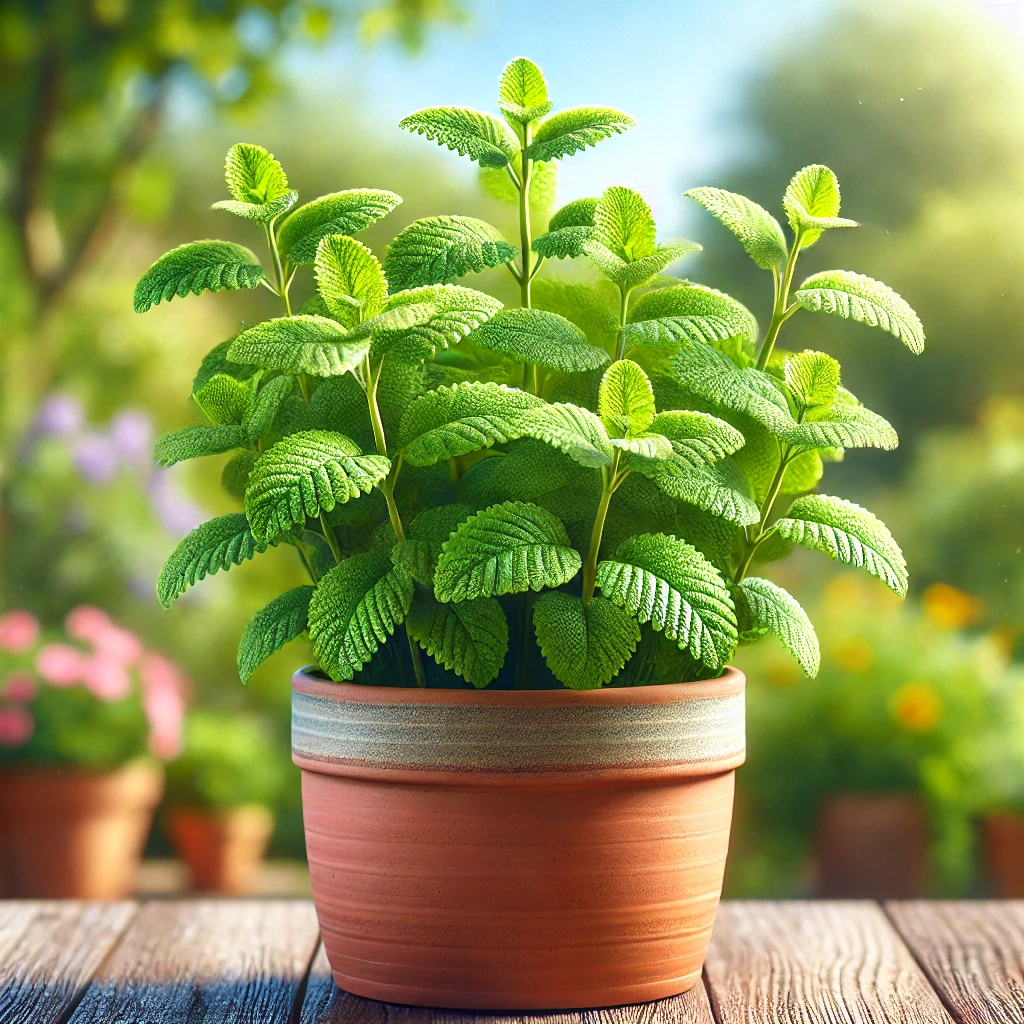
Lemon balm (Melissa officinalis) is a fragrant, versatile herb belonging to the mint family. It’s a fantastic addition to your garden, whether you have a sprawling backyard or just a balcony. Here’s a comprehensive guide to successfully growing lemon balm in containers:
1. Choosing the Right Container
Lemon balm thrives in containers as long as the basics are covered:
- Size: Use a pot that is at least 10-12 inches in diameter and 8-10 inches deep. Larger pots will help accommodate the plant’s spreading roots and prevent overcrowding.
- Material: Terracotta, plastic, or ceramic pots work well. Ensure the pot has drainage holes to avoid waterlogging.
2. Selecting the Right Soil
Lemon balm prefers well-draining soil:
- Use a high-quality potting mix. A mix with added compost or organic matter is ideal.
- Ensure the pH is slightly acidic to neutral, ranging between 6.5 and 7.0.
- Avoid using heavy garden soil, which may compact and retain too much moisture in a container.
3. Planting Lemon Balm
- Starting from Seeds: Sow lemon balm seeds about 1/4 inch deep in the soil. Germination typically takes 7-14 days. Keep the soil moist but not soggy.
- Using Seedlings or Transplants: If starting with a nursery plant, gently loosen the roots before placing it in the container. Fill the pot with soil, leaving about an inch of space at the top for watering.
4. Light and Location
Lemon balm thrives in:
- Light: Full sun to partial shade. In very hot climates, provide afternoon shade to prevent leaf scorch.
- Location: Place the container in a spot that gets at least 4-6 hours of sunlight daily, such as a sunny windowsill, balcony, or patio.
5. Watering Needs
Proper watering is crucial for healthy lemon balm growth:
- Water regularly to keep the soil consistently moist but not waterlogged.
- Reduce watering in cooler months, as the plant’s growth slows.
- Always check that excess water drains out to avoid root rot.
6. Fertilizing Tips
- Feed lemon balm every 4-6 weeks during the growing season with a balanced, water-soluble fertilizer.
- Avoid over-fertilizing, as it can lead to reduced flavor and aroma.
- Organic options like compost tea or diluted fish emulsion are excellent choices.
7. Pruning and Maintenance
- Regularly pinch or trim the plant to encourage bushy growth.
- Harvest leaves frequently to promote new growth. The best time to harvest is in the morning when the oils are most concentrated.
- Remove any flowers as they appear to keep the plant focused on producing flavorful leaves.
8. Managing Pests and Diseases
- Lemon balm is relatively pest-resistant but can occasionally attract aphids or spider mites. Use a gentle spray of water or insecticidal soap to manage these pests.
- Avoid overwatering to prevent fungal diseases like powdery mildew. Ensure good airflow around the plant.
9. Overwintering Lemon Balm
If you live in a region with cold winters:
- Bring the container indoors to a sunny windowsill or place it under grow lights.
- Reduce watering during the dormant season.
- If left outdoors, protect the pot by wrapping it in insulating material or moving it to a sheltered location.
10. Propagation
Lemon balm can be propagated through division or cuttings:
- Division: Gently separate the root ball into smaller sections and replant.
- Cuttings: Take a 4-6 inch stem cutting, remove the lower leaves, and place it in water or moist soil until roots develop.
FAQs
Yes, lemon balm grows well in containers, making it a great choice for small spaces like balconies or patios.
Water when the top inch of soil feels dry, ensuring the container has drainage holes to prevent overwatering.
Yes, but move the container to a sheltered location or indoors to protect it from frost in colder climates.
For sure! Place it near a sunny window or use grow lights to ensure it gets enough light.
Regularly check for pests like aphids and avoid overwatering to prevent root rot. Keep the area around the plant clean and prune as needed.
Sign up to get our FREE weekly emails
Gardening guides, tips, & videos delivered right to your inbox!


